Russia · Beverages
Homemade Bread Kvass
Dark rye bread toasted until almost charred, steeped in boiling water, sweetened, and left to ferment for one to two days with a small amount of yeast.
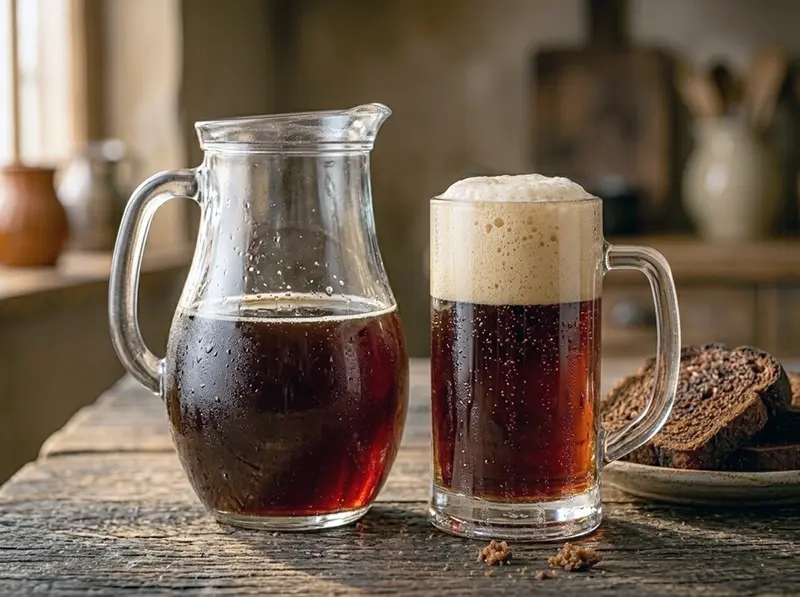
Ingredients
- dark rye bread, a day or two old300 g
- boiling water3 l
- granulated sugar100 g
- dry instant yeast5 g
- raisins30 g
- fresh mint or lemon slices1 handful
Method
- 1Toast the bread to near-black. Slice the rye bread into 1 cm slices and spread on a baking tray. Bake at 200°C for 15 to 20 minutes, turning once, until the bread is deeply dark brown with near-black edges — not burned, but very well toasted. This step is the most important one. The caramelized and slightly charred crust compounds are exactly what give kvass its dark color, bittersweet complexity, and roasted grain flavor. Pale-toasted bread produces a pale, flavourless drink.
- 2Make the bread infusion. Place the toasted bread pieces in a large pot or heatproof bowl. Pour 3 liters of boiling water over them. Cover with a clean cloth or lid left slightly ajar and leave at room temperature for 3 to 4 hours, or until the liquid has cooled to below 30°C. The liquid will turn a deep amber-brown. Strain through a fine sieve or cheesecloth into a clean fermentation vessel (a large jar or plastic bottle), pressing the bread to extract every drop of liquid. Discard the spent bread.
- 3Add sugar and yeast. Stir the sugar into the warm bread liquid until fully dissolved. Check the temperature — it must be below 30°C before you add the yeast. Above 35°C kills yeast. Add the dry or crumbled fresh yeast and stir gently. Add the raisins — they carry wild yeasts on their surface and contribute to a secondary fermentation that adds carbonation. If you want a flavoured kvass, add mint sprigs or lemon slices now.
- 4Ferment at room temperature. Pour the liquid into a clean large jar or bottle, leaving about 20% headspace at the top — the fermentation produces CO₂ and the liquid expands and foams. Cover loosely (not airtight) for the first 8 to 12 hours. After the first fermentation begins (you will see bubbles and foam), seal more tightly but leave a small gap. Total fermentation time at 20-22°C is 18 to 36 hours. Taste periodically: when it's pleasantly sour and slightly sweet with visible carbonation, it's ready.
- 5Strain, bottle, and refrigerate. When the kvass has reached the right level of sourness and bubbles, strain it again through a fine sieve or cheesecloth to remove the raisins and any sediment. Pour into clean sealed bottles. Refrigerate immediately — cold stops the fermentation. The kvass will continue to carbonate slightly in the bottle over 24 hours. Serve very cold over ice. Keep refrigerated and consume within 3 to 4 days — after that the sourness increases and the flavor deteriorates.