Italy · Cereal and Pasta Dishes
Cacio e Pepe
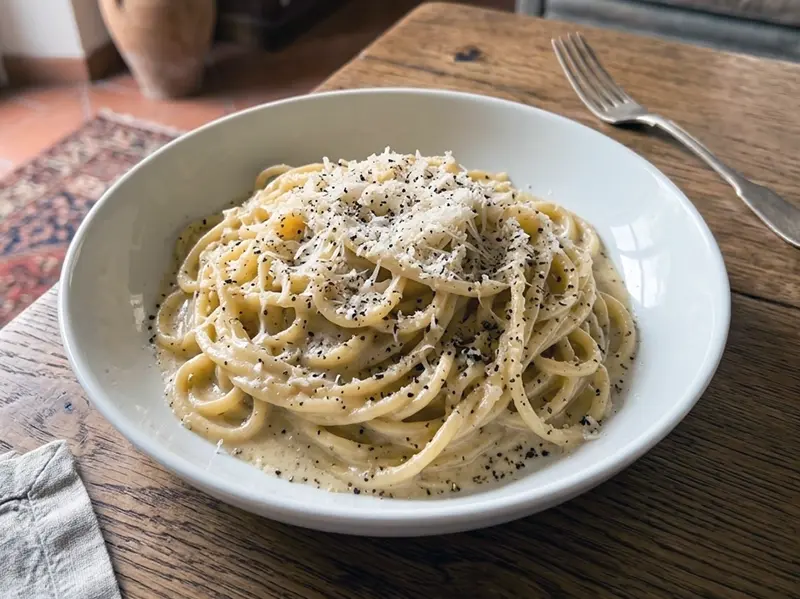
Three ingredients: pasta, Pecorino Romano, black pepper.
Ingredients
- spaghetti, tonnarelli, or bucatini200 g
- Pecorino Romano, very finely grated80 g
- whole black peppercorns, coarsely ground just before cooking1.5 tsp
- fine salt1 tsp
Method
- 1Use less water than normal — this is not optional. Fill a large pot with only enough water to fully submerge the pasta — roughly half the usual amount. Less water means the pasta releases starch into a smaller volume, making the cooking water significantly more concentrated. This starchy water is your emulsifier and your insurance against a clumpy sauce. Salt the water lightly — a single teaspoon, not the usual generous handful. Pecorino is intensely salty and the pasta water will season the pasta enough. Bring to a boil and cook the pasta 1 to 2 minutes less than the package instructions — it will finish cooking in the sauce.
- 2Toast and grind the pepper. Toast the whole peppercorns in a wide, dry skillet over medium heat for 60 to 90 seconds, shaking occasionally, until they smell fragrant and just begin to smoke slightly. Tip onto a board or into a mortar and coarsely grind — you want a mix of sizes, mostly medium-coarse, some finer dust. A pepper mill works but a mortar and pestle gives more control over texture. Return the ground pepper to the skillet. This is the pan the pasta will finish in.
- 3Make the cheese paste. While the pasta cooks, put the finely grated Pecorino into a bowl. Reserve about 150 ml of pasta water when the pasta is about 2 minutes from done. Let this water cool for 2 to 3 minutes — it should be warm, not boiling. The target temperature is around 70°C (150°F). Hot water scrambles the cheese proteins and causes clumping; slightly cooled water emulsifies. Add the pasta water to the cheese a tablespoon at a time, working it vigorously with a fork or whisk until you have a smooth, flowing paste — the consistency of single cream. If it's stiff and pasty, add more water. If it's too thin, add more cheese. You are building the sauce in the bowl before it touches the pan.
- 4Finish the pasta in the pepper. Add a ladleful of pasta water to the skillet with the toasted pepper and bring to a low simmer. Transfer the pasta directly from the boiling water using tongs — do not drain completely, you want some water clinging to it. Toss the pasta vigorously in the pepper-water for 1 to 2 minutes, letting it absorb the liquid. Remove the skillet from the heat. Let it rest 30 to 60 seconds — you need the temperature to drop slightly before the cheese goes in.
- 5Add the cheese paste and serve immediately. Pour the cheese paste over the pasta in the pan off the heat. Toss quickly and continuously using tongs, working from the bottom of the pan. If the sauce is too thick and the pasta looks sticky, add pasta water a tablespoon at a time and keep tossing. If it's too thin, toss more vigorously — the residual heat and starch will thicken it. The final sauce should be creamy, flowing, and coat every strand. Serve immediately in warmed bowls. Cacio e Pepe does not wait. As it cools, the sauce tightens and loses its silk. Finish with extra ground pepper and a little more Pecorino.