Japan · Vegetable and Mushroom Dishes
Kabocha no Nimono (Japanese Simmered Kabocha Squash)
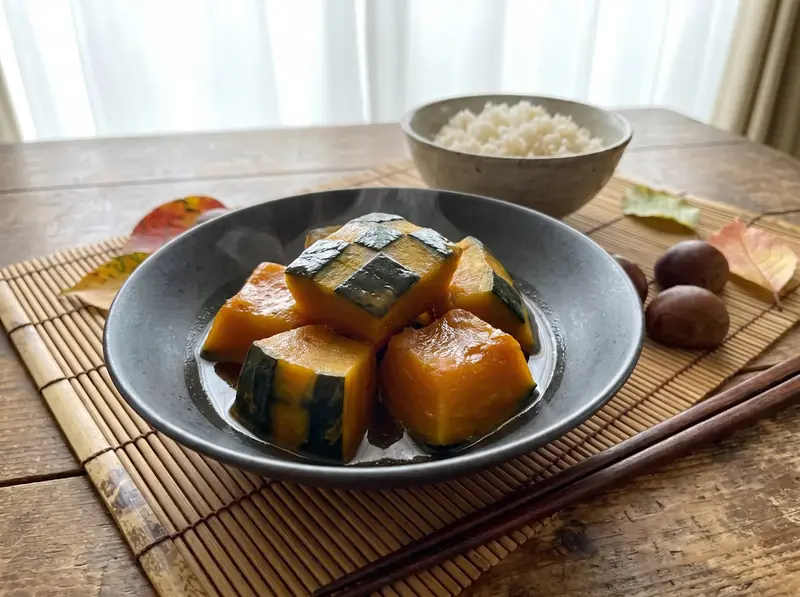
Kabocha no nimono (かぼちゃの煮物, simmered kabocha, also called Japanese simmered pumpkin) is a Japanese home dish of kabocha chunks simmered in dashi with sugar, mirin, sake and soy sauce until soft, with part of the skin…
Ingredients
- kabocha pumpkin450 g
- dashi300 ml
- sugar2 tbsp
- mirin1 tbsp
- sake1 tbsp
- soy sauce1.5 tbsp
Method
- 1Scoop the seeds and the stringy pulp out of the kabocha with a spoon and rinse the outside; the skin stays on, and after simmering it is soft and good to eat. Put a damp cloth under the cutting board so it does not slip, cut the pumpkin into wedges, then into pieces about 3 to 4 cm across. Keep them all the same size, otherwise the small ones turn to mush before the big ones are done.
- 2Trim the sharp edges of every piece with a thin slice of the knife (the Japanese name is mentori). Rounded corners do not knock against each other in the pan and crumble. Then peel strips of skin from two or three spots on each piece, so that about half of the green skin stays. The bare patches let heat and seasoning in, and the skin that remains holds the piece together, so do not peel it completely.
- 3Pick a saucepan in which the pieces just fit in a single layer, about 20 to 21 cm across: in a wide pan the liquid boils away, in a small one the pieces stack and crush each other. Arrange them skin-side down, snug enough that they cannot shift. Pour in the dashi, add the sugar, sake and mirin, and bring to a boil over high heat. From here on do not stir: cooked pumpkin breaks if you move it.
- 4As soon as the liquid boils, lay a drop lid (otoshibuta) directly on the pumpkin, or a round of parchment paper with a few holes cut in it, and turn the heat to medium-low. Simmer for 10 minutes, with the liquid bubbling gently and touching the lid. The lid keeps the pieces pressed under the liquid, so the seasoning reaches them evenly even though there is very little of it, and nothing bumps around. After 10 minutes the edges should be soft while the pieces still hold their shape.
- 5Pour the soy sauce in along the edge of the pan, put the lid back and simmer for 5 to 7 minutes more over medium-low heat, until a skewer slides in with almost no resistance and only a few tablespoons of glossy liquid are left. Soy sauce goes in late because long boiling dulls its aroma. If the pan starts to sound dry, take it off the heat at once: the sugar scorches fast, and the pieces finish cooking in the leftover heat.
- 6Turn off the heat and leave the lid on for 15 to 20 minutes. Kabocha keeps absorbing the liquid as it cools, so it tastes better lukewarm than straight from the pan. Slide a spatula under the pieces to lift them without breaking them, set them in a bowl skin-side up and spoon the remaining liquid around. Serve warm or at room temperature.