Mexico · Beverages
Tepache (Mexican Fermented Pineapple Drink)
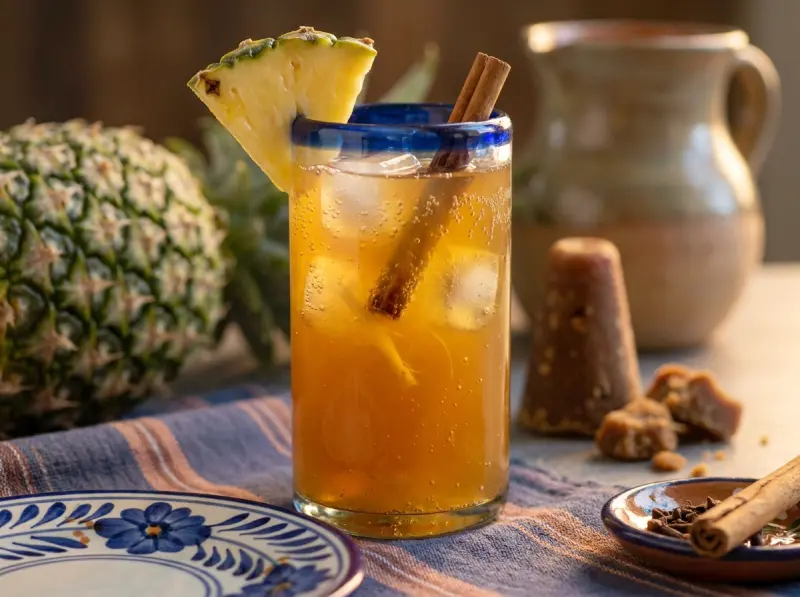
Tepache is a traditional Mexican fermented pineapple drink built on pineapple rinds, piloncillo (unrefined Mexican cane sugar), Mexican cinnamon, and cloves.
Ingredients
- pineapple1.5 kg
- piloncillo200 g
- filtered water2 l
- cinnamon sticks2 pcs
- whole cloves4 pcs
Method
- 1Choose a ripe organic pineapple — the wild yeast lives on the skin, and conventional pineapples may be coated with antifungal agents that hold the fermentation back. Scrub the pineapple with a clean brush under cool running water; use no soap or detergent. Cut off the crown and base, then peel the pineapple in big chunks leaving about 1 cm of fruit attached to each piece of skin. Cut the core into thick wedges. Save the inner flesh for another use — fresh slices, salsa, or smoothies. The peel and core are what go into the tepache.
- 2Put the piloncillo in a large saucepan (3 litres or more) with 500 ml of the filtered water and 1 cinnamon stick. Heat over medium-low until the piloncillo dissolves completely — this takes 8 to 10 minutes since piloncillo is a hard cone, you may need to break it with a spoon as it softens. Do not boil hard; simmer gently. Once dissolved, take off the heat and pour the remaining 1.5 litres of cold filtered water into the hot syrup. The mixture will still be lukewarm: leave it until it is no warmer than the room before it goes over the pineapple. Hot liquid kills the wild yeast — temperature is critical here. If you have no filter, boiled-and-cooled water is the safer choice.
- 3Get out a 4-litre glass or food-grade ceramic jar; avoid reactive metal. Put the pineapple peels and core wedges into the jar. Pour in the cooled piloncillo water and add the second cinnamon stick and the cloves.
- 4Press the pineapple pieces down to fully submerge them under the liquid. Use a small clean glass plate or a fermentation weight to keep them under — peel above the surface can grow mold, so keep it submerged. Cover the jar with a clean cotton cloth or a few layers of paper towel and secure with a rubber band. Do not seal tightly: fermentation produces CO2 and sealed jars can crack or explode.
- 5Place the jar in a warm spot at 22 to 26°C, out of direct sunlight (a kitchen counter away from a window works). Fermentation takes 48 to 72 hours. After the first 24 hours you will see small bubbles rising from the bottom and white foam forming on the surface; this is normal — skim the foam off with a clean spoon every 12 hours. Mold (fuzzy white, gray, or black patches) is not normal — if you see it, throw out the whole batch and start over with cleaner equipment. A thin, flat white film is yeast, not mold: skim it off and smell the drink — it should still smell of pineapple and spice.
- 6Start tasting at 36 hours by drawing some out with a clean straw. The tepache is ready when it tastes pleasantly sweet with a slight tang and reads as fizzy on the tongue. Most batches hit the sweet spot at 48 to 60 hours. Beyond 72 hours the drink starts shifting into pineapple vinegar territory — still drinkable but sharp, better for marinades than for sipping.
- 7Strain the tepache through a fine mesh strainer or cheesecloth into clean glass bottles, leaving 5 cm headspace at the top of each bottle for gas pressure. Close the caps and refrigerate immediately. Once a day, loosen each cap for a moment to let the gas out. Never leave a closed bottle somewhere warm. Cold slows fermentation but does not stop it. Serve very cold over ice, garnished with a slice of fresh pineapple or a thin orange slice. Keeps 5 to 7 days in the fridge — the flavour deepens for the first 3 days, then begins to turn vinegary.