Italy · Cereal and Pasta Dishes
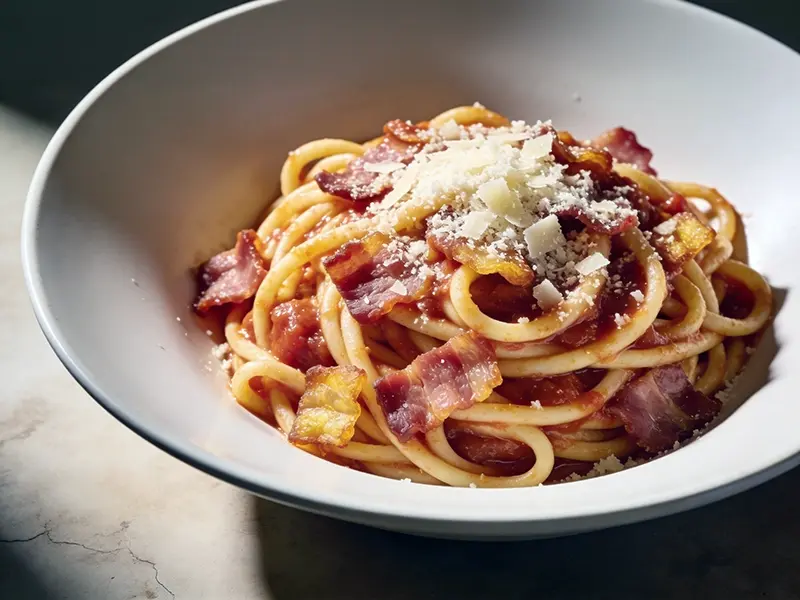
Pasta all'Amatriciana
One of four classic Roman pastas, and the only one with a tomato sauce.
Ingredients
- bucatini or spaghetti400 g
- guanciale, cut into 1 cm strips or cubes150 g
- whole peeled San Marzano tomatoes, crushed by hand400 g
- dry white wine60 ml
- dried peperoncino or ½ tsp chilli flakes1
- Pecorino Romano, very finely grated60 g
- fine salt1 pinch
- freshly ground black pepper1 pinch
Method
- 1Render the guanciale slowly. Place the guanciale strips in a cold, wide pan — no added fat. Turn the heat to medium-low. The guanciale needs to render its fat gradually: the goal is soft, slightly golden pieces swimming in their own melted fat, not crisped meat with burnt edges. This takes 10 to 12 minutes and cannot be rushed. The rendered fat is the base of the sauce — it must be abundant, clear, and fragrant. Once the guanciale is lightly golden and has given up most of its fat, remove it with a slotted spoon and set aside. Leave all the fat in the pan.
- 2Deglaze with wine and build the tomato sauce. Raise the heat to medium-high and add the white wine to the hot guanciale fat. It will sizzle and evaporate quickly — this deglazing lifts the flavor compounds stuck to the pan and adds a faint acidity that brightens the tomatoes. Let the wine reduce by half — about 1 to 2 minutes. Add the crushed tomatoes and the dried peperoncino or chilli flakes. Stir, season with a small pinch of salt (remembering that guanciale and Pecorino will add more), and simmer over medium-low heat for 15 to 18 minutes until the sauce has thickened, the tomatoes have broken down, and the fat from the guanciale has visibly integrated into the sauce.
- 3Cook the pasta and bring it together. While the sauce simmers, bring a large pot of generously salted water to a boil and cook the pasta 2 minutes less than the package suggests. Reserve at least 200 ml of starchy pasta water before draining. Remove the dried chilli from the sauce if using a whole one. Return the guanciale to the sauce. Add the drained pasta directly to the pan and toss over medium heat for 1 to 2 minutes, adding pasta water as needed to loosen the sauce and help it coat every strand. The pasta should finish cooking in the sauce.
- 4Finish with Pecorino and serve. Remove the pan from the heat. Add the finely grated Pecorino Romano and toss quickly — the residual heat and the starch in the pasta water will melt the cheese into a light, glossy coating rather than clumping. If the Pecorino seizes or clumps, add a splash of warm pasta water and toss harder. Taste and adjust pepper. Serve immediately in warmed bowls with extra Pecorino grated at the table.
- 5Serve the Amatriciana as it is: no olive oil drizzled over, no fresh herbs, no breadcrumbs. It is complete without them. Finish generously with Pecorino at the table. The guanciale pieces should be visible and plentiful on each plate. If a guest wants more chilli, put a small dish of flakes on the table.