
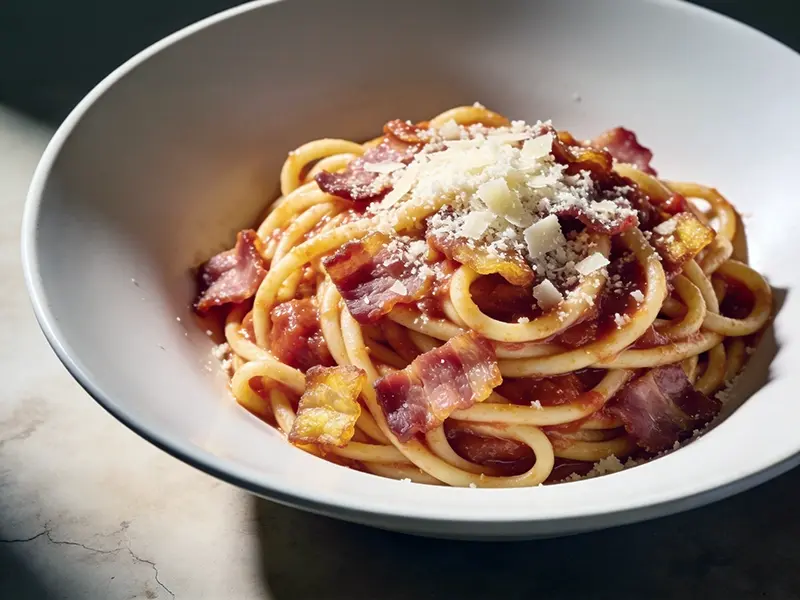
Pasta all'Amatriciana
One of four classic Roman pastas, and the only one with a tomato sauce. Bucatini or spaghetti with guanciale, San Marzano tomatoes, a touch of chilli, and Pecorino Romano. The dish comes from Amatrice, a mountain town on the Monti della Laga (part of Abruzzo until 1927, now Lazio). Transhumant shepherds carried it through the Roman countryside, and in the 19th century emigrants from Amatrice who ran inns and food shops in Rome made it a Roman staple. The white version without tomatoes, Pasta alla Gricia, is the older dish. The key is in the guanciale: cured pork cheek with a higher fat content than pancetta, it renders into the pan and flavors the tomato sauce with a deep, porky richness that no substitute fully replicates. The rules here are strict — no garlic, no onion, no herbs — because the dish doesn't need them.
Ingredients
- 400 gbucatini or spaghetti
- 150 gguanciale, cut into 1 cm strips or cubes
- 400 gwhole peeled San Marzano tomatoes, crushed by hand
- 60 mldry white wine
- 1 dried peperoncino or ½ tsp chilli flakes
- 60 gPecorino Romano, very finely grated
- 1 pinchfine salt
- 1 pinchfreshly ground black pepper
Method
- Render the guanciale slowly. Place the guanciale strips in a cold, wide pan — no added fat. Turn the heat to medium-low. The guanciale needs to render its fat gradually: the goal is soft, slightly golden pieces swimming in their own melted fat, not crisped meat with burnt edges. This takes 10 to 12 minutes and cannot be rushed. The rendered fat is the base of the sauce — it must be abundant, clear, and fragrant. Once the guanciale is lightly golden and has given up most of its fat, remove it with a slotted spoon and set aside. Leave all the fat in the pan.

- Deglaze with wine and build the tomato sauce. Raise the heat to medium-high and add the white wine to the hot guanciale fat. It will sizzle and evaporate quickly — this deglazing lifts the flavor compounds stuck to the pan and adds a faint acidity that brightens the tomatoes. Let the wine reduce by half — about 1 to 2 minutes. Add the crushed tomatoes and the dried peperoncino or chilli flakes. Stir, season with a small pinch of salt (remembering that guanciale and Pecorino will add more), and simmer over medium-low heat for 15 to 18 minutes until the sauce has thickened, the tomatoes have broken down, and the fat from the guanciale has visibly integrated into the sauce.
- Cook the pasta and bring it together. While the sauce simmers, bring a large pot of generously salted water to a boil and cook the pasta 2 minutes less than the package suggests. Reserve at least 200 ml of starchy pasta water before draining. Remove the dried chilli from the sauce if using a whole one. Return the guanciale to the sauce. Add the drained pasta directly to the pan and toss over medium heat for 1 to 2 minutes, adding pasta water as needed to loosen the sauce and help it coat every strand. The pasta should finish cooking in the sauce.

- Finish with Pecorino and serve. Remove the pan from the heat. Add the finely grated Pecorino Romano and toss quickly — the residual heat and the starch in the pasta water will melt the cheese into a light, glossy coating rather than clumping. If the Pecorino seizes or clumps, add a splash of warm pasta water and toss harder. Taste and adjust pepper. Serve immediately in warmed bowls with extra Pecorino grated at the table.
- Serve the Amatriciana as it is: no olive oil drizzled over, no fresh herbs, no breadcrumbs. It is complete without them. Finish generously with Pecorino at the table. The guanciale pieces should be visible and plentiful on each plate. If a guest wants more chilli, put a small dish of flakes on the table.
FAQ
Guanciale is cured and seasoned pork cheek or jowl. It is fattier than pancetta (which comes from the belly) and has a softer, silkier texture when rendered, with a more intense pork flavor and higher collagen content that gives the sauce body. Pancetta is the standard substitute and works well — add a tablespoon of olive oil when rendering it since it is leaner. Unsmoked bacon lardons are an emergency substitute; smoked bacon changes the flavor profile noticeably and is not recommended. Outside Italy, guanciale can be found in Italian delis, some specialist butchers, or ordered online.
The original recipe from Amatrice, as registered by the town itself, includes neither garlic nor onion. The Roman matriciana, the version in classic Roman cookbooks and many trattorias, often adds onion and sometimes garlic. Both are considered legitimate. Adding garlic or onion will produce a deeper, more complex sauce but will move the dish away from the strict Amatrice tradition. If you add onion: cook it slowly in the rendered guanciale fat until soft and golden before adding the wine and tomatoes. If you add garlic: a single sliced clove, briefly sautéed after the guanciale is rendered.
Bucatini is the Roman choice and the most traditionally associated shape — the hollow tube catches the sauce inside and the thick diameter holds up to the chunky guanciale. Spaghetti is the Amatrice original and the more practical everyday option. Rigatoni and mezze maniche (half rigatoni) work well for a heartier, more substantial result. Short pasta fans will find rigatoni particularly satisfying because the guanciale pieces fit into the tube. Avoid very fine pasta like angel hair or spaghettini — too delicate for this sauce.
Yes. The wine step deglazes the pan and adds a light acidity that brightens the tomatoes. If you skip it: add the tomatoes directly to the hot fat, or deglaze with a splash of pasta water instead. The result will be slightly richer and less bright but still excellent. Some versions of Amatriciana do not include wine at all and rely solely on the tomato acidity for balance.
Pasta alla Gricia is often described as 'white Amatriciana' or the ancestor of Amatriciana. It uses the same guanciale and Pecorino Romano but no tomatoes — the sauce is built entirely from the rendered fat and pasta water, finished with cheese, very similarly to Cacio e Pepe but with the guanciale adding another dimension. Tomato joined the dish between the late 1700s and early 1800s, and the red version is documented in Rome from the second half of the 19th century. Gricia is the older dish, the one before the tomato arrived.
Rate this
Recipes by email
One letter a week: a recipe picked for your taste, plus whatever is new on the site. Unsubscribe in one click.
Welcome gift: Sergei's cookbook (e-book).
By subscribing you agree to the privacy policy.
Tell us what you like to cook (30 seconds) →Keep browsing
More dishes from the Italian archive — picked by overlap with what you're cooking now.


Join the conversation
Comments (1)
The widest pan you own works best for pasta all'amatriciana. Maximum surface area means faster evaporation, more concentrated sauce, and better coating. A deep pot keeps things too wet.