


Penne alla Vodka
Penne alla vodka is an Italian pasta dish of penne in a creamy tomato sauce with pancetta, a splash of vodka and a little chilli. The sauce is the color of a sunset — somewhere between deep red and pale pink — and the texture is what happens when cream meets a reduced tomato base: thick, glossy, and rich enough that the pasta takes on its own weight. Ugo Tognazzi wrote about a vodka penne, "penne all'infuriata", as early as 1974; the dish became a cult dish in Italy in the 1980s and hit American restaurant menus shortly after. Its origins are genuinely disputed between Rome, Bologna, and New York. What nobody disputes is that it works. The vodka doesn't make the sauce taste boozy, though only part of the alcohol cooks off. It carries tomato aroma that would otherwise stay locked in the fat, so the sauce smells and tastes more intensely of tomato than a standard tomato cream sauce.
Ingredients
- 400 gpenne rigate
- 150 gpancetta
- 1 small onion
- 3 garlic cloves, finely sliced or crushed
- 80 mlvodka
- 400 gSan Marzano tomatoes, crushed by hand
- 2 tbsptomato paste
- 150 mldouble cream
- 0.5 tspdried chilli flakes
- 2 tbspolive oil
- 40 gParmesan or Pecorino Romano
- 4 leavesfresh basil, torn
Method
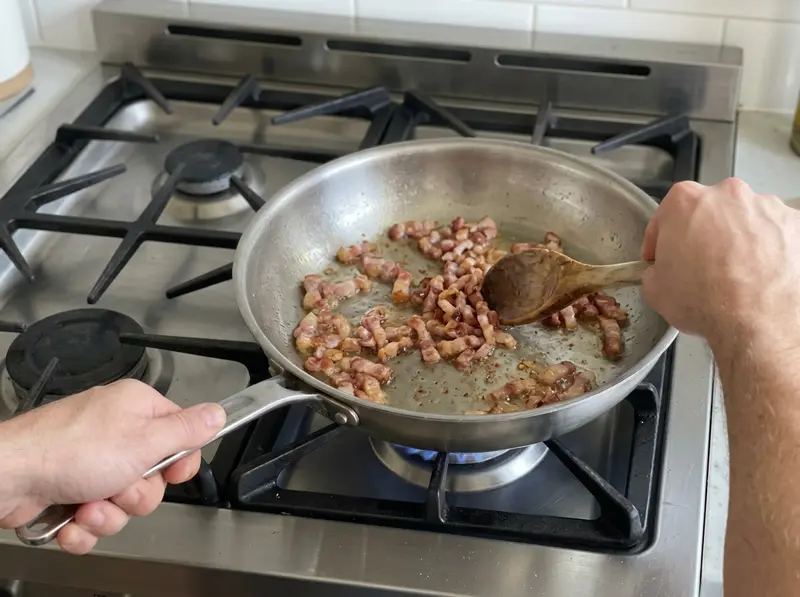
- Render the pancetta. Heat the olive oil in a wide, heavy pan over medium heat. Add the pancetta and cook, stirring occasionally, until it has rendered most of its fat and the pieces are starting to brown and crisp — about 6 to 8 minutes. Do not rush this step: the rendered fat becomes the base of the sauce and the crispy pancetta bits scattered back in at the end are one of the dish's key textural elements. Once done, remove the pancetta with a slotted spoon and set aside, leaving the fat in the pan.
- Build the base. In the same pan over medium heat, add the diced onion to the pancetta fat and a splash of olive oil if needed. Cook, stirring occasionally, until softened and just starting to turn golden — about 8 minutes. Add the garlic and chilli flakes and cook 1 to 2 minutes more until fragrant. Add the tomato paste and stir it into the onion and fat, letting it cook for 2 minutes — this 'toasting' of the paste deepens its flavor and color from bright red to a deeper, almost brick tone.
- Add the vodka and tomatoes. Remove the pan from the heat before adding the vodka — if you have a gas hob this prevents a flare-up. Pour in the vodka, return to medium-high heat, and let it simmer briskly for 3 to 4 minutes, stirring frequently. Part of the alcohol evaporates here, and you will smell the sharp ethanol note soften into something rounder. Add the crushed tomatoes, stir to combine, and simmer over medium-low heat for 12 to 15 minutes until the sauce has thickened and the tomatoes have broken down. Season lightly with salt — the pancetta and Parmesan will add more later. While the tomatoes simmer, cook the penne in generously salted boiling water until just shy of al dente — 1 to 2 minutes less than the package says.
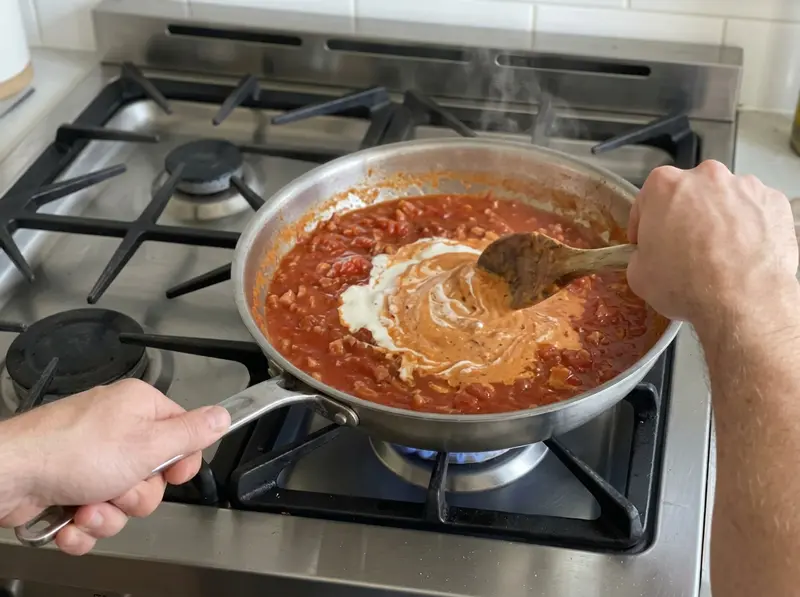
- Add the cream and finish the sauce. Reduce the heat to low before adding the cream — high heat at this point can cause the cream to split and the sauce to look grainy. Pour in the cream and stir until fully incorporated. The sauce should turn from red to a deep salmon-pink color. Simmer gently for 3 to 4 minutes until slightly thickened. Taste and adjust seasoning. Return the pancetta to the pan.
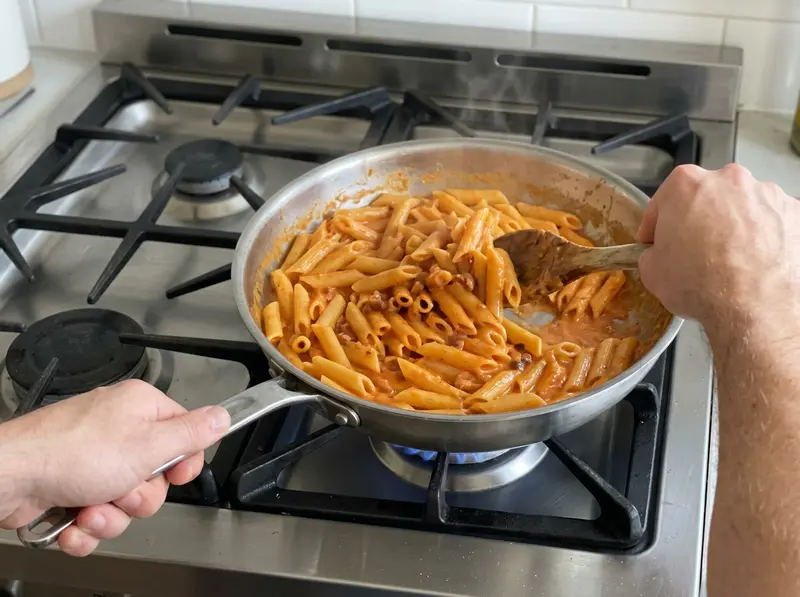
- Finish in the sauce. Drain the pasta, reserving a cup of pasta water. Add the penne directly to the sauce over medium heat and toss vigorously for 1 to 2 minutes, letting the pasta finish cooking in the sauce and absorb some of it. If the sauce is too thick, add pasta water a splash at a time. Remove from heat, stir in the grated Parmesan and torn basil. Serve immediately in warmed bowls with extra Parmesan at the table.
Cooked it? Rate the recipe
FAQ
Only part of it. In the 3 to 4 minutes after the vodka goes in, well over half of the alcohol is still in the pan. By the time the pasta is tossed, about 20 minutes later, roughly a third remains: USDA retention tables put it at 40% after 15 minutes of simmering and 35% after 30. About 2.5 g of alcohol per serving remains; leave the vodka out for children, during pregnancy or for anyone avoiding alcohol. The flavor side matters more. Alcohol dissolves aroma compounds from the tomato, pancetta and garlic and carries them up as it evaporates, so the sauce smells and tastes more intensely of tomato. That is the actual job of the vodka.
Yes, but the result is a straightforward tomato cream pasta, not quite the same dish. The sauce will be pleasant but will lack the particular aromatic depth that the vodka extraction provides. If you are avoiding alcohol, leave the vodka out and add half a tablespoon of apple cider vinegar or lemon juice with the tomatoes for a little sharpness, plus a splash of pasta water in place of the missing liquid. White wine is not an alcohol-free swap. If making for children, simply omit and make a tomato cream sauce — it will be good.
Guanciale (cured pork cheek, the meat in amatriciana) is the richest option and gives the most flavor. Unsmoked bacon lardons work well — avoid smoked bacon as the smokiness competes with the sauce. Prosciutto, torn into pieces and added toward the end, is a lighter alternative. For a vegetarian version, omit the pancetta entirely and increase the olive oil slightly to compensate for the lost fat — the sauce is still very good without it. Parmesan and Pecorino Romano are traditionally made with animal rennet, so for a strictly vegetarian version use a hard cheese made with microbial rennet.
The pink color is the result of cream mixing with reduced tomato. The deeper the tomato reduction before the cream is added, the darker orange-red the base. The amount of cream determines how pink the final color is — more cream = more pink, less cream = more orange. A classic penne alla vodka should be a deep salmon-pink, not pale baby-pink (too much cream, not enough tomato) and not dark red (not enough cream). The color is a useful indicator of balance.
The sauce can be made up to 3 days ahead and refrigerated, or frozen for up to 2 months. Reheat gently over low heat with a splash of water, stirring frequently — the cream can separate if reheated too fast. Reheat the sauce until it is steaming hot all the way through, 74°C in the centre. Do not cook the pasta ahead: it will continue to absorb moisture in the sauce and turn soft. Cook pasta fresh and toss with the reheated sauce. If making for a dinner party, the sauce can sit on the stove on the lowest heat while guests arrive.
Keep browsing
More dishes from the Italian archive — picked by overlap with what you're cooking now.





Recipes by email
One letter a week: a recipe picked for your taste, plus whatever is new on the site. You can stop the letters in one click.
Welcome gift: Sergei's cookbook (e-book).
By signing up for the newsletter you agree to the privacy policy.
Tell us what you like to cook (30 seconds) →
Join the conversation
Comments
No comments yet — be the first!