
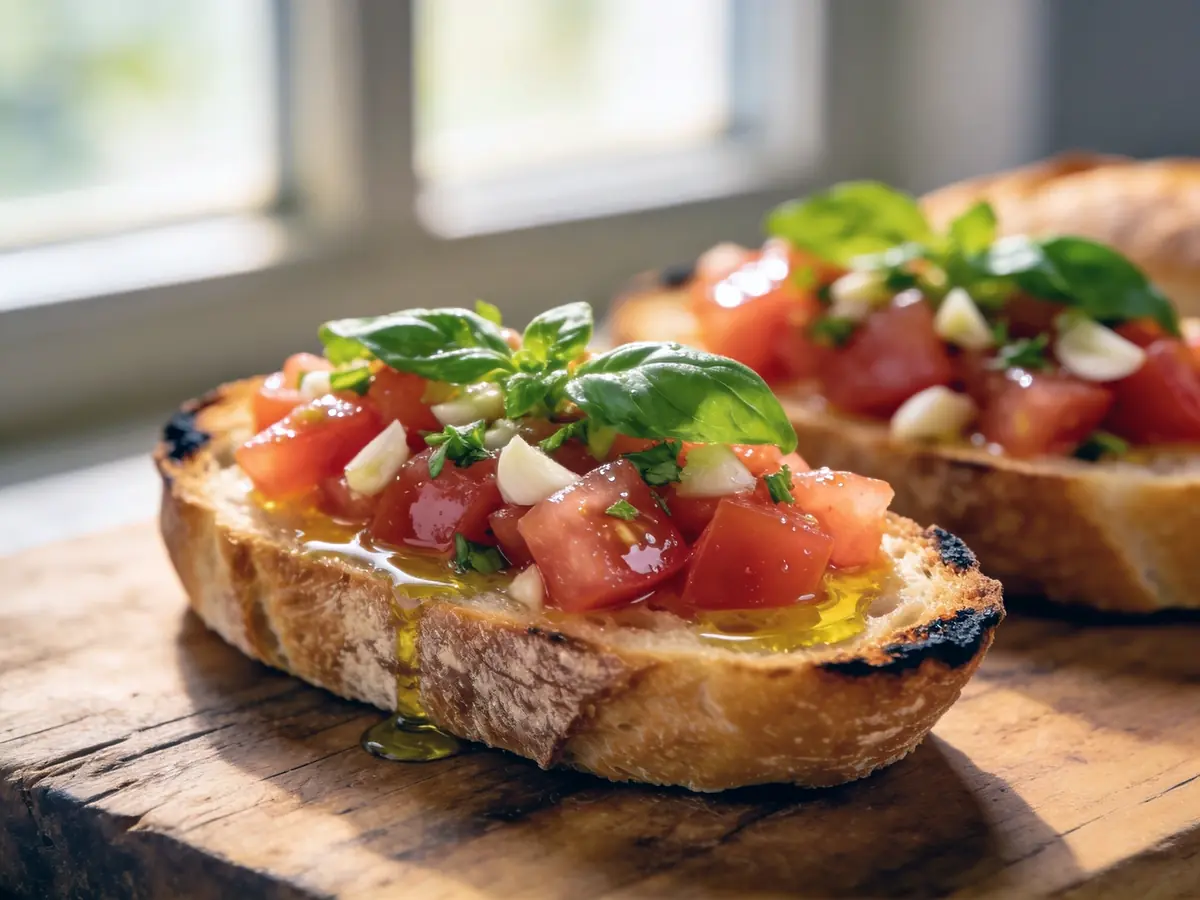
Bruschetta
Grilled bread rubbed with raw garlic, drizzled with good olive oil, then piled high with ripe tomatoes and torn basil. The bread must be charred enough to crunch but still soft inside — that contrast is everything.
Ingredients
- 1 baguette or ciabatta / focaccia
- 2 garlic cloves
- 4 ripe tomatoes (about 500 g)
- 1 small bunch fresh basil (about 15 leaves)
- 50 mlolive oil (2 tbsp for the bread, the rest for the tomatoes)
- to tastemozzarella or parmesan
- to tastesalt and pepper
Method
- Cut the bread into slices about 1–1.5 cm thick (cut a baguette on a long diagonal). Toast the slices on a dry frying pan or grill until golden on both sides.
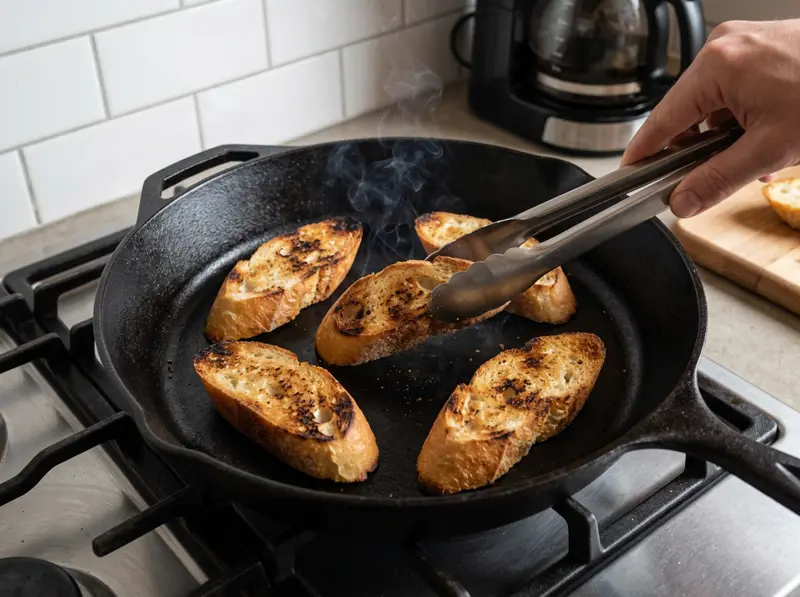
- While the slices are still hot, rub each one with a cut garlic clove (2 cloves for the whole batch), so the garlic melts into the bread. Drizzle with 2 tablespoons of the olive oil in total and set aside.
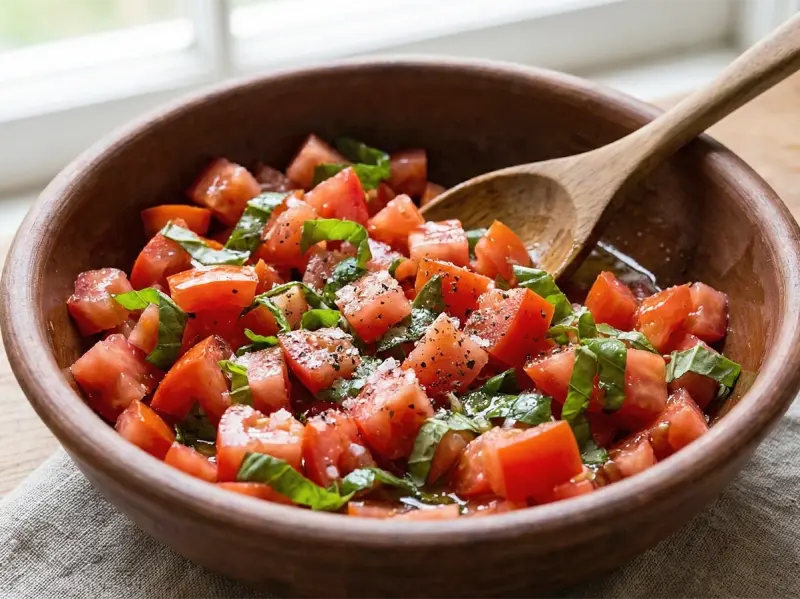
- Cut the tomatoes into small cubes, salt them and let them stand for 5–10 minutes, then drain off the excess juice. Chop the basil. Mix the tomatoes with the basil, the remaining olive oil (about 1½ tablespoons) and pepper; taste and add salt if needed.
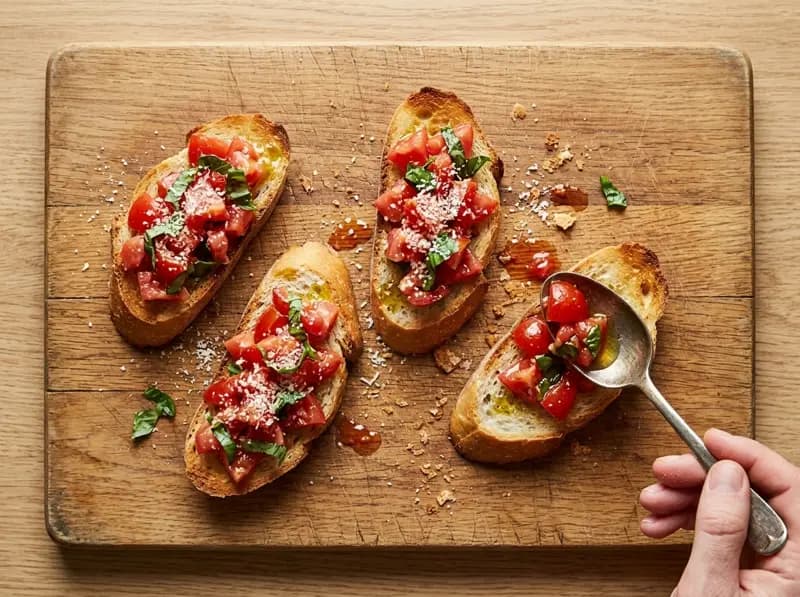
- Spread the tomato mixture on the prepared bread slices. Sprinkle mozzarella or grated parmesan on top if desired. Serve immediately.
FAQ
Tomatoes release juice immediately after cutting — it soaks into the bread. The solution: dice tomatoes, salt them, let sit 5–10 minutes, drain the liquid. Rub the hot bread with garlic and drizzle with oil, add topping at the last moment. In Italian restaurants the topping is often served separately so guests assemble it themselves — the only way to keep crunch for longer than 2 minutes.
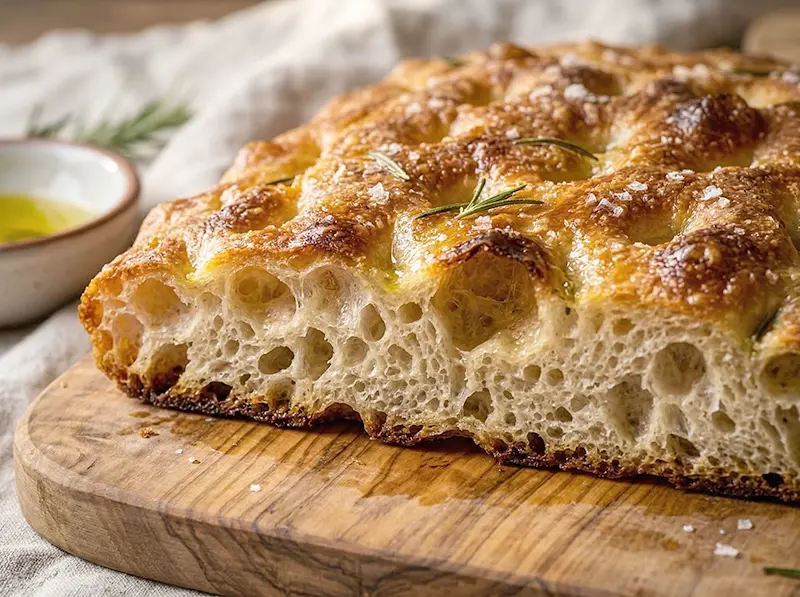
In the original it is Tuscan rustic bread on sourdough without salt — dense with a thick crust, it holds up well on the grill. Ciabatta or focaccia also work perfectly: large holes hold the oil and don't go soggy. A baguette is fine too if you cut it on a long diagonal and a little thicker, but ciabatta or country bread holds the topping better. The key criterion: the bread must be grilled or baked at high heat to a crispy crust.
For classic bruschetta — no, the skin stays. Seeds and liquid are better removed: halve the tomatoes and let drain in a colander. Skin doesn't need to go — the texture is more interesting with it. Exception: if using large beef tomatoes with tough skin, peel them or use cherry tomatoes which have thin delicate skin.
The word bruschetta comes from bruscare — 'to char over coals.' In the original it is bread toasted on an open fire, rubbed with raw garlic and drizzled with good olive oil — that is all. Bruschetta with tomatoes (bruschetta al pomodoro) is the best-known version. Italians eat bruschetta as bread, not as a dish piled with toppings.
For bruschetta, oil is the main ingredient — so the difference is enormous. You need Extra Virgin first cold press, ideally from Tuscany or Apulia — they give a green, spicy, slightly bitter flavor that is the soul of the dish. Refined or blended oil gives a flavorless result. Simple rule: if the oil tastes good eaten with bread on its own, it is right for bruschetta.
Rate this
Recipes by email
One letter a week: a recipe picked for your taste, plus whatever is new on the site. Unsubscribe in one click.
Welcome gift: Sergei's cookbook (e-book).
By subscribing you agree to the privacy policy.
Tell us what you like to cook (30 seconds) →Keep browsing
More dishes from the Italian archive — picked by overlap with what you're cooking now.
Join the conversation
Comments (1)
Make this bruschetta in individual portions for formal occasions, or as one large shared board for casual settings. The recipe works both ways — just adjust the assembly, not the ratios.