
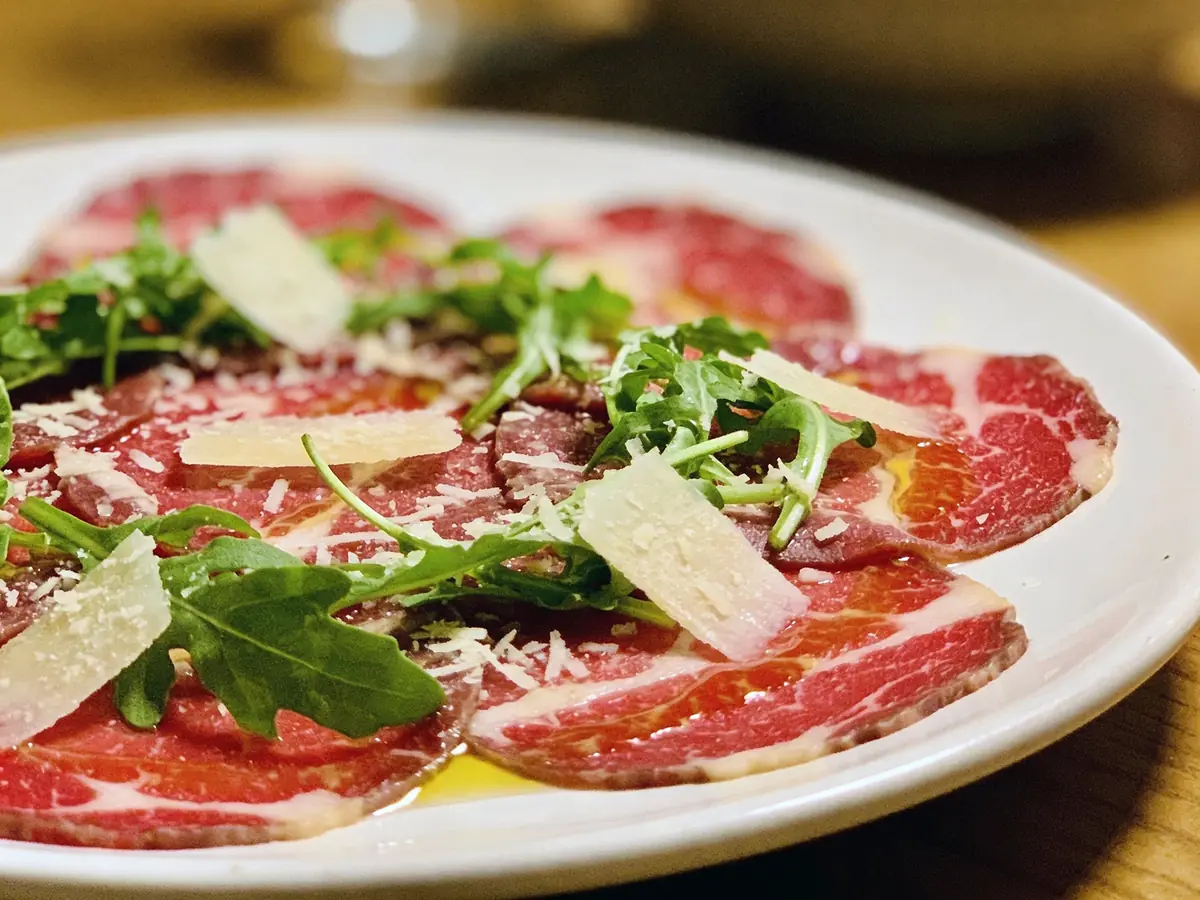
Carpaccio
Carpaccio is an exquisite Italian dish consisting of thinly sliced raw meat seasoned with olive oil, lemon juice and other ingredients.
Ingredients
- 250 gbeef tenderloin
- 30 gparmesan
- 30 garugula
- 4-5 tspcapers
- 4 tbspolive oil
- 1 lemon juice
- to tastesalt and freshly ground black pepper
Method
- Wrap the beef tenderloin in clingfilm and place in the freezer for 1-2 hours.

- Take the meat out of the freezer and let it stand at room temperature for 1-2 minutes.
- Cut the meat across the fibers into very thin slices. If needed, pound between cling film with a rolling pin.

- Arrange the meat slices on a plate in a single layer.

- Drizzle with olive oil and lemon juice. Sprinkle with capers, salt and pepper. Arrange arugula and thin slices of parmesan on top.
FAQ
Carpaccio uses raw beef and risks are real but manageable. The key is meat quality: beef tenderloin from a trusted supplier, ideally hygienically certified. The outer surface carries the highest risk (bacteria live on the outside), so the piece is often briefly seared on the outside or marinated in acid (lemon juice). Vulnerable groups — pregnant women, elderly, immunocompromised — should avoid raw meat.
Best method: wrap the tenderloin in plastic wrap and freeze for 1–2 hours until semi-frozen — it becomes firm and slices easily. Use a very sharp thin knife, cutting across the grain at a slight angle. Alternatively, slice slightly thicker and pound each piece flat between plastic wrap — it spreads thin perfectly.
Historical carpaccio is beef only. The dish was invented by Giuseppe Cipriani at Harry's Bar in Venice in 1950, named after painter Vittore Carpaccio known for rich red tones. Today 'carpaccio' is a culinary term for any product sliced paper-thin and served raw or lightly marinated. Beetroot, salmon, octopus — all are modern variations on the concept.
You need Parmigiano Reggiano — aged at least 24 months: it is granular with a nutty flavor, and its umami perfectly accentuates the tenderness of raw beef. Grana Padano is a softer, more affordable alternative. Pecorino gives a sharper flavor. Shave it with a vegetable peeler — not grated, but large flakes: this matters both visually and texturally.
Capers are pickled flower buds of the caper bush. They deliver an intense salty-sour note and slight bitterness that contrasts with the fatty beef and sweet Parmesan. Substitutes: finely chopped salt-cured olives (similar saltiness), pickled green peppercorns, or finely diced cornichons. Without capers carpaccio tastes flatter.
Rate this
Recipes by email
One letter a week: a recipe picked for your taste, plus whatever is new on the site. Unsubscribe in one click.
Welcome gift: Sergei's cookbook (e-book).
By subscribing you agree to the privacy policy.
Tell us what you like to cook (30 seconds) →Keep browsing
More dishes from the Italian archive — picked by overlap with what you're cooking now.
Join the conversation
Comments (1)
Freeze the beef for 30 minutes before slicing this carpaccio. Partially frozen meat is the only way to achieve those paper-thin slices with a regular knife. Room temperature beef tears and shreds instead of cutting cleanly.