
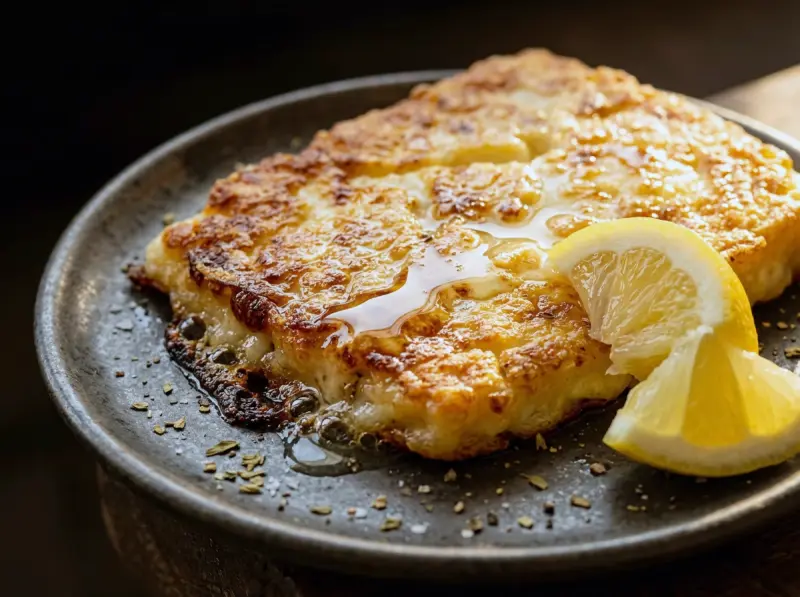
Saganaki
A slab of firm Greek cheese dredged in flour and pan-fried in olive oil until the outside forms a thin golden crust and the inside becomes soft and yielding. The dish takes about 8 minutes from start to finish and must be eaten immediately — the crust stays crisp for only a few minutes before it softens as the cheese cools. A squeeze of fresh lemon over the hot cheese just before serving cuts through the richness and is not optional. Saganaki is the name of both the small two-handled frying pan traditionally used and, by extension, the dish itself.
Ingredients
- 250 gkefalotyri, kefalograviera, or graviera cheese
- 3 tbspplain flour
- 4 tbspextra virgin olive oil
- 1 lemon
- 1 tspdried oregano
- 1 tsphoney
Method
- Prepare the cheese. Cut the cheese into a slab about 10 × 7 cm and 1.5 cm thick. No thinner — a thinner slice melts through the crust and into the pan before the outside is ready. Run the cheese under cold water briefly, or dip in a bowl of cold water and shake off the excess. The moisture on the surface helps the flour adhere evenly and prevents it from burning in the oil.
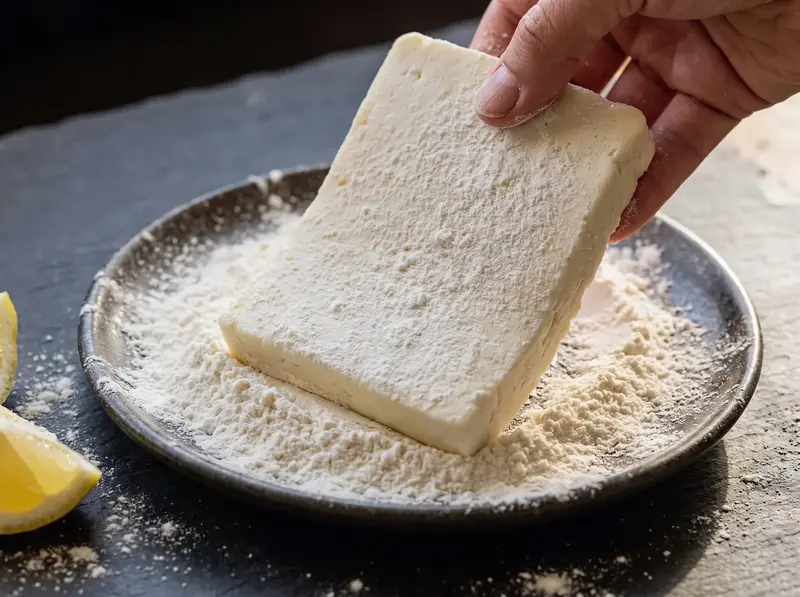
- Dredge in flour. Spread the flour on a flat plate. Press both flat sides and all four edges of the wet cheese firmly into the flour, coating all surfaces. Shake off any excess — too much flour creates a thick doughy crust rather than a thin crispy one. The coating should be a fine even dusting, not a thick layer.
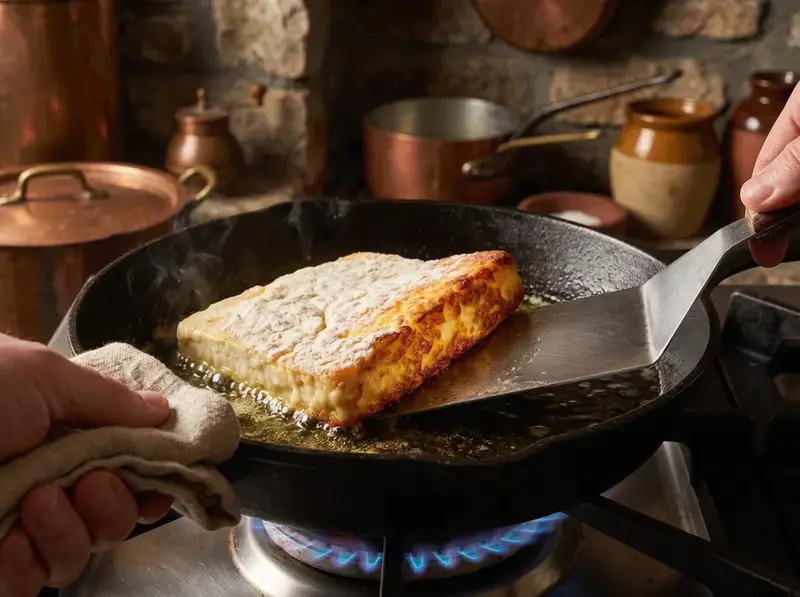
- Fry. Heat the olive oil in a small heavy-based pan (cast iron or stainless steel) over medium-high heat until the oil shimmers but does not smoke. Carefully lay the cheese in the pan. Do not move it. Fry for 2 to 3 minutes until the underside is deep golden — you will see the edges of the crust setting and turning gold. Flip with a wide spatula in one confident motion and fry the second side for 1 to 2 minutes until equally golden. The total frying time is 3 to 5 minutes.
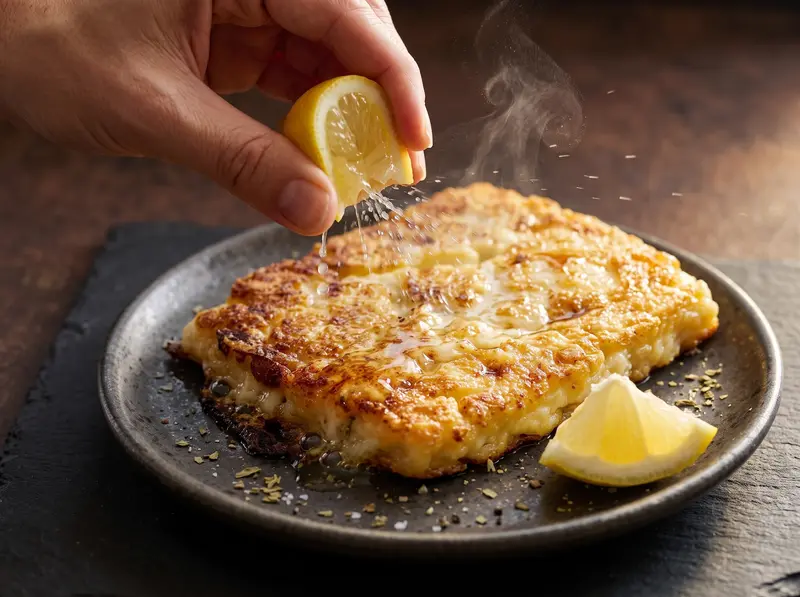
- Serve immediately. Transfer directly to a warm plate — do not let it rest or the crust begins to soften. Squeeze a generous amount of fresh lemon juice over the hot cheese the moment it hits the plate. If using, scatter dried oregano and drizzle a thread of honey over. Serve with crusty bread or warm pita. This dish waits for no one — eat it while it is still crackling.
FAQ
Saganaki takes its name from the small shallow two-handled frying pan traditionally used to make it — called saganaki in Greek, from the Turkish word sahan, meaning a small copper pan. Over time the word became attached to the dish itself, the same way a wok dish might be called 'wok food'. The same pan is used to make shrimp saganaki and mussels saganaki, so technically saganaki refers to a cooking style rather than a single recipe. When people say saganaki without qualification, they almost always mean the cheese version — pan-fried hard cheese with flour and olive oil.
The traditional cheeses are kefalotyri, kefalograviera, and graviera — all firm, salty Greek cheeses with a high melting point that allows them to brown before they melt completely. Available at Greek groceries and many Mediterranean food shops. Substitutes in order of preference: firm halloumi (widely available, similar high melting point, slightly more rubbery texture); young pecorino (salty, good crust, slightly sharper); provolone (milder, more mozzarella-like pull inside); Monterey Jack. Avoid mozzarella (too wet), feta (crumbles), and any aged hard cheese that doesn't soften in the center.
It is a Greek-American invention. The tableside flambé — splashing ouzo or brandy onto the hot cheese and igniting it — was created in the 1960s at the Parthenon restaurant in Chicago's Greektown. It was designed to entertain American diners unfamiliar with Greek food and became a signature spectacle at Greek-American restaurants. In Greece itself, saganaki is not typically flambéed. Tavernas serve it simply with lemon and bread, sometimes honey or oregano. The flambé is entirely optional, adds a faint anise note from the ouzo, and is safe if done with the pan off the heat and away from overhead cabinets. But it is performance, not tradition.
The moisture on the surface of the cheese helps the flour adhere evenly and forms a thin paste-like layer that becomes the crust. Dry flour dropped on dry cheese does not stick well and falls off unevenly in the pan, creating bare patches where the cheese is exposed directly to the oil and can melt through. Wetting also lowers the surface temperature slightly, giving the flour coating a moment to set before the interior heat starts pushing outward. The water method works well. Some recipes use cold water with a teaspoon of sugar in the flour, which promotes caramelisation of the crust.
Lemon is essential and not optional — the acidity cuts through the richness of the fried cheese and brightens the flavor. Squeeze it over the moment the cheese hits the plate, while it is still crackling. Honey and oregano is a traditional Cretan variation — graviera in particular is excellent with a thread of honey because the nuttiness of the cheese pairs with the sweetness. Fresh thyme can substitute for oregano. Crusty bread or warm pita for scooping is standard. At a Greek taverna, saganaki arrives as part of a meze spread alongside olives, tzatziki, and salad — eaten communally with wine or cold beer.
Rate this
Recipes by email
One letter a week: a recipe picked for your taste, plus whatever is new on the site. Unsubscribe in one click.
Welcome gift: Sergei's cookbook (e-book).
By subscribing you agree to the privacy policy.
Tell us what you like to cook (30 seconds) →Keep browsing
More dishes from the Greek archive — picked by overlap with what you're cooking now.

Join the conversation
Comments (2)
Thirty seconds per side. That is the entire technique for saganaki. People overthink this and end up with a puddle of melted cheese. Get the oil hot enough that the cheese sizzles on contact, give it 30 seconds, flip, 30 more seconds, squeeze lemon, serve immediately. The cheese should be golden outside and just starting to soften inside — not melted through. Graviera works best but halloumi is a solid backup.
El saganaki es ridículamente fácil y rápido. Dos minutos en la sartén y ya está. Pero ojo con el queso — tiene que ser uno que aguante el calor sin derretirse completamente. Yo usé halloumi porque no encontré el griego y funcionó bien. El limón al final es imprescindible, sin él está soso.