
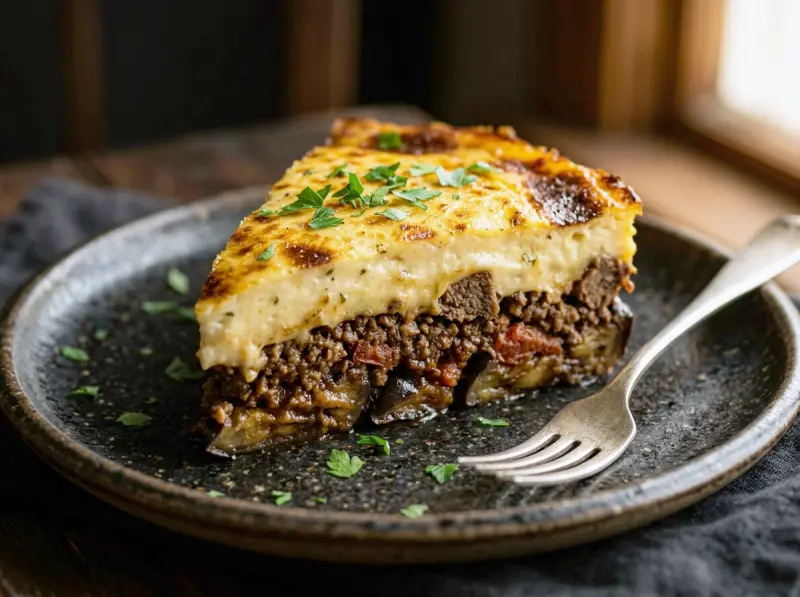
Moussaka
Three components built and assembled: roasted eggplant, cinnamon-spiced lamb sauce reduced until thick, and a Greek béchamel enriched with egg yolks that sets firm during baking so the slices hold. Moussaka in the form most people know — with that custard-like béchamel top — is an early-twentieth-century creation by chef Nikolaos Tselementes, who added a French béchamel to an older layered eggplant dish. The work is real but most of it is waiting: the sauce reducing, the eggplant roasting, the assembled dish baking and then resting. The rest time after baking is not optional.
Ingredients
- 2 large eggplants, cut into 1 cm rounds
- 2 medium potatoes, peeled and sliced 5 mm thin (optional)
- 500 gminced lamb, or half lamb half beef
- 1 large onion, finely chopped
- 3 garlic cloves, minced
- 150 mldry red wine
- 400 gcanned crushed tomatoes
- 1 tbsptomato paste
- 0.5 tspground cinnamon
- 2 cloves, whole
- 1 tspdried oregano
- 60 gunsalted butter, plus a little for the dish
- 60 gplain flour
- 700 mlwhole milk
- 2 egg yolks
- 0.5 tspfreshly grated nutmeg
- 50 ggraviera or parmesan, finely grated
- 6 tbspolive oil (3 tbsp for the eggplant, 1 tbsp for the potatoes, 2 tbsp for the sauce)
- to tastesalt
- to tastefreshly ground black pepper
Method
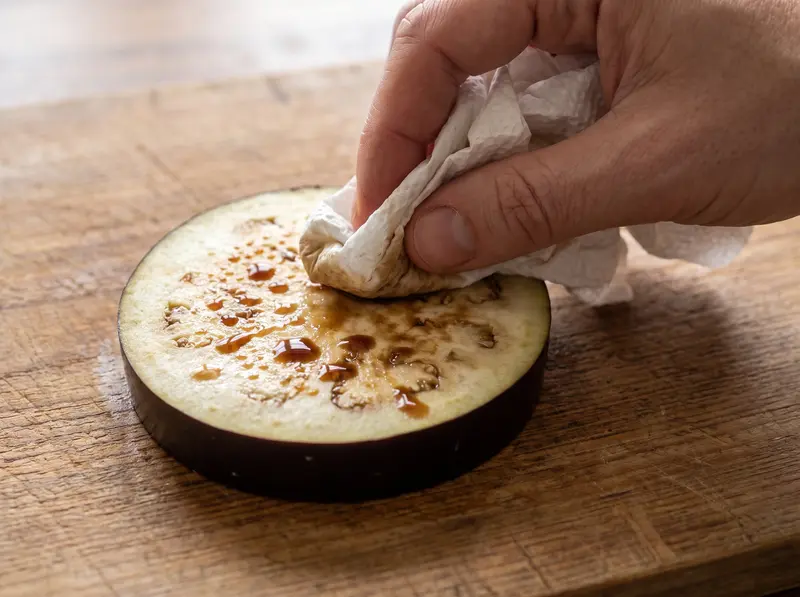
- Salt and roast the eggplant. Lay the eggplant rounds in a single layer, sprinkle both sides with salt, and leave for 30 minutes — brown liquid will appear on the surface. Pat each slice thoroughly dry with paper towels, pressing firmly. Brush both sides with 3 tablespoons of the olive oil and roast at 200°C for 20 to 25 minutes, flipping halfway, until golden and soft. Do not crowd the pan: crowded slices steam instead of roasting and turn soggy. If using potatoes, parboil the slices for 6 minutes, drain, toss with 1 tablespoon of the oil and roast on a second tray at 200°C for 10 to 15 minutes, until lightly golden.
- Make the meat sauce. Heat 2 tablespoons of the olive oil in a wide pan over medium-high heat. Brown the onion until golden, about 8 minutes. Add garlic and cook 1 minute. Add the minced meat and brown in batches if needed — do not steam it. When browned, add tomato paste and stir 2 minutes. Pour in the red wine and let it reduce by half. Add the crushed tomatoes, cinnamon, cloves, oregano, salt, and pepper. Simmer uncovered over low heat for 35 to 45 minutes until very thick — the sauce should hold its shape when pressed with a spoon, not pool. Remove the cloves. This thickness is essential: a wet sauce makes the whole dish collapse.
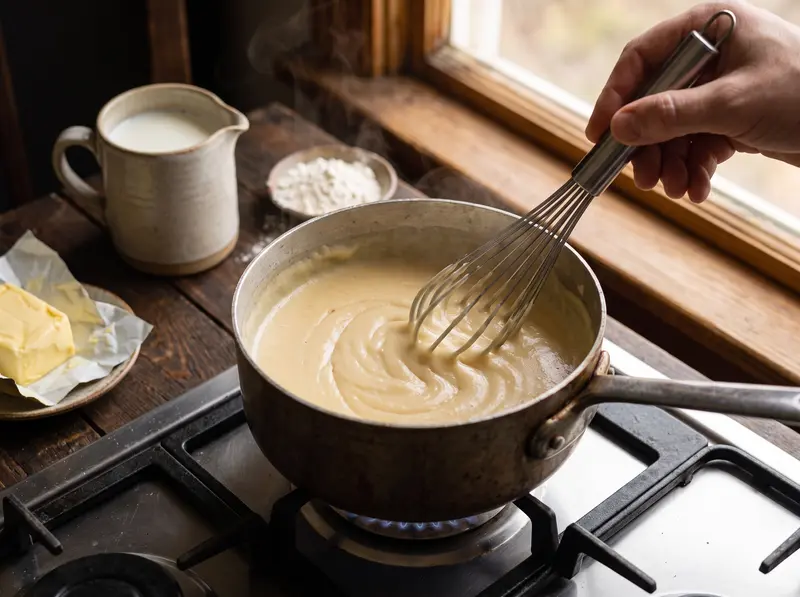
- Make the Greek béchamel. Warm the milk in a small pan until it steams, without letting it boil, and set it aside. Melt the butter in a second saucepan over medium heat. Add flour and whisk constantly for 90 seconds until the roux smells lightly toasted. Gradually pour in the warm milk, whisking continuously to prevent lumps. Cook over medium heat, whisking, until very thick — about 8 to 10 minutes. The béchamel should hold a mound on the whisk. Remove from heat. Beat the egg yolks lightly, then whisk them quickly into the hot béchamel — do this fast to prevent scrambling. Add nutmeg, half the grated cheese, salt, and pepper. The egg yolks are what makes Greek béchamel set like a custard rather than slide off.
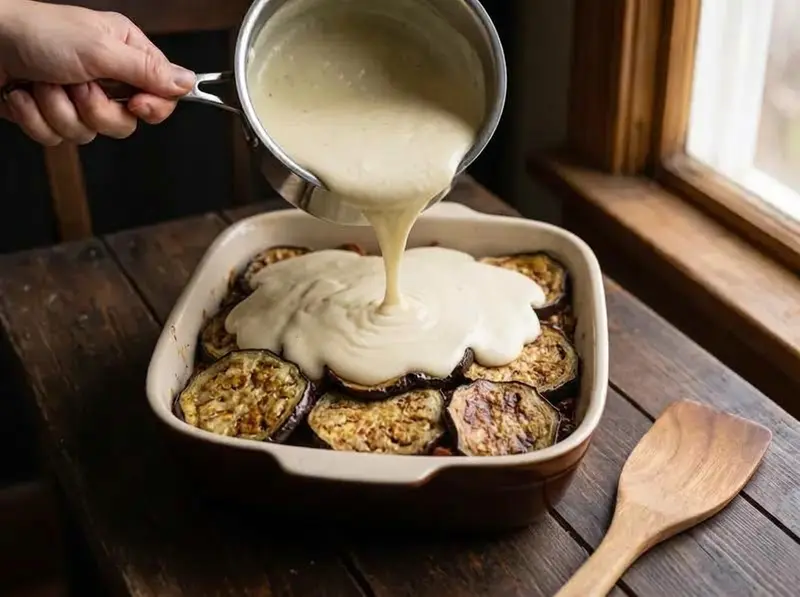
- Assemble. Butter a 20 × 30 cm baking dish at least 7 cm deep. Layer the potato slices on the bottom (if using). Add half the eggplant. Spread all the meat sauce evenly — press it flat. Add the remaining eggplant. Pour the béchamel over the top and smooth it with a spatula right to the edges. Sprinkle the remaining cheese. Turn the oven down to 180°C and bake for 45 to 50 minutes until the top is deep golden and the béchamel has set completely.
- Rest and serve. Remove from the oven and leave to rest at room temperature for at least 25 minutes before cutting. This is not optional — the layers need to set or the moussaka collapses when sliced. Cut with a sharp knife in a single decisive downward motion. Serve with a simple green salad and crusty bread.
FAQ
Watery moussaka almost always comes from one of three places: eggplant that wasn't dried properly after salting (it releases steam during baking), meat sauce that wasn't reduced enough (it pools between layers), or béchamel that was too thin (it runs when cut). All three are moisture problems. Salt the eggplant, pat thoroughly dry, roast not fry if possible. Simmer the meat sauce uncovered until it genuinely holds its shape — 35 to 45 minutes. Make the béchamel thick enough to hold a mound. Then the most important step: rest the baked moussaka at least 25 minutes before cutting. The layers need to set. Cutting too early is the single most common reason moussaka looks messy on the plate.
Salting draws out excess moisture from the eggplant and, in older varieties, helped reduce bitterness. Modern eggplants have largely had the bitterness bred out, so the main reason to salt now is moisture control: a well-dried eggplant roasts to golden and holds its structure in the dish, whereas an unsalted one releases water during baking and turns mushy. Minimum time: 20 to 30 minutes. After salting, pat each slice firmly dry with paper towels — the drying is the important part, not the salting itself. Technically skippable if your eggplants are very fresh and firm, but not recommended.
French béchamel is butter, flour, and milk — a loose sauce designed to coat. Greek béchamel for moussaka contains egg yolks, which transform it into something closer to a savory custard. The yolks add richness and, crucially, protein that sets firm in the oven rather than remaining liquid. This is what allows the béchamel layer to be cut cleanly and hold its shape on the plate. Without egg yolks, the topping remains soft and slides off when sliced. Nutmeg is also characteristic of the Greek version. The béchamel for moussaka is made deliberately thicker than a standard sauce — it needs to be thick before it goes on, not just after baking.
Lamb is the traditional choice and gives moussaka its characteristic slightly gamey, aromatic depth that works particularly well with cinnamon and cloves. Many Greek recipes use half lamb and half beef, which gives depth without the full intensity of pure lamb. Beef alone produces a milder, more accessible result and is now common in Greek home cooking. Either works. The key difference is that lamb fat has a stronger flavor that carries the warm spices differently — if you like cinnamon-forward dishes with some richness, lamb is better. If you prefer a cleaner, less assertive result, beef or the 50/50 mix is perfectly correct.
Moussaka is an exceptional make-ahead dish and actually improves over 24 hours as the flavors develop and the layers firm. Refrigerate the fully baked dish covered for up to 4 days. Reheat covered with foil at 160°C until hot all the way through — 74°C in the centre; portions heat much faster than the whole dish. Individual slices can be reheated in a microwave but the béchamel texture will soften. For freezing: bake and cool completely, then freeze in portions wrapped in foil for up to 3 months. Reheat from frozen at 180°C, covered, until hot in the centre (74°C), then uncovered for 10 minutes to restore the golden top.
Rate this
Recipes by email
One letter a week: a recipe picked for your taste, plus whatever is new on the site. Unsubscribe in one click.
Welcome gift: Sergei's cookbook (e-book).
By subscribing you agree to the privacy policy.
Tell us what you like to cook (30 seconds) →Keep browsing
More dishes from the Greek archive — picked by overlap with what you're cooking now.

Join the conversation
Comments (2)
I have made moussaka probably fifty times and the single biggest improvement was switching from frying the eggplant to roasting it. Brush slices with olive oil, salt them, roast at 220°C until golden. They absorb about a third of the oil compared to frying, and the assembled dish is less greasy without losing any flavour. The bechamel needs to be thick — almost like a custard. If it pours easily, it is too thin.
Мусака хорошая, но времени уходит немеряно. Три часа у плиты это не "простой рецепт". Баклажаны я не жарю а запекаю на противне — меньше масла и не так воняет на кухне. Бешамель делаю погуще чем написано, иначе течёт при разрезании. В целом результат стоит усилий, жена оценила.