
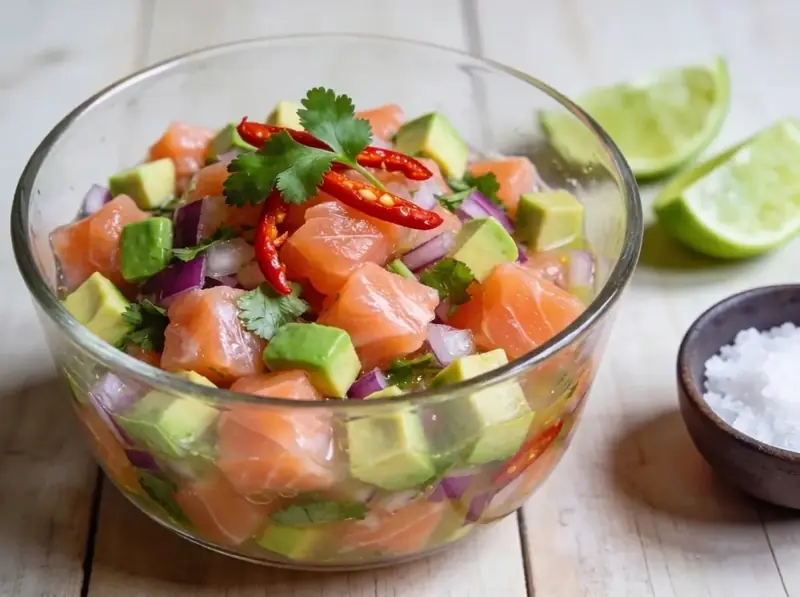
Salmon Ceviche
Salmon ceviche is raw salmon ‘cooked’ in lime juice, tossed with red onion, chili and cilantro until the fish turns opaque and firm. It's a salmon spin on Peruvian ceviche, which traditionally uses white fish, with avocado folded in the way many Mexican-style ceviches do.
Ingredients
- 400 gfresh salmon
- 2 avocados
- 1/2 red onion
- 2 limes, juice
- 40 mllemon juice (about 1 lemon)
- 1/2 bunchfresh cilantro
- 1 chili pepper
- 1 tspfine sea salt (adjust to taste), plus freshly ground black pepper
- 2 tbspolive oil
Method
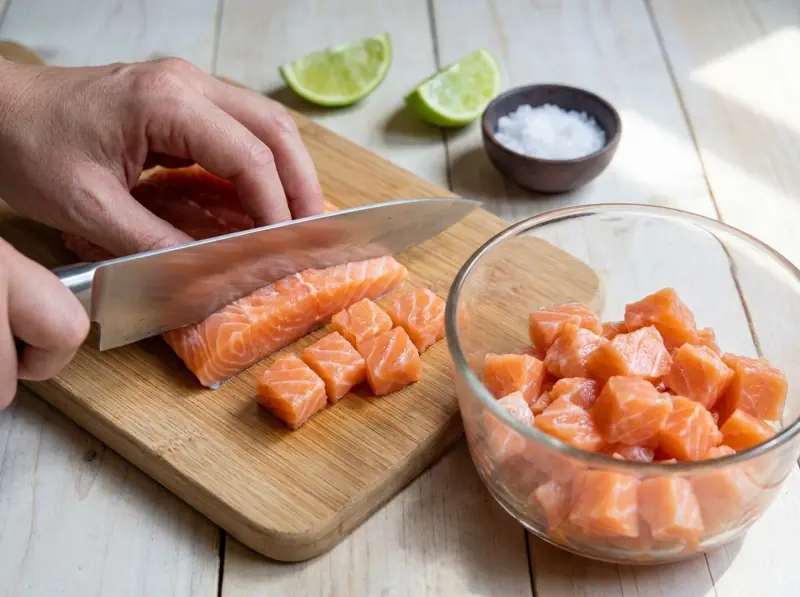
- Raw salmon for ceviche must be previously frozen at −20°C (−4°F) for at least 24 hours, or bought labeled for raw consumption or sushi grade, to kill parasites. Clean it from bones and skin, then dice into 1.5 cm cubes. Dice the avocado the same way and thinly slice the red onion.
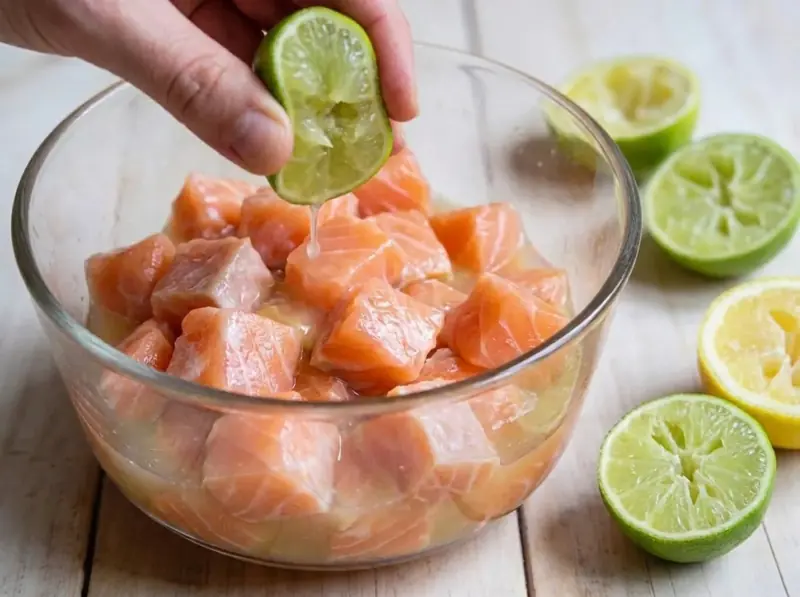
- In a bowl, combine the lime and lemon juice. Add the diced salmon and mix well. Marinate in the refrigerator for 15-20 minutes.
- Combine the marinated salmon, avocado, red onion, cilantro, and the chili pepper (seeded and very finely chopped) in a large bowl.
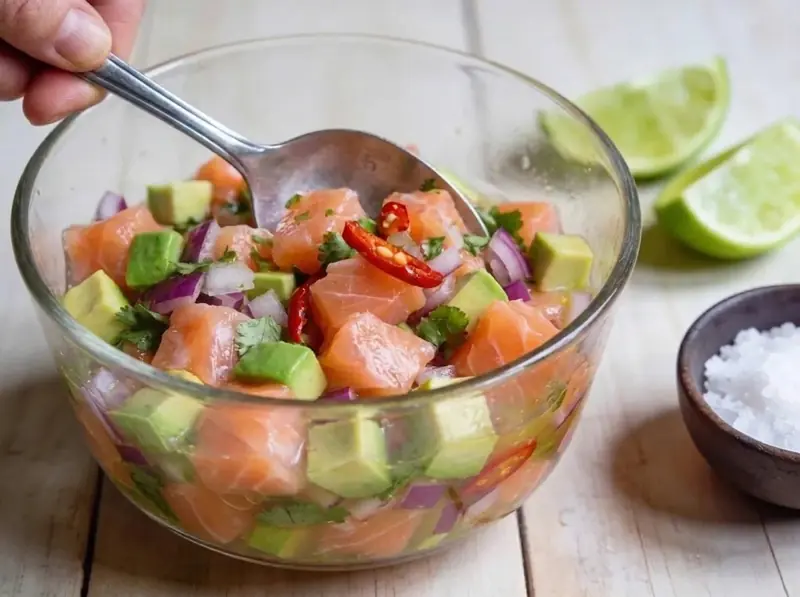
- Add the olive oil, salt, and pepper to taste. Gently mix to avoid mashing the avocado.
- Arrange on a serving plate, garnish with lime wedges and fresh herbs. Serve immediately.
FAQ
Ceviche is a Peruvian dish of raw fish 'cooked' in citrus acid. Acid denatures proteins (fish turns white and firms up) but does not destroy bacteria and parasites as reliably as heat. The risk is manageable: use very fresh fish from a trusted supplier or previously frozen fish (freezing kills parasites). Pregnant women and immunocompromised people should avoid it.
Freezing at −20°C for at least 24 hours kills most parasites including Anisakis — a nematode found in salmon. Sashimi-grade fresh salmon is safer but can still carry parasites. In Peru only wild ocean fish with verified sourcing is used. For home cooking, previously frozen salmon from a reputable store is the safest choice.
For 'classic' firm ceviche — 15–20 minutes in lime juice is enough for the fish to turn white on the outside. For 'leche de tigre' style — only 2–3 minutes: fish stays almost raw inside, the traditional Peruvian way. If left for 1–2 hours the fish becomes rubbery and 'acid-burned', losing its tenderness. Rule: marinate at the last moment and serve immediately.
Peruvian ceviche marinates in pure lime juice (leche de tigre), fish is diced, served with choclo corn, sweet potato and aji amarillo pepper. Mexican is more 'salad-like': fish is finely chopped or minced, lots of tomato, avocado, sometimes tomato juice. Peruvian is austere and sharp, Mexican is rich and filling. Both are delicious but fundamentally different dishes with different philosophies.
Yes — and it is actually preferable from a safety standpoint (frozen kills parasites). Key: thaw slowly in the fridge, not in water — this preserves texture. After thawing the fish should smell fresh and oceanic, not of ammonia. Atlantic salmon, pink salmon (firmer) or chum salmon all work well. Important: never use smoked or salted salmon.
Rate this
Recipes by email
One letter a week: a recipe picked for your taste, plus whatever is new on the site. Unsubscribe in one click.
Welcome gift: Sergei's cookbook (e-book).
By subscribing you agree to the privacy policy.
Tell us what you like to cook (30 seconds) →Keep browsing
More dishes from the Peruvian archive — picked by overlap with what you're cooking now.
Join the conversation
Comments (2)
Севиче — это не маринованная рыба из вчерашних остатков. Рыба должна быть такого качества, чтобы её можно было есть сырой. Если от лосося пахнет рыбой — не делайте севиче, сделайте котлеты. И лимонный сок работает быстро: 15-20 минут максимум, иначе текстура станет резиновой.
Presentation is half the battle with salmon ceviche. I serve it on a wooden board rather than a plate — it's more inviting and signals to people that they should reach in and help themselves.