


Pancakes with Caviar
Blini with caviar are a Russian festive appetizer: thin wheat pancakes brushed with butter and served warm with salmon or sturgeon caviar and sour cream. The batter here is a scalded one: eggs, milk and flour are whisked to a paste and then loosened with boiling water, which makes the blini soft and easy to fold. The batter rests for 15–20 minutes before frying. They belong to Maslenitsa, the week before Lent.
Ingredients
- 240 mlmilk
- 240 mlboiling water
- 2 eggs
- 160 gflour
- 1 tbspsugar
- 1 pinchsalt
- 2 tbspmelted butter (1 tbsp for the batter, 1 tbsp for brushing)
- 100 gred or black caviar
- as neededvegetable oil, for greasing the pan
- to servesour cream
Method
- In a large bowl, whisk the eggs with the sugar and salt. Mix in half of the milk (120 ml), then sift in all 160 g of flour. Whisk into a thick, smooth paste: lumps are easy to break up now and hard to get rid of once the batter is thin.
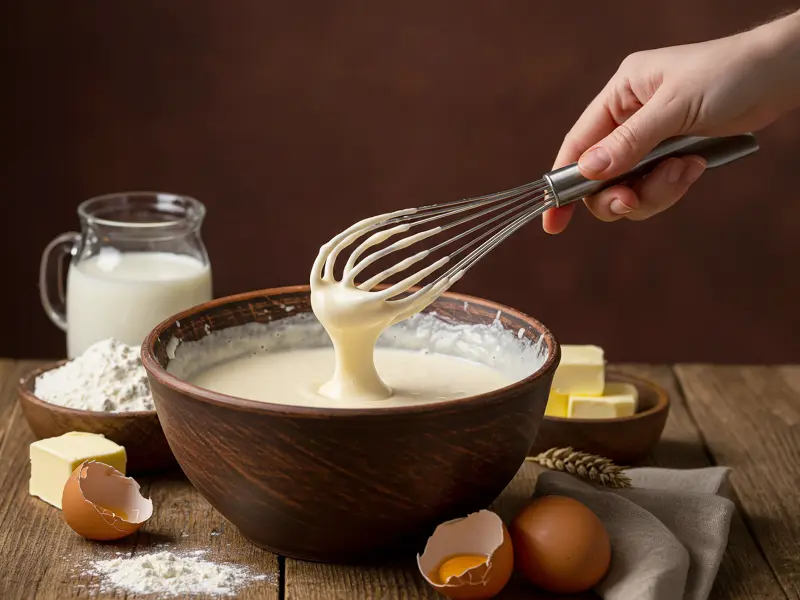
- Bring 240 ml of water to a full boil. Whisking constantly, pour it into the paste in a thin stream until the batter is smooth and silky.
- Stir in the remaining 120 ml of milk and 1 tablespoon of the melted butter. Let the batter rest for 15–20 minutes; it should pour like thin cream.
- Heat a 24 cm skillet over medium heat for 2–3 minutes and wipe it with a little oil on a folded paper towel. Pour in a small ladle of batter (about 60 ml), then tilt and swirl the pan so the batter covers the base in a thin layer. Cook for about 1 minute per side until golden: flip when the edges brown and the surface turns matte.

- Stack the finished blini on a plate, brushing each one thinly with the remaining tablespoon of melted butter. Serve warm, topped with red or black caviar and a spoonful of sour cream.
Cooked it? Rate the recipe
FAQ
The first one usually goes wrong because the pan is not evenly hot yet and the oil sits in patches. Give the skillet 2–3 minutes over medium heat before the first ladle, and wipe the oil on with a folded paper towel instead of pouring it. If the first blin is pale and rubbery, the pan is too cool; if the batter sets before you finish swirling, it is too hot. Russians have a proverb for it: the first blin is always a lump.
Blini tear when they are flipped too early, when the pan is too cool, or when the batter is too thin to hold together. Wait until the edges brown and the surface turns matte, then slide a thin spatula under the edge and turn the blin in one motion. In this recipe 240 ml of boiling water goes into the egg and flour paste; it scalds the flour, and the blini come out soft and elastic enough to fold without cracking. If they still tear, whisk 1 tablespoon of flour into the batter.
Red caviar is salmon roe (chum, pink salmon, sockeye): large orange eggs that pop, salty with a slight bitterness. Black caviar is sturgeon roe: smaller, softer grains with a buttery, nutty taste and a far higher price. Salmon roe began to reach shops in Moscow and St Petersburg only around 1899 and caught on in the 1900s, at a fraction of the price of sturgeon caviar. Today it is the one most families buy for Maslenitsa, and both kinds are served the same way, about a teaspoon per blin.
Thinly sliced lightly salted or smoked salmon or trout with sour cream is the closest substitute. Tobiko or capelin roe (masago) keeps the pop of the eggs at a lower price. The same blini are also wrapped around a savory filling, as in Russian meat blini. Whatever you choose, keep the pattern: a warm buttered blin, something salty, sour cream.
Stack the blini as they come off the pan, each brushed with butter, and cover the stack with an upturned bowl or foil while you cook the rest. Made ahead, they keep wrapped in the fridge for up to 3 days; reheat them in a dry skillet over low heat for a few seconds per side. Add the caviar only at the table, because on a hot blin it warms through and loses its pop, and put the open jar back in the fridge within 2 hours. The plain version without caviar is here: thin Russian blini.
Keep browsing
More dishes from the Russian archive — picked by overlap with what you're cooking now.








Recipes by email
One letter a week: a recipe picked for your taste, plus whatever is new on the site. You can stop the letters in one click.
Welcome gift: Sergei's cookbook (e-book).
By signing up for the newsletter you agree to the privacy policy.
Tell us what you like to cook (30 seconds) →
Join the conversation
Comments
No comments yet — be the first!