
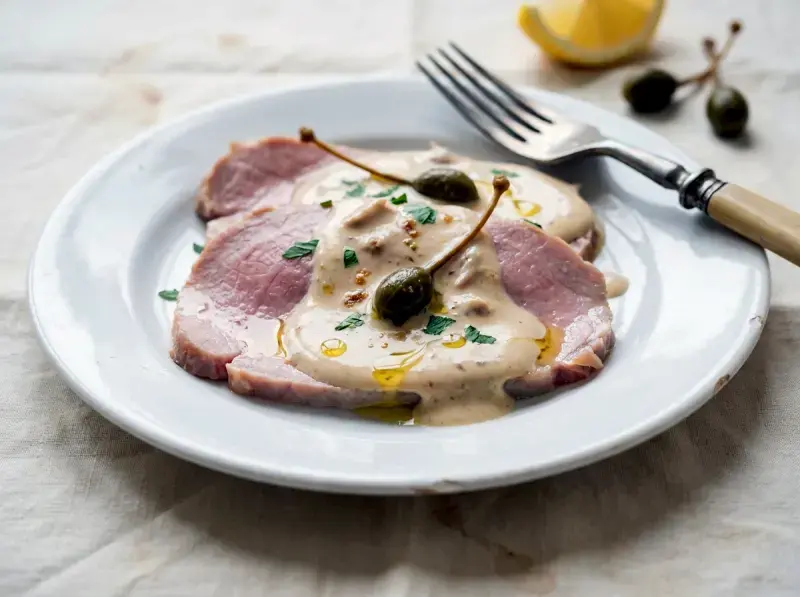
Italian Salsa Tonnata (Piedmontese Tuna Sauce, Pellegrino Artusi 1891)
Salsa tonnata is the Piedmontese emulsion sauce of canned tuna, anchovies, capers, hard-boiled egg yolks, olive oil, and lemon juice — a creamy savory cream that defines the iconic vitello tonnato (cold sliced veal under tuna sauce). Origins go to 18th-19th century Piedmont as a way to use leftover meat; the modern form was codified by Pellegrino Artusi in his 1891 cookbook 'La scienza in cucina e l'arte di mangiar bene', where he added tuna and capers to an older anchovy-oil base. Before Artusi the dish was known as vitel tonné, sometimes mistakenly attributed to French origins via Savoy linguistic mix. By the 1980s vitello tonnato became a must-have on Italian restaurant menus. This classic Artusi version uses hard-boiled yolks rather than raw — safer and historically authentic. Beyond veal: tomato tonnato, egg tonnato, pasta salad, sandwiches, vegetable dressing. Active 20 minutes plus 1-2 hours rest. Yields about 350 ml, serves 8 as a sauce or dip.
Ingredients
- 200 gcanned tuna in oil
- 4 anchovy fillets
- 2 tbspcapers
- 2 hard-boiled egg yolks
- 100 mlextra virgin olive oil
- 1 tbsplemon juice
- 1 pinchsalt
Method
- Hard-boil the eggs (in parallel). Cover 2 eggs with cold water by 2 cm in a small saucepan, bring to a boil, then reduce to a gentle simmer for 10 minutes — fully hard-boiled, with a pale yellow yolk that crumbles dry, exactly what's needed for emulsion. Cool under running cold water for 2 minutes to stop the cooking. Peel and separate the yolks; reserve the whites for another use (egg salad, garnish). The yolks act as emulsifier and add body without the salmonella risk of raw yolks.
- Drain the tuna. Open a 200 g can of quality Italian or Spanish tuna in olive oil — Ortiz Cantabrian, Callipo, Tonnino, or Maruzzella. Drain off most of the oil but reserve 1-2 tablespoons of the rich tuna oil for extra umami in the final sauce. Tip the drained tuna into the food processor bowl. Quality matters: do not substitute supermarket chunk light in water — the result will be flat and fibrous. The drained weight should be about 180 g.
- Prep anchovies and capers. If using salt-packed anchovies (preferred — Cetara, Recca): rinse 4 fillets briefly under cold water for 30 seconds, then soak in cold water for 5 minutes to soften, lift out the central spine with a finger. If using oil-packed: pat dry with paper towel, no further prep. For capers: if salt-packed (Pantelleria), rinse 2 tablespoons under water for 30 seconds and soak for 10 minutes; if brined, drain and rinse briefly. Salt-packed give the deepest flavour but oil-packed and brined work well too.
- Combine in food processor. Add the drained tuna, prepared anchovies, drained capers, the 2 hard-boiled egg yolks, 1 tablespoon of fresh lemon juice, and the reserved 1-2 tablespoons of tuna oil to a food processor or high-powered blender. Pulse 5-6 times for 2-3 seconds each to break everything down before continuous blending — this prevents motor strain and uneven texture.
- Blend with olive oil drizzle. With the motor running on low speed, slowly drizzle in 100 ml of delicate extra virgin olive oil through the feed tube in a thin stream — like making mayonnaise. The slow drizzle is critical: dumping all the oil at once will not emulsify properly. Use a mild Ligurian or Spanish Arbequina, NOT peppery Sicilian or Tuscan — aggressive polyphenols oxidize during high-speed blending and turn the sauce bitter. Total blending time: 30-60 seconds maximum, until smooth and creamy.
- Check texture and adjust. The finished sauce should be thick and creamy like mayonnaise, pourable but holding shape on a spoon. Too thick: add 1-2 tablespoons of cold water (or veal poaching liquid if making vitello tonnato) and pulse briefly. Too thin: add more drained tuna and pulse. Taste — salt is rarely needed (anchovies and capers provide salinity), but add a pinch if flat. A touch more lemon juice can brighten if too rich.
- Rest in the fridge. Transfer to a glass jar or covered bowl and refrigerate for at least 1-2 hours before serving — flavours integrate, texture sets, the sauce thickens slightly. Best after 12-24 hours when 'aged taste' develops fully. Cover the surface with a thin film of olive oil to prevent oxidation if storing more than a day.
- Serve chilled. Present salsa tonnata cold, never at room temperature — chill defines the proper silky texture. Spoon over thinly-sliced cold roasted veal for classic vitello tonnato; over halved hard-boiled eggs for egg tonnato; over thick tomato slices for tomato tonnato; over blanched asparagus or roasted vegetables; spread on focaccia or crostini; in tramezzini sandwiches with lettuce. Garnish with extra capers and chopped parsley. Pair with white wine — Arneis, Gavi di Gavi, Vermentino, or Pinot Grigio.
FAQ
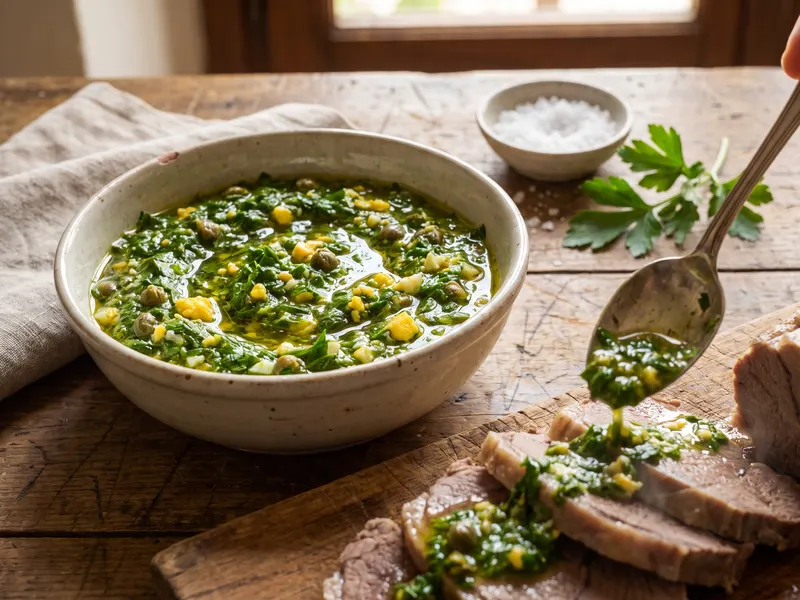
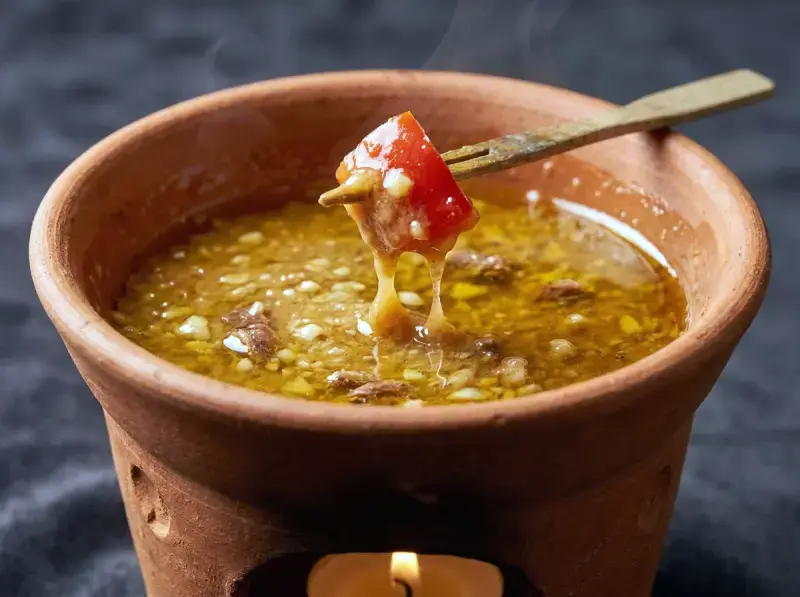
Salsa tonnata ('tuna sauce' in Italian) is a Piedmontese emulsion sauce of canned tuna, anchovies, capers, hard-boiled egg yolks, olive oil, and lemon juice. Origins are Piedmont in the 18th-19th centuries, originally a way to use leftover meat. The modern form was codified by Pellegrino Artusi in his culinary classic 'La scienza in cucina e l'arte di mangiar bene' (1891) — Artusi added tuna and capers to an older anchovy-oil base. Before Artusi the dish was known as vitel tonné (from Piedmontese dialect, sometimes mistakenly considered French due to Savoy lingo) and was paired with a simple anchovy-oil sauce. Salsa tonnata is the main component of vitello tonnato (cold sliced veal under tuna sauce), a classic of Piedmontese restaurants and the par excellence summer antipasto. By the 1980s vitello tonnato became a must-have on Italian restaurant menus across Italy and abroad. Although salsa tonnata was originally a sauce for veal, today it's used as a universal condiment: on sandwiches, as a dip for vegetables, with roasted chicken or turkey (vitel di tacchino tonnato), with hard-boiled eggs, with tomatoes (tomato tonnato), as pasta sauce for cold pasta salad, as dressing for green salads (tuna Caesar style). The peculiarity of Piedmontese cuisine is that the landlocked region built a culture around cured fish — anchovies from Liguria and canned tuna delivered through the Strada Salis (salt road) from the coast. Tonnata, alongside bagna cauda and bagnet verd, is a symbol of this fish-oil culture without sea.
Tuna is 90% of salsa tonnata's success, and the quality of the can determines the result. The ideal is Italian or Spanish tuna in olive oil at premium grade: Ortiz (Cantabria), Callipo (Calabria), Tonnino (Italy), Galfrè or Maruzzella — they cost €5-12 per 100 g, but you use 200 g per batch. This is ventresca (belly) or premium belly cut, the flesh is bright, dense, light pink, in pure olive oil without additives. What to look for on the label: only tuna + olive oil (extra virgin or regular) + salt. Nothing of rapeseed, sunflower, water, vegetable broth, soy. What to avoid: tuna in water — bland, tough, makes the sauce dry; chunk light supermarket — low-quality press, fibrous texture; tuna with tomatoes/marinade — extraneous flavors. If only supermarket is available — better an Italian discount brand than water-pack. Volume: 200 g of drained tuna in oil (1 large 250 g net can = ~180 g drained; aim for 10% more). Whether to drain the can oil: partially — keep 1-2 tablespoons of fragrant 'tuna oil' from the can and add to the final olive oil for extra umami; drain the rest so the sauce isn't too thin. Olive oil for the sauce: should be delicate / mild extra virgin — not aggressive peppery Sicilian or Tuscan, but mild Ligurian or fruity Spanish (Arbequina). Peppery oil overwhelms the subtle tuna umami and makes the sauce bitter after blending (peppery polyphenols oxidize when whipped). 100 ml is enough for the batch — more makes the sauce too thin. Fresh tuna substitutes: do not try salsa tonnata with fresh seared tuna — the texture is wrong, it doesn't emulsify. Only canned/jarred. Vegan substitute: white cannellini beans + nori powder + caper brine — close umami profile, not authentic but works.
There are three main schools of salsa tonnata, each giving a different result. (1) Artusi 1891 classic (hard-boiled yolks) — the original Pellegrino Artusi recipe from 'La scienza in cucina': 2 hard-boiled egg yolks + tuna + anchovies + capers + olive oil + lemon, all in blender. The yolks provide emulsion and body, similar to mayonnaise but without the raw egg risk. Texture: dijonnaise-like, slightly granular, more rustic. Safest for families with kids, pregnant women, the elderly. This is the authentic version — recommended for home execution. (2) Modern raw-yolk mayo-style (Great Italian Chefs Luca Marchiori, many restaurant chefs) — 2 raw egg yolks + slow drizzle oil = true emulsion-based sauce (like hollandaise/aioli). Texture is silkier, more silky, more restaurant-like. Flavor brighter, tuna more transparent. Cons: salmonella risk with low-quality eggs; for safety use pasteurized or shell-treated eggs. (3) Mayo-shortcut (La Cucina Italiana modern) — purchased ready-made mayonnaise + tuna + anchovies + capers — blender. Quick (5 minutes), convenient for banquet. Cons: loses delicate olive oil flavor, mass-produced mayo often on soybean/canola oil — drifts industrial. (4) Egg-free version (Mediterranean Dish, dietary preference) — more tuna + more olive oil, no eggs. Emulsion is weak, texture rough/grainy, but healthy. Cons: not real salsa tonnata, more like a tuna-anchovy spread. Which to choose: for authenticity and safety — Artusi classic with hard-boiled yolks (my recommendation). For restaurant-style elegance — raw yolks with pasteurized eggs. For last-minute / large batch — mayo-shortcut with premium mayo. For dietary needs — egg-free with extra tuna. How to make raw yolks safer: buy pasteurized eggs (available in US/EU); or quickly warm the yolks in a double-boiler to 60°C (3 minutes) before blending — yolk structure stays liquid but pathogens killed. This compromise between classic and risk reduction.
Salsa tonnata is one of the most versatile Italian sauces, going far beyond its native veal pairing. The classic pair is vitello tonnato: thinly-sliced cold poached veal under a layer of salsa tonnata, garnished with capers and parsley. Best cuts: round (eye of round, magatello), shoulder, leg. Cooked in aromatic broth with carrots, onions, celery, peppercorns 35-45 minutes for 800 g, cooled overnight, sliced very thinly (2-3 mm). Veal alternatives: vitel di tacchino tonnato (turkey breast — most affordable substitute), vitel di pollo tonnato (chicken breast or bone-in thighs), arrosto di maiale tonnato (roast pork loin), reverse-seared lamb leg. Many Italian grandmothers make tacchino tonnato in August — veal is expensive, turkey works. Modern uses: (1) Tomato tonnato — summer classic dish: thick slices of ripe tomatoes, slate of salsa tonnata on top, sprinkled with capers and basil. Ideal aperitivo. (2) Egg tonnato — hard-boiled eggs halved, spoon of salsa tonnata + caper + parsley. Like deviled eggs but Italian. (3) Pasta salad — cold cooked pasta (penne, fusilli) + salsa tonnata + cherry tomatoes + arugula + olives. Summer cool meal. (4) Sandwiches & tramezzini — Venetian classic: bread + salsa tonnata + lettuce + capers + olives + ham. (5) Crostini & focaccia spread — toasted bread + salsa tonnata + parsley → instant aperitivo. (6) Grilled or roasted vegetables — asparagus, zucchini, bell peppers, blanched green beans, baby potatoes, dressed with thinned salsa tonnata. (7) Caesar-style dressing — diluted salsa tonnata as alternative dressing for caesar salad (replace anchovy-mayo base). (8) Burger sauce — on slider buns as elevated condiment. (9) Stuffed peppers — raw or roasted bell peppers stuffed with salsa tonnata. (10) Salade niçoise — thinned salsa tonnata instead of vinaigrette. What does not work: very spicy dishes (tuna umami clashes with chili), Asian cuisine (profile doesn't match), sweet, raw seafood (tuna-on-tuna). Service: chilled (not room temperature) after 1-2 hours rest in fridge — flavors integrate, texture sets. Wine: dry whites — Arneis, Gavi di Gavi, Vermentino, Pinot Grigio, Chablis, Albariño. Avoid heavy reds, oaky chardonnay (overpowers).
Salsa tonnata keeps best in the fridge in an airtight glass container for 3-4 days, the surface covered with a thin film of olive oil (oxidation protection). Due to the presence of egg yolks and tuna — risk products — don't exceed this period. The colour may darken slightly over time (oxidation), the flavour develops and becomes deeper after 12-24 hours of resting in the fridge — this is normal and desirable for aged taste. The texture becomes thicker during refrigerator storage (oil slightly sets), before serving you may need to lightly whisk with a fork or add 1-2 teaspoons of water to restore pourable consistency. Freezing is not recommended — the sauce splits when frozen/thawed, the emulsion breaks due to: 1) egg yolks (texture crumbles when frozen); 2) olive oil-water emulsion (water crystals destroy bonds); 3) tuna fibers (become cottony). If absolute necessity to freeze — up to 1 month, but texture will be grainy, use only in blended applications (pasta sauce, dressing). Mayo-shortcut version freezes slightly better (industrial mayo more stable), but still not ideal. Restaurant trick: make salsa tonnata 24 hours before serving and keep in the fridge — flavours peak. Ideal for make-ahead for dinner parties. Spoilage signs: sour/fermented smell (not just briny), slimy texture, mucous surface, off-color (gray-green), bitter aftertaste — discard. Raw yolk safety (if used raw-yolk version): keep maximum 24-48 hours; for pasteurized eggs — standard 3-4 days. Never leave at room temperature >2 hours (egg-tuna combo perfect environment for bacteria growth). Vitello tonnato together: if prepared with veal, can't store together; keep meat and sauce separately, assemble at serving — soak affects the texture of both. Mass-prep batch: tripling the recipe (600 g tuna) is problematic — blender may struggle, do double max (400 g tuna) or work in batches. Vegan version (bean-based) keeps longer (5-6 days) due to absence of eggs/fish.
Rate this
Recipes by email
One letter a week: a recipe picked for your taste, plus whatever is new on the site. Unsubscribe in one click.
Welcome gift: Sergei's cookbook (e-book).
By subscribing you agree to the privacy policy.
Tell us what you like to cook (30 seconds) →Keep browsing
More dishes from the Italian archive — picked by overlap with what you're cooking now.
Join the conversation
Comments
No comments yet — be the first!