Skip to content
GetCookMatch
⌘K
Ingredient

Pecorino romano Recipes

4 recipes with pecorino romano for weeknights, meal prep, and quick ingredient searches. Choose by time, cuisine, and what is in your kitchen.

4 recipes

Spaghetti Carbonara with eggs, pancetta and parmesan — Italy recipe
🇮🇹ItalyEasy
Cereal and Pasta Dishes

Spaghetti Carbonara

Hot pasta tossed with crisp guanciale, raw egg yolks, and Pecorino Romano — the residual heat creates a silky, golden sauce without any cream. Timing is everything: too slow and you get scrambled eggs, too fast and it stays raw.

23 min850 kcal2 serves
⚡Quick💪High protein
Cacio e Pepe with spaghetti, Pecorino Romano and black peppercorns — Italy recipe
🇮🇹ItalyEasy
Cereal and Pasta Dishes

Cacio e Pepe

Three ingredients: pasta, Pecorino Romano, black pepper. No butter. No cream. No olive oil. The sauce is a natural emulsion of finely grated cheese and starchy pasta water — the starch prevents the cheese proteins from clumping and turning the whole thing into a grainy mess. Cacio e Pepe originated with the shepherds of Lazio, who carried dried pasta, hard cheese, and pepper because they lasted for weeks without refrigeration. It became a Roman trattoria staple, and now it is one of the most searched pasta recipes in the world. Its difficulty is entirely about temperature control and starch: get those two right and it takes fifteen minutes.

20 min520 kcal2 serves
🌿Vegetarian⚡Quick
Pasta all'Amatriciana with bucatini or spaghetti, guanciale and tomatoes — Italy recipe
🇮🇹ItalyMedium
Cereal and Pasta Dishes

Pasta all'Amatriciana

Pasta all'Amatriciana is one of the four classic Roman pastas, and the only one with a tomato sauce. Bucatini or spaghetti with guanciale, San Marzano tomatoes, a touch of chilli, and Pecorino Romano. The dish comes from Amatrice, a mountain town on the Monti della Laga (part of Abruzzo until 1927, now Lazio). Transhumant shepherds carried it through the Roman countryside, and in the 19th century emigrants from Amatrice who ran inns and food shops in Rome made it a Roman staple. The white version without tomatoes, Pasta alla Gricia, is the older dish. The key is in the guanciale: cured pork cheek with a higher fat content than pancetta, it renders into the pan and flavors the tomato sauce with a deep, porky richness that no substitute fully replicates. The rules here are strict — no garlic, no onion, no herbs — because the dish doesn't need them.

35 min700 kcal4 serves
🌶️Spicy
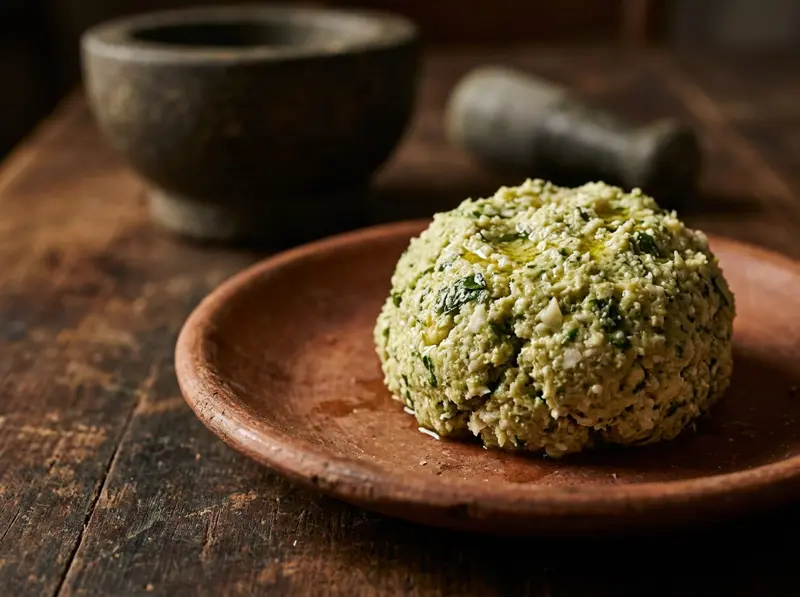
Moretum (Ancient Roman Garlic and Cheese Spread) with pecorino romano, garlic and celery — Italy recipe
🇮🇹ItalyEasy
Sauces and Dips

Moretum (Ancient Roman Garlic and Cheese Spread)

Moretum is an ancient Roman spread of salted cheese, garlic and fresh herbs, pounded together in a mortar with olive oil and a little vinegar and eaten with bread. The word is spelled the same way in German and Italian, Моретум in Russian and モレトゥム in Japanese. The best-known account is a Latin poem called Moretum, which is attributed to Virgil, although nobody is sure who wrote it. In the poem a poor farmer gets up before dawn, bakes his bread, pulls four heads of garlic from his garden and pounds them with salt, a cheese gone hard from the salt, and the herbs he picked: apium (celery or parsley, translators disagree; we use celery leaves), rue and coriander. The poem gives no weights at all, so the quantities here are a modern reconstruction. Pecorino romano stands in for the Roman cheese, and arugula (rocket) takes the place of rue, which is hard to buy. It takes about 30 minutes, all of it hands-on.

30 min160 kcal6 serves
🌿Vegetarian🌾Gluten-free🥑Keto
Ingredients

Goes well with

Other ingredients that appear most often alongside pecorino romano across the archive. Pick one to drill deeper.