


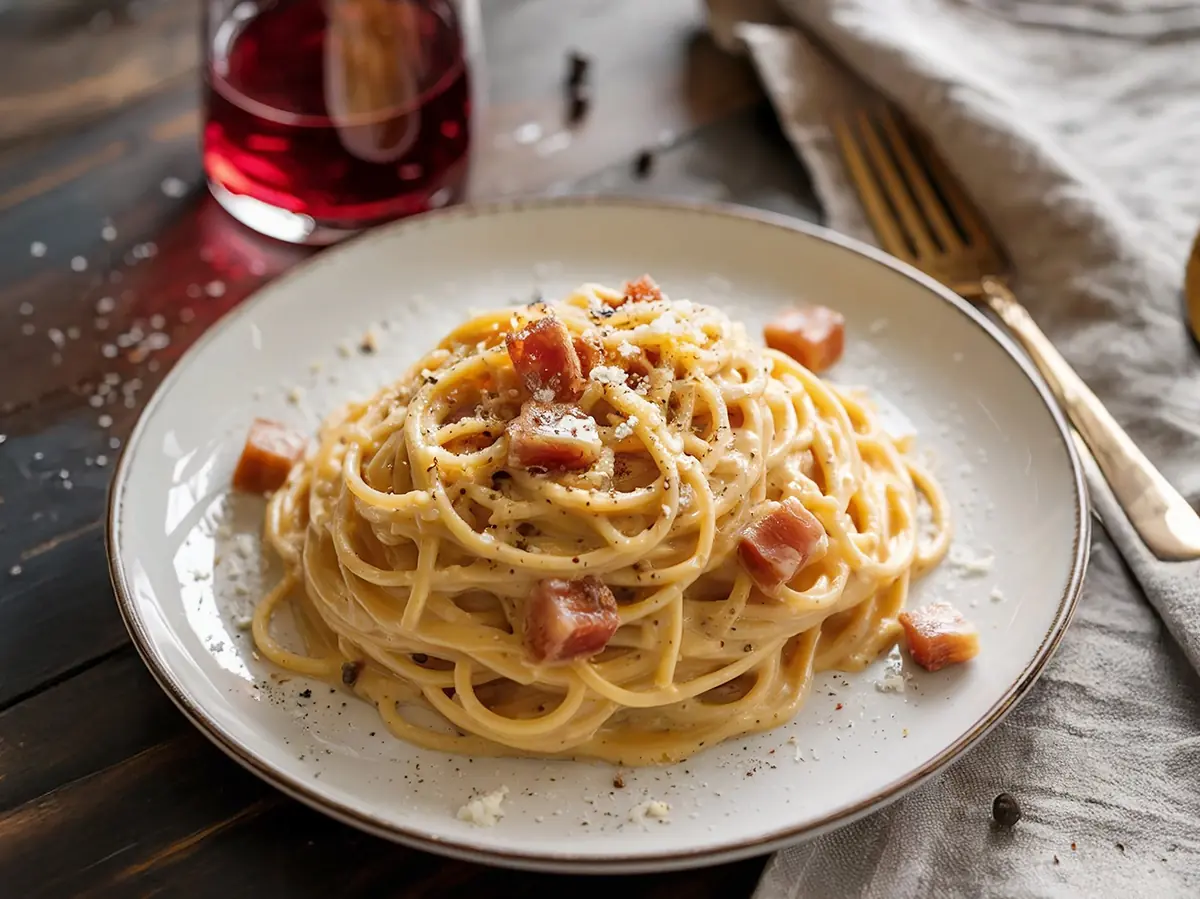
Spaghetti Carbonara
Spaghetti carbonara is the Roman pasta of guanciale, eggs, Pecorino Romano, and black pepper, with no cream. Here hot spaghetti is tossed with crisp guanciale, whole eggs, Pecorino Romano, and Parmesan, and the heat of the pasta turns them into a silky, golden sauce. Timing is everything: too slow and you get scrambled eggs, too fast and it stays raw.
Ingredients
- 450 gspaghetti
- 200 gguanciale or pancetta
- 4 largeeggs
- 50 gpecorino Romano
- 20 gparmesan
- generous amountfreshly ground black pepper
- to tastesalt
Method
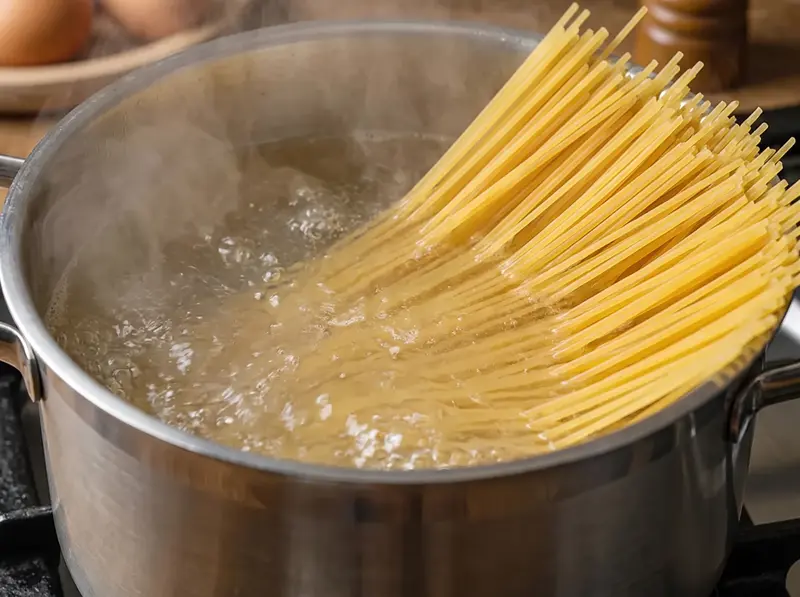
- Boil spaghetti in salted water until al dente according to package directions. Save 1 cup (250 ml) of the pasta water before draining.
- While the pasta is boiling, dice the guanciale or pancetta. Fry over medium-low heat until golden and crisp, about 5–7 minutes.
- In a large bowl, whisk eggs. Finely grate both cheeses and add them with a generous portion of freshly ground black pepper. Stir to combine.
- When the pasta is ready, drain, leaving some moisture on the spaghetti. Quickly transfer the hot pasta to the bowl with the egg mixture, stirring constantly.
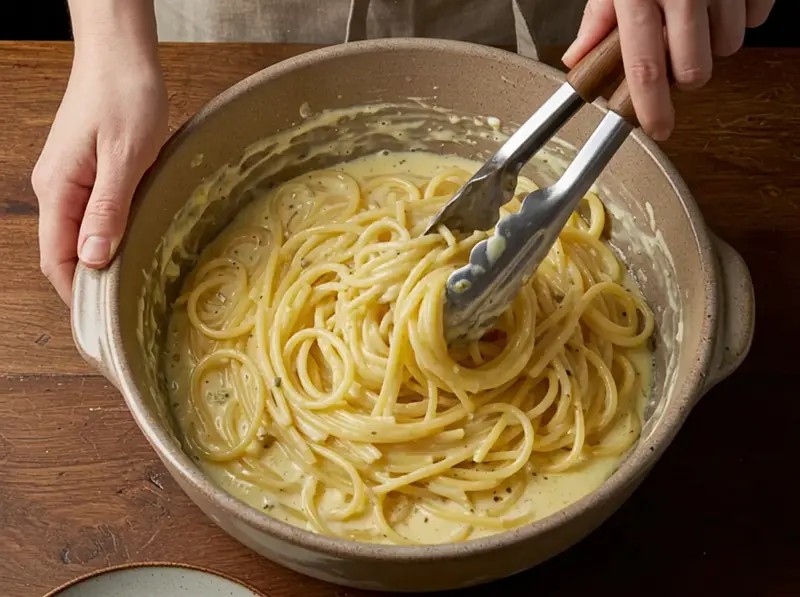
- Add the crispy guanciale/pancetta along with the rendered fat and continue stirring until the eggs form a creamy sauce. If necessary, add a little of the saved pasta water to achieve the desired consistency. The eggs are only gently set by the heat of the pasta, not fully cooked. For pregnant women, young children, older people, or anyone with a weakened immune system, use pasteurized eggs.
Cooked it? Rate the recipe
FAQ
The eggs scramble when the pasta is too hot or the sauce sits over heat. Toss the drained pasta with the egg mixture in a bowl, away from the stove, and keep it moving. The heat of the pasta is enough to set the sauce. If the spaghetti is steaming hard, let it stand for 30 seconds first.
Yes — pancetta is the most common substitute and widely available. Bacon works too, though it has a smokier flavor that slightly changes the character of the dish. Avoid turkey bacon or any lean cuts: the rendered fat is part of the sauce.
No — traditional Roman carbonara has no cream at all. The creaminess comes entirely from emulsifying eggs, Pecorino Romano (or Parmesan), and starchy pasta water. Adding cream makes the sauce heavier and masks the flavor of the eggs and cheese.
Authentic carbonara uses Pecorino Romano — a sharp, salty aged sheep's milk cheese. Parmesan (Parmigiano Reggiano) is a milder and more widely available substitute. Many cooks use a mix of both. Avoid pre-grated cheese from a packet: it contains anti-caking agents that prevent the sauce from emulsifying smoothly.
Reheat in a pan over very low heat with a splash of water, stirring constantly, until steaming hot all the way through, 74°C in the centre. Never use a microwave — it scrambles the eggs and dries out the pasta. Honestly, carbonara is one of those dishes best eaten fresh; leftovers are edible but the texture is never quite the same.
Keep browsing
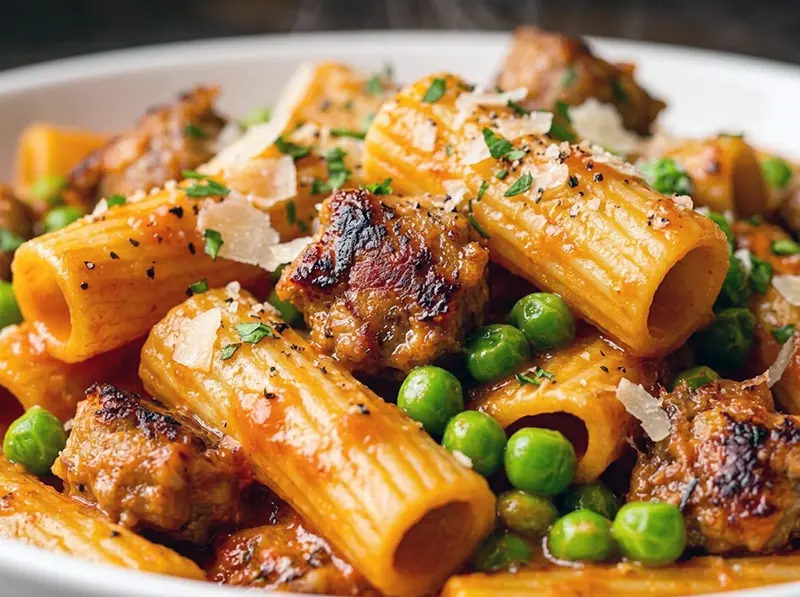
More dishes from the Italian archive — picked by overlap with what you're cooking now.

Recipes by email
One letter a week: a recipe picked for your taste, plus whatever is new on the site. You can stop the letters in one click.
Welcome gift: Sergei's cookbook (e-book).
By signing up for the newsletter you agree to the privacy policy.
Tell us what you like to cook (30 seconds) →
Join the conversation
Comments (1)
Niente panna! Mai! Questa ricetta è corretta — solo uova pecorino e guanciale. Finalmente qualcuno che la fa come si deve