Portugal · Cereal and Pasta Dishes
Arroz de Marisco (Portuguese Seafood Rice)
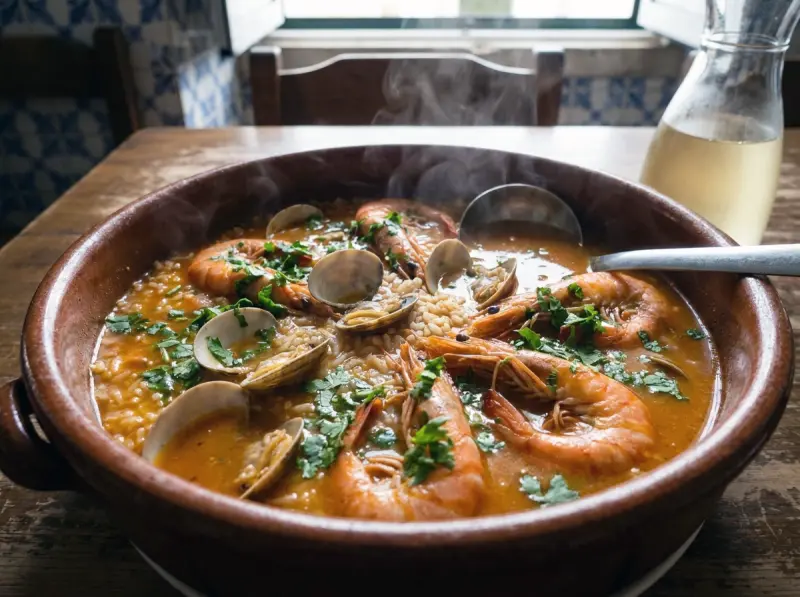
Arroz de marisco is the Portuguese rice cooked in a stock drawn from prawn heads and shells, with clams and mussels opening in the pot.
Ingredients
- carolino rice300 g
- whole raw prawns, shell-on, heads on500 g
- live clams, in the shell400 g
- live mussels, in the shell400 g
- onion1
- garlic4 cloves
- ripe tomatoes400 g
- dry white wine150 ml
- olive oil60 ml
- fresh coriander1 bunch
- piri piri sauce1 tsp
- water1500 ml
- salt1.5 tsp
- black pepper0.5 tsp
Method
- 1Peel the prawns and keep every head and shell. Simmer them in the water with a little salt for 15 minutes, blitz the lot and strain it through a fine sieve. This stock is the dish; nothing you buy in a carton will stand in for it.
- 2Sit the clams and mussels in salted water for half an hour to purge the sand, then scrub them, pull the beards off the mussels and throw out any with a cracked shell or that stay open when tapped.
- 3Soften the chopped onion and garlic in the olive oil until translucent, add the chopped tomatoes and cook for 5 to 8 minutes until they collapse into a sauce.
- 4Pour in the white wine, let it reduce for two minutes, then add the hot stock, keeping back about 250 ml for the end, along with the coriander stalks and the piri piri sauce, and bring it to a boil.
- 5Add the rice without washing it — the surface starch is what makes the broth creamy — and cook at a steady simmer for 12 minutes, stirring now and then.
- 6Add the clams and mussels, then the prawns, and cook for another 5 minutes, until the shells have opened, the prawns are pink and opaque all the way through, and the rice is just short of soft. Throw out any clam or mussel that has not opened. Loosen with the reserved stock if it tightens.
- 7Take the pot off the heat, stir through the chopped coriander and check the salt and pepper. Serve straight away, loose and brothy — malandrinho, as the Portuguese say, never dry.