
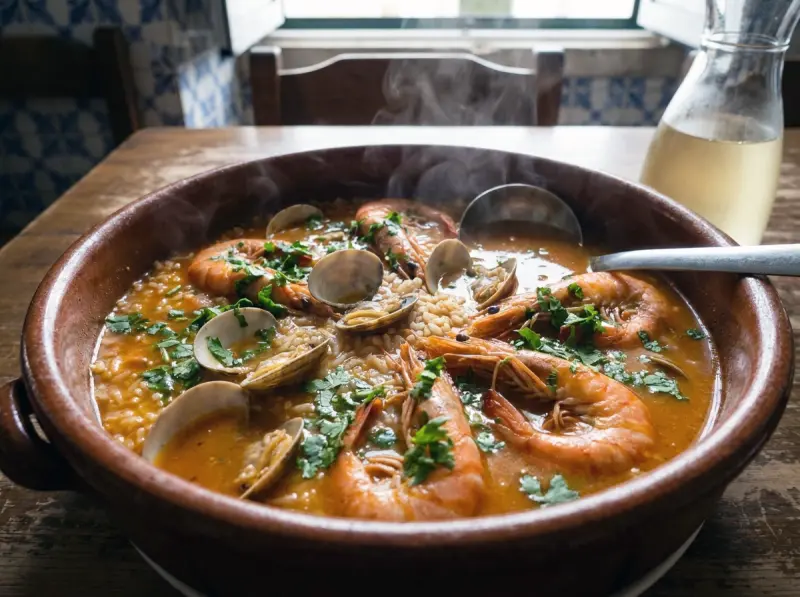
Arroz de Marisco (Portuguese Seafood Rice)
Arroz de marisco is the Portuguese rice cooked in a stock drawn from prawn heads and shells, with clams and mussels opening in the pot. The rice goes in unwashed and the dish is served loose and brothy — malandrinho, never dry like a paella.
What to serve with arroz de marisco
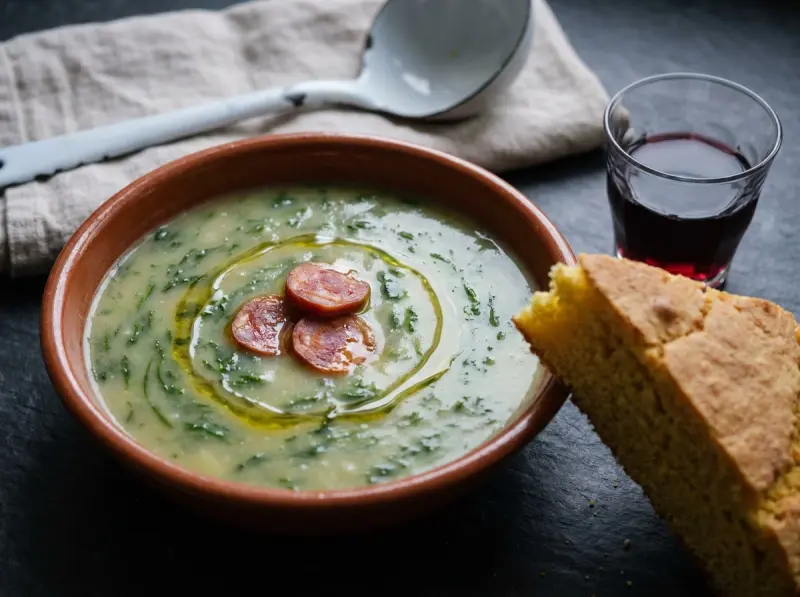
In Portugal this rice is a main course on its own, with bread for the broth and a cold vinho verde. If you want a fuller Portuguese table, start with a bowl of caldo verde, the kale and chouriço soup, or put bacalhau à Brás alongside for anyone who wants salt cod. For a grill night, frango piri-piri uses the same piri piri sauce that goes into the rice pot.
Ingredients
- 300 gcarolino rice
- 500 gprawns
- 400 gclams
- 400 gmussels
- 1 pcsonion
- 4 clovesgarlic
- 400 gripe tomatoes
- 150 mldry white wine
- 60 mlolive oil
- 1 bunchfresh coriander
- 1 tsppiri piri sauce
- 1500 mlwater
- 1.5 tspsalt
- 0.5 tspblack pepper
Method
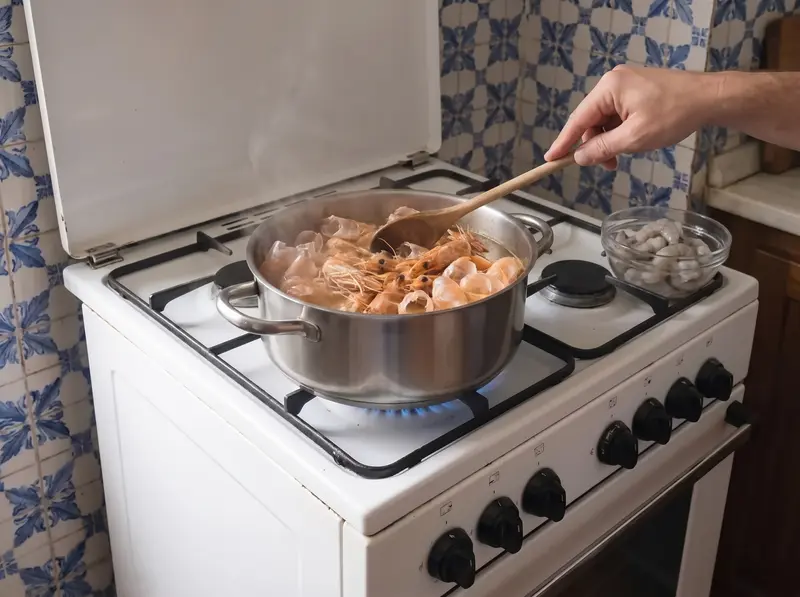
- Peel the prawns and keep every head and shell. Simmer them in the water with a little salt for 15 minutes, blitz the lot and strain it. This stock is the dish; nothing you buy in a carton will stand in for it.
- Sit the clams and mussels in salted water for half an hour to purge the sand, then scrub them and throw out any that stay open when tapped.
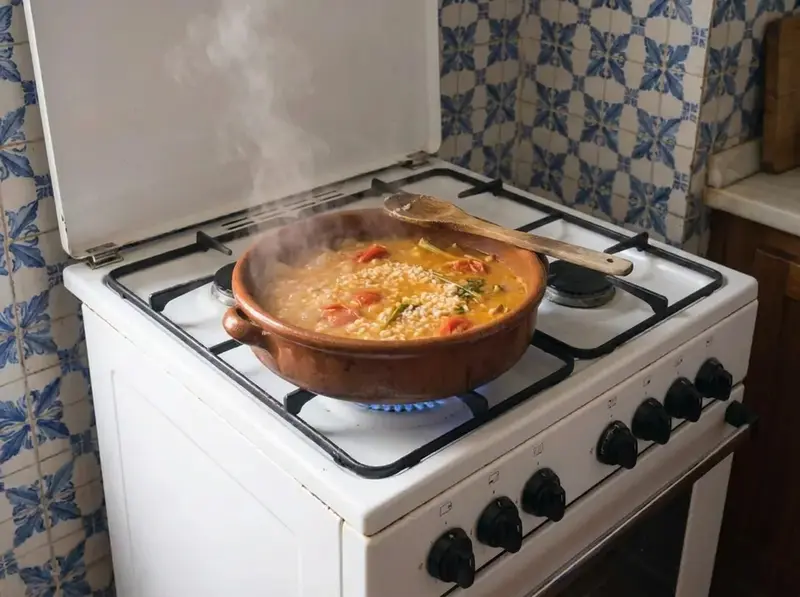
- Soften the chopped onion and garlic in the olive oil until translucent, add the chopped tomatoes and cook for 5 to 8 minutes until they collapse into a sauce.
- Pour in the white wine, let it reduce for two minutes, then add the hot stock, the coriander stalks and the piri piri sauce and bring it to a boil.
- Add the rice without washing it — the surface starch is what makes the broth creamy — and cook at a steady simmer for 12 minutes, stirring now and then.
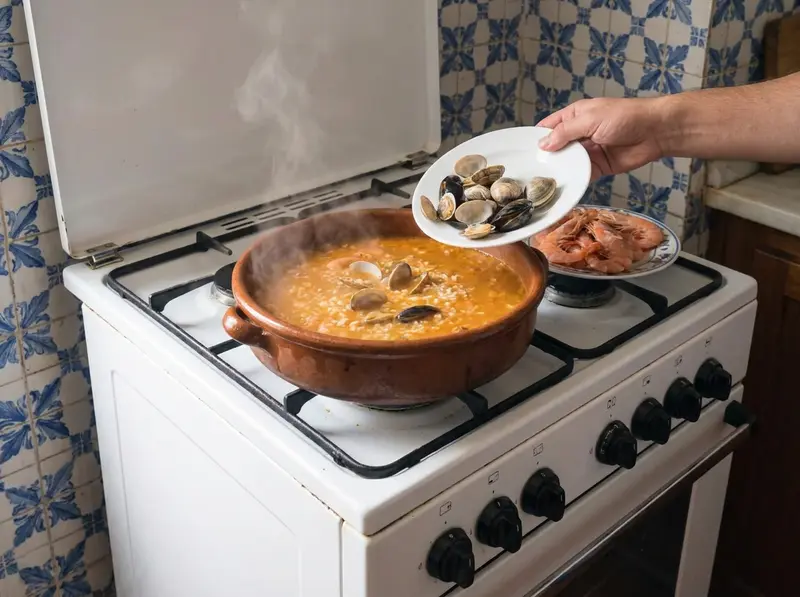
- Add the clams and mussels, then the prawns, and cook for another 5 minutes until the shells open and the rice is just short of soft. Loosen with more stock if it tightens.
- Take the pot off the heat, stir through the chopped coriander and check the salt and pepper. Serve straight away, loose and brothy — malandrinho, as the Portuguese say, never dry.
FAQ
Carolino, the short Portuguese rice that releases starch and soaks up broth. Arborio or another risotto rice is the closest substitute. Long grain and parboiled rice will not give the creamy broth. Do not rinse whatever you use.
Malandrinho means loose and brothy, with the grains still separate and just cooked. It sits between a paella, which is dry, and a soup. If a spoon leaves a clean channel through the pot, you have gone too far.
Yes — frozen prawns, clams, and mussels all work well as long as you thaw them fully in the fridge and drain off any excess water before cooking, since extra liquid will thin the broth. If the prawns came shell-on, save the shells for the stock exactly as you would with fresh ones; the flavor comes from the shells, not from how recently they were frozen. Without shells to work with, a good store-bought fish stock is a reasonable fallback, though it will taste less distinctly of shellfish. Give frozen clams and mussels an extra minute or two in the pot, since they can be slower to open than fresh ones.
Paella is cooked flat and dry in a wide, shallow pan, spread thin so the base caramelizes into a crust. Arroz de marisco is cooked in a deep pot instead and stays loose and wet, closer to a rice soup than a dish you eat with a fork alone. The flavor base differs too: paella usually leans on saffron, while arroz de marisco is built on tomato, coriander, and a stock made from prawn shells. If you want to compare the two side by side, paella is the drier, pan-cooked version of the same rice-and-seafood idea.
The stock and the tomato base can both be made a day ahead and kept covered in the fridge, which actually deepens the tomato flavor. Clean the clams and mussels ahead of time too, but keep them in the fridge, not sitting in water, until you are ready to cook. The rice and the shellfish, though, should only go into the pot once everyone is sitting down, since arroz de marisco keeps absorbing broth and turns stodgy if it sits or gets reheated. If you want a starter that reheats without any trouble while the rice cooks, caldo verde can be made well ahead and warmed through.
Rate this
Recipes by email
One letter a week: a recipe picked for your taste, plus whatever is new on the site. Unsubscribe in one click.
Welcome gift: Sergei's cookbook (e-book).
By subscribing you agree to the privacy policy.
Tell us what you like to cook (30 seconds) →Keep browsing
More dishes from the Portuguese archive — picked by overlap with what you're cooking now.


Join the conversation
Comments
No comments yet — be the first!