
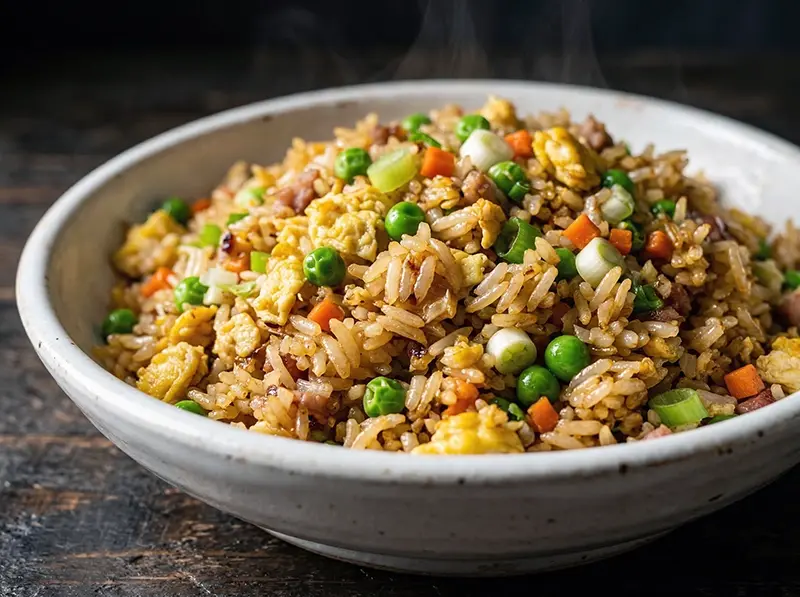
Fried Rice
Day-old cooked rice stir-fried over maximum heat with eggs, vegetables, and soy sauce until every grain is separate, lightly smoky, and coated in sauce. The technique is simple — but two things determine everything: the rice must be cold and dry, and the heat must be as high as your stove allows. Get those right and fried rice is one of the fastest, most satisfying things you can make.
Ingredients
- 600 gcooked long-grain white rice, refrigerated overnight
- 3 eggs
- 3 tbspvegetable oil
- 4 garlic cloves
- 1 tspfresh ginger
- 4 scallion stalks
- 150 gfrozen peas and carrots
- 3 tbspsoy sauce
- 1 tbspoyster sauce
- 1 tspsesame oil
- 0.5 tspwhite pepper
- salt to taste
Method
- Take the refrigerated rice out and break up any clumps with your hands or a fork. The grains must be completely separate and dry before they hit the pan — this is the single most important step. Wet or freshly cooked rice steams instead of frying and turns into a sticky mass.
- Heat a wok or the largest, heaviest skillet you have over maximum heat for 2 minutes until it just starts to smoke. Add 1 tbsp oil. Pour in the beaten eggs and scramble them quickly, leaving them slightly underdone. Remove to a plate.
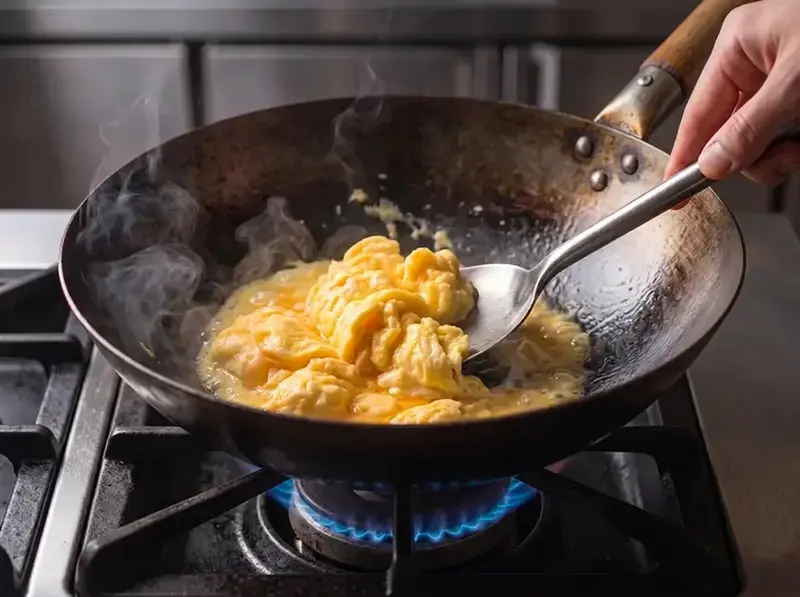
- Add the remaining 2 tbsp oil to the wok. Add the garlic, ginger, and the white parts of the green onion — stir-fry 30 seconds until fragrant but not browned.
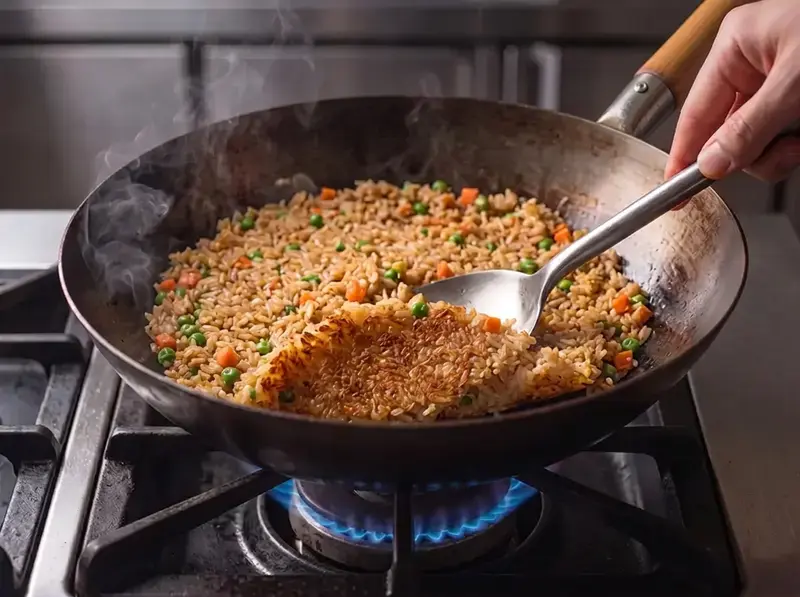
- Add the peas and carrots. Stir-fry 1 minute. Then add all the rice in one go, spreading it across the full surface of the wok. Press it down and let it sit untouched for 30–45 seconds — this contact with the hot surface gives the rice its characteristic slightly toasted flavor. Then toss and repeat once or twice.
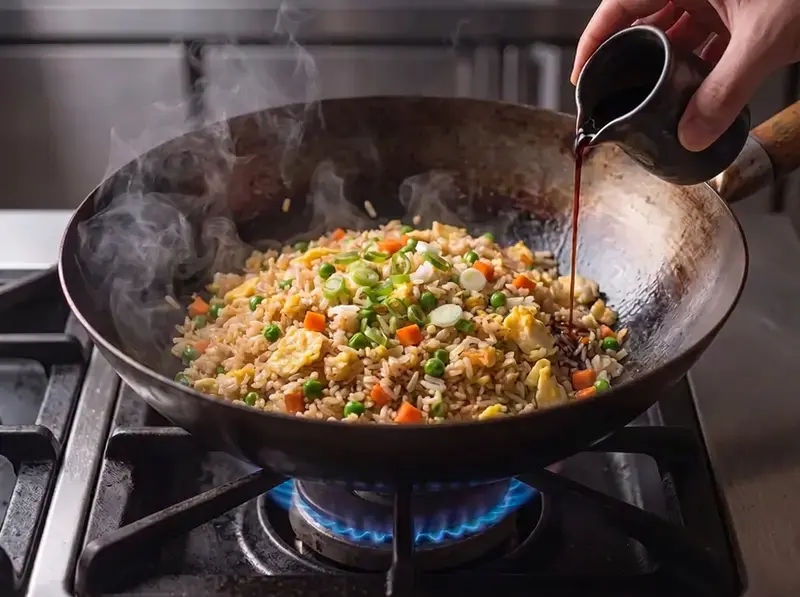
- Drizzle the soy sauce and oyster sauce around the edges of the wok, not directly onto the rice — the sauce hits the hot metal first and caramelizes slightly before mixing in. Toss everything together. Add the scrambled eggs back in and break them into pieces as you stir.
- Remove from heat. Add sesame oil, white pepper, and the green parts of the green onion. Toss once more and taste for salt. Serve immediately — fried rice waits for no one.
FAQ
Freshly cooked rice contains too much surface moisture. When it hits a hot pan, that moisture turns to steam and the grains stick together into clumps. Day-old rice refrigerated overnight loses most of its surface moisture and the grains firm up slightly, so they fry separately and develop a light crust instead of steaming. If you need to use fresh rice, spread it on a tray and refrigerate uncovered for at least 2 hours, or spread it out at room temperature and let a fan blow over it for 30 minutes to dry the surface.
Wok hei comes from very high heat, a well-seasoned cooking surface, and short contact time. At home: use a carbon steel wok or your heaviest cast iron pan, preheat it over maximum heat for 2 full minutes before adding oil, and cook in a single batch — never divide the rice into multiple smaller batches. Each time you add more cold ingredients the temperature drops. Spreading the rice flat and leaving it untouched for 30–45 seconds maximizes the contact with the hot surface and produces the light toasting that approximates wok hei.
The sequence matters: eggs first (scrambled and removed), then aromatics (garlic, ginger, onion whites — 30 seconds), then any dense vegetables (carrots, peas — 1 minute), then the rice. Sauce goes in after the rice has had time to fry and develop some color. Eggs come back in at the very end, just before the sesame oil and garnish. Adding eggs last prevents them from overcooking and turning rubbery during the hot stir-fry phase.
When soy sauce hits the side of a very hot wok it immediately contacts the metal at high temperature and begins to caramelize slightly in the fraction of a second before it runs down into the rice. This creates a small but noticeable layer of Maillard reaction flavor that you don't get when the sauce goes straight onto the rice grains. The same principle applies to any liquid seasoning — oyster sauce, fish sauce, tamari. Pour it down the side, let it sizzle, then toss to combine.
Jasmine rice works beautifully and is actually many cooks' first choice — its natural fragrance complements the soy and sesame. It has slightly more moisture than long-grain white, so the overnight refrigeration step is especially important. Brown rice can be used but it stays firmer and chewier even after frying, and it doesn't pick up sauce as readily because the bran layer is less porous. The technique is identical — cold rice, high heat, correct order — but expect a denser result with brown rice. Basmati is a good substitute for long-grain white.
Rate this
Recipes by email
One letter a week: a recipe picked for your taste, plus whatever is new on the site. Unsubscribe in one click.
Welcome gift: Sergei's cookbook (e-book).
By subscribing you agree to the privacy policy.
Tell us what you like to cook (30 seconds) →Keep browsing
More dishes from the Chinese archive — picked by overlap with what you're cooking now.

Join the conversation
Comments (3)
隔夜饭是关键中的关键!新鲜饭太粘根本炒不开。我每次故意多煮一碗饭放冰箱第二天炒
炒饭最重要的是用隔夜饭,新鲜米饭太湿了。我加了一点老抽颜色更好看
Finish cooking the cooked long-grain white in the sauce, not in the water. Those last 2 minutes of simmering together create a bond between grain and sauce that plating separately never achieves.