
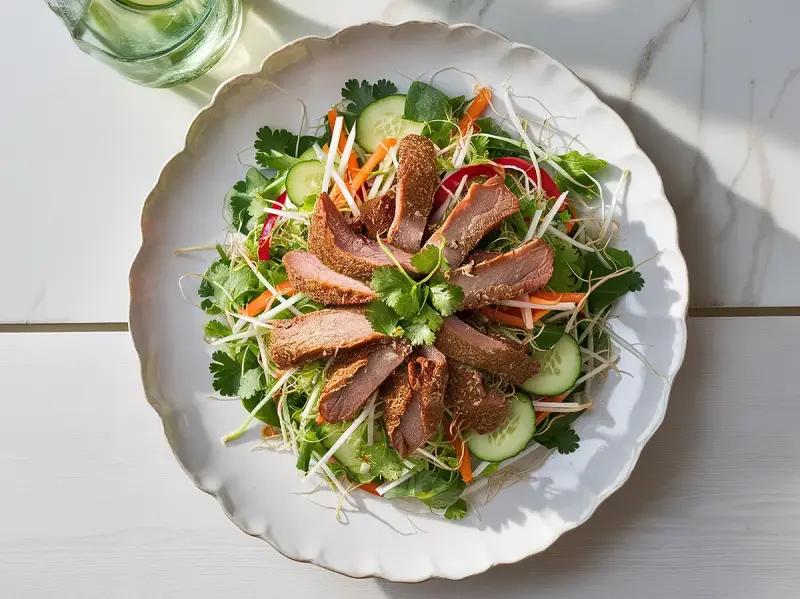
Crispy Duck Salad
Crispy duck salad is warm pan-fried duck breast sliced over crisp leaves and raw vegetables, dressed with soy, honey, ginger and sesame. The duck is cooked skin-side down from a cold pan so the fat renders out slowly and the skin turns glass-crisp, while the meat stays pink. The rich duck against cold, crunchy vegetables is the point of the dish.
Ingredients
- 2 duck breasts, skin on, about 250 g each
- to tastesalt and freshly ground black pepper
- 1 largecucumber
- 1 largecarrot
- 1 red bell pepper
- 1 headromaine lettuce, torn
- 1 small bunchfresh cilantro
- 3 tbspsoy sauce
- 2 tbsprice vinegar
- 1 tbsphoney
- 1 tbspsesame oil
- 1 tspfresh ginger
- 1 clovegarlic
- 1 tbsptoasted sesame seeds
- optionalcrushed walnuts or cashews
Method
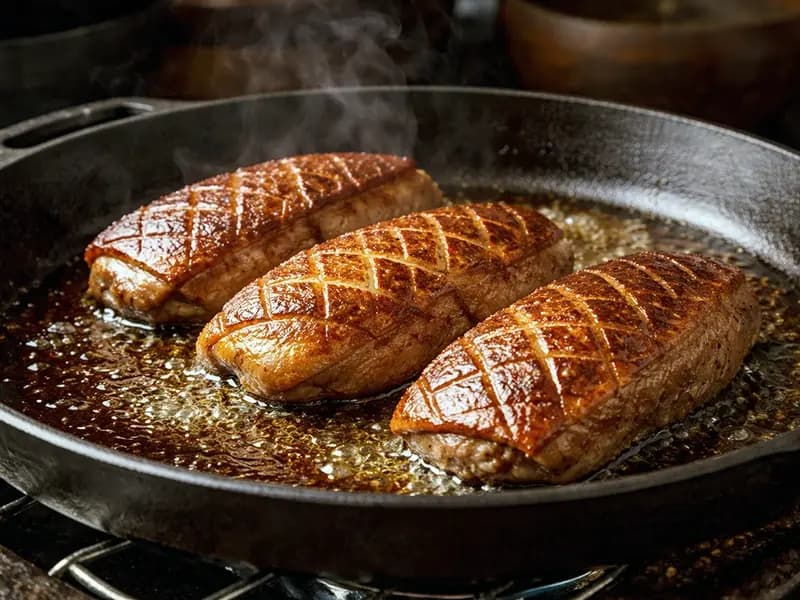
- Pat the duck breasts dry. Score the skin in a diamond pattern. Season both sides with salt and pepper.
- Place the duck breasts skin-side down in a cold, dry skillet. Turn heat to medium-low. Cook for 10-15 minutes until skin is deep golden brown and crispy, pouring off excess fat periodically. Flip and cook for another 2–4 minutes, until the centre reads 55 °C for medium rare — it rises a few degrees more as it rests. For fully cooked duck, keep the flesh side on low heat until the centre reads 74 °C. Rest for 10 minutes, then slice thinly.
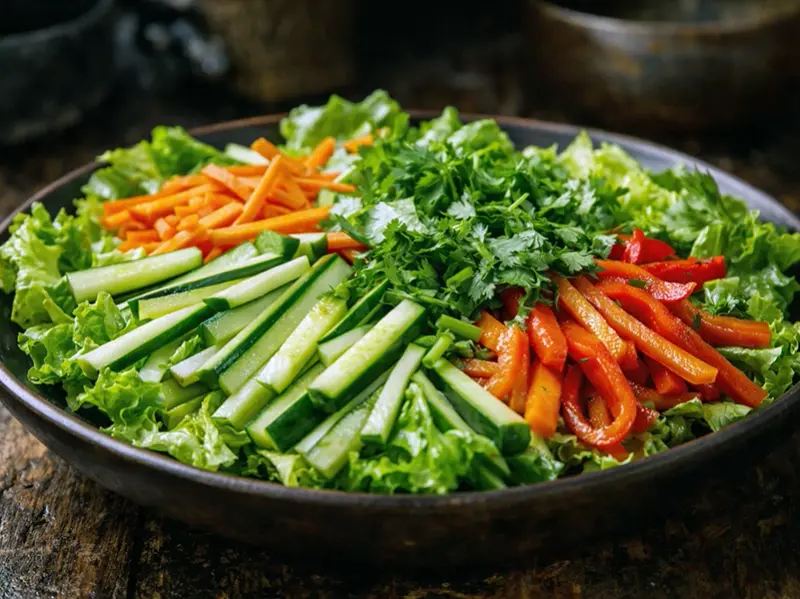
- Julienne the cucumber, carrot and red bell pepper. Wash and tear the lettuce. Roughly chop the cilantro.
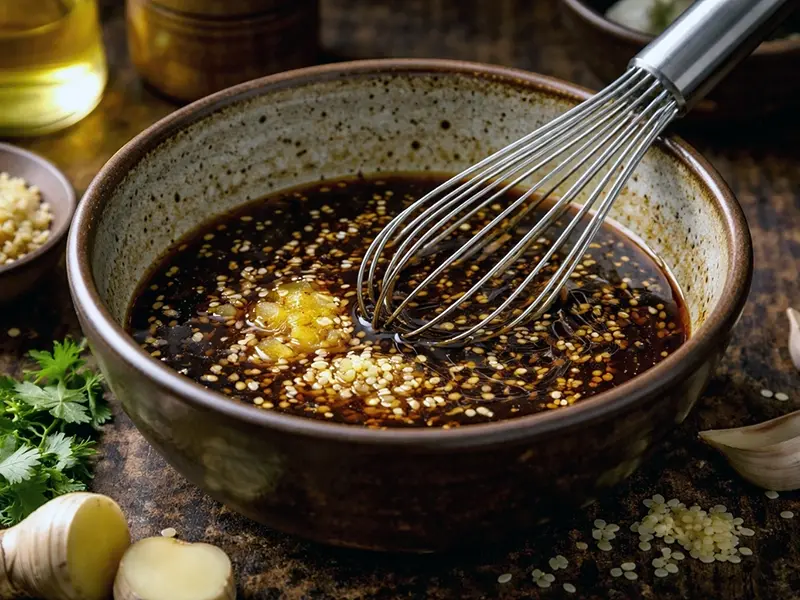
- Whisk together soy sauce, rice vinegar, honey, sesame oil, grated ginger and minced garlic.
- In a large bowl, combine lettuce, cucumber, carrot, bell pepper and cilantro. Add half the dressing and toss. Divide among four plates, arrange duck slices on top, drizzle with remaining dressing. Garnish with sesame seeds and nuts if desired.
FAQ
Score the skin and render the fat slowly. Pat the breast completely dry, then score the skin in a crosshatch at 1 cm intervals, cutting through the fat but not into the meat. Put it skin-side down in a cold, dry pan and turn the heat to medium-low — starting cold lets the fat melt out gradually instead of seizing. Cook skin-side down for 10–15 minutes, pouring off the fat as it collects, until the skin is deep gold and crisp, then flip and give the flesh side 2–4 minutes. Rest for 10 minutes before slicing thinly across the grain.
Restaurants usually serve duck breast medium rare: taken off the heat at 55 °C, it climbs to 57–60 °C while resting, and the meat stays rose-pink and juicy. That is a matter of taste, not a safety guarantee. Duck, like any poultry, can carry Campylobacter, and Germany's Federal Institute for Risk Assessment (BfR) warns specifically about pink duck breast. If you are cooking for children, pregnant women, older people or anyone with a weakened immune system, cook the breast until a thermometer in the thickest part reads 74 °C, the temperature USDA recommends for poultry. To keep fully cooked duck from drying out, render the skin slowly as usual, finish the flesh side over low heat and rest it for 10 minutes before slicing thinly. Add the slices to the salad warm or at room temperature, not straight from the fridge.
The best substitute is five-spice roasted chicken thighs with the skin on — they provide a similar rich, fatty flavor and can be made crispy in the same way. Cook bone-in, skin-on thighs at 200°C for 35–40 minutes, then shred the meat and leave the skin crispy. Store-bought Peking duck or roast duck from a Chinese restaurant works excellently with no cooking required — just shred the meat and scrape the crispy skin. For a lighter version, seared tuna steak (sesame-crusted, seared rare) makes a good Asian-style salad partner. Smoked duck breast (available in delis) requires no cooking and has a similar deep flavor — slice it thinly and use directly in the salad.
Bitter and peppery leaves are the ideal match for rich, fatty duck because they provide a natural counterbalance. Watercress is the classic partner — its sharp, peppery bite cuts through the fat beautifully. Radicchio and endive add a pleasant bitterness and hold their shape under warm ingredients. Rocket (arugula) is another excellent choice with its peppery flavor. A mix of watercress and baby spinach (neutral and soft) gives a good balance of bite and tenderness. Avoid soft, neutral lettuces like butter lettuce or iceberg — they wilt immediately when they come into contact with warm duck and the rich dressing, and their mild flavor gets completely lost. The leaves should be chilled and added to the plate just before topping with the warm duck.
The recipe uses a soy, honey and ginger dressing; if you want a hoisin-based alternative, a balanced version uses: 2 tablespoons hoisin sauce, 1 tablespoon soy sauce, 2 tablespoons fresh lime juice, 1 tablespoon rice vinegar, 1 teaspoon freshly grated ginger, 1 teaspoon sesame oil, and 1 teaspoon honey. Whisk everything together and taste — the dressing should be sweet, salty, sour, and slightly hot in balance. If too thick, thin with 1–2 teaspoons of warm water. For extra heat, add a small finely chopped fresh chilli or a pinch of chilli flakes. For more depth, add a crushed small garlic clove. This dressing should be made fresh and used at room temperature — never refrigerate it before adding to the salad or the sesame oil will solidify and the hoisin will stiffen.
Rate this
Recipes by email
One letter a week: a recipe picked for your taste, plus whatever is new on the site. Unsubscribe in one click.
Welcome gift: Sergei's cookbook (e-book).
By subscribing you agree to the privacy policy.
Tell us what you like to cook (30 seconds) →Keep browsing
More dishes from the Chinese archive — picked by overlap with what you're cooking now.
Join the conversation
Comments (1)
Cold plates are a small detail that make this crispy duck salad noticeably better. Ten minutes in the fridge before plating keeps everything crisp through the meal. It's a restaurant trick worth stealing.