
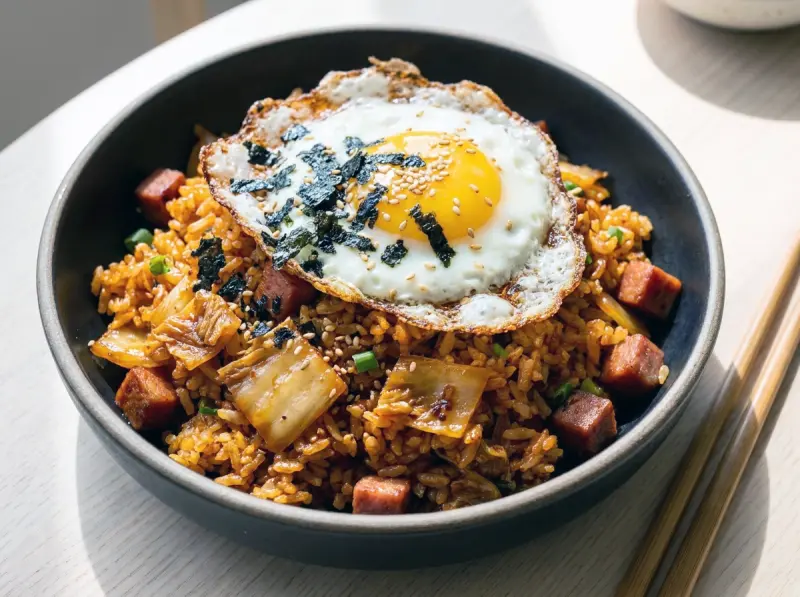
Kimchi Fried Rice
The definitive Korean way to use up sour kimchi and day-old rice: the kimchi is fried until it caramelises, seasoned with gochujang, tossed with cold rice, and topped with a runny fried egg. It's a five-minute weeknight plate built entirely from fridge and pantry staples, and it lives or dies on how fermented the kimchi is.
Ingredients
- 200 gkimchi, well-fermented
- 400 gshort-grain rice, day-old
- 15 ggochujang
- 2 pcsegg
- 100 gSpam
- 2 pcsspring onion
- 2 pcsgarlic
- 10 mlsesame oil
- 5 ggochugaru
- 1 pcsnori, sheets
- 15 mlvegetable oil
- 3 gsesame seeds
Method
- Use cold, day-old rice if you can. Fresh warm rice steams and clumps in the pan and turns the dish gluey; refrigerated rice has dried out and fries into separate grains. If you only have fresh rice, spread it on a tray to cool and dry for 15 minutes.
- Chop the kimchi into bite-sized pieces and squeeze it lightly, saving the juice in a small bowl. Dice the Spam and slice the spring onion, keeping the green tops for garnish.
- Heat the vegetable oil in a wide pan or wok over medium-high heat and fry the diced Spam until the edges are browned and crisp. Push it to one side.
- Add the chopped kimchi, garlic, and gochugaru to the pan and stir-fry for 2 to 3 minutes until the kimchi smells cooked and caramelised at the edges. This step is what deepens the flavour — raw kimchi tastes flat here.
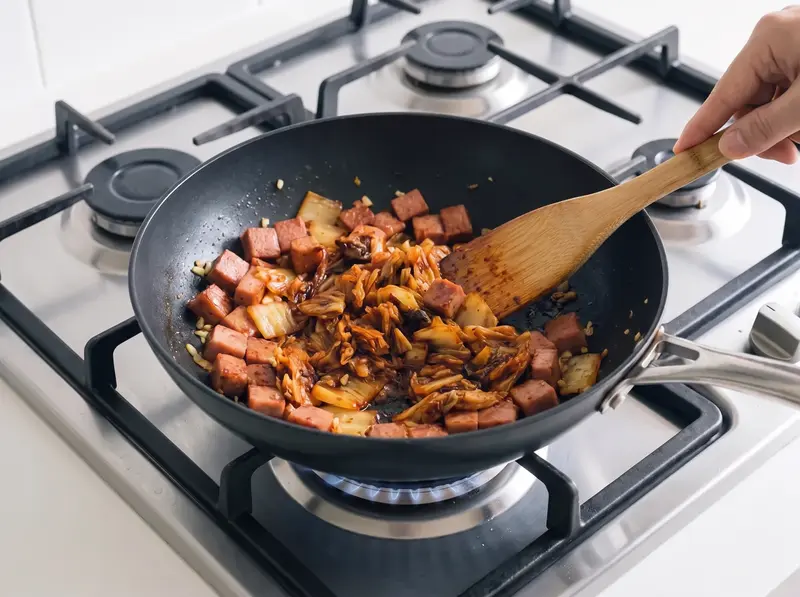
- Stir in the gochujang and the reserved kimchi juice, cook for a minute, then add the rice. Break up any clumps and toss everything over high heat until the grains are coated and heated through, 3 to 4 minutes.
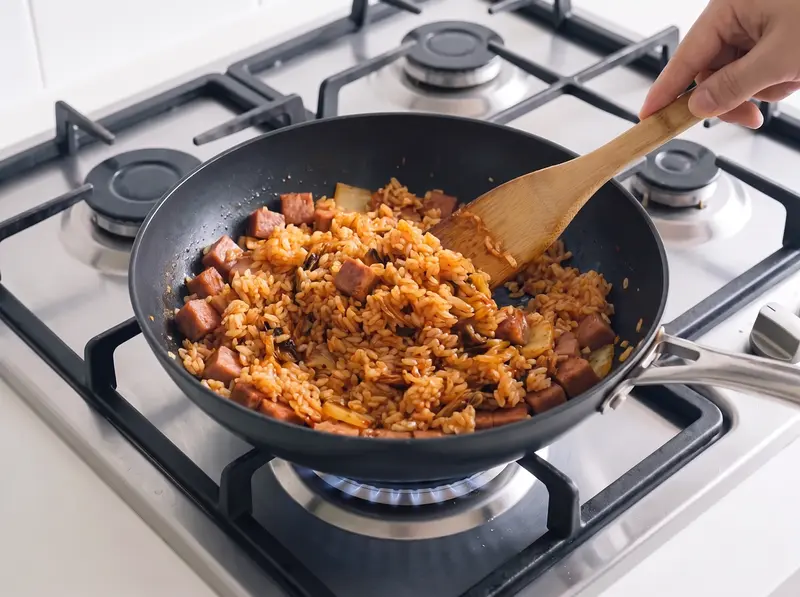
- Off the heat, stir through the sesame oil and the white parts of the spring onion. Taste and adjust with a little more kimchi juice or gochujang.
- In a separate pan, fry the eggs sunny-side up with crisp edges and runny yolks. Top each portion of rice with an egg and scatter with crumbled nori, sesame seeds, and the reserved spring onion greens.
FAQ
Cold, dried-out rice fries into separate grains, while fresh warm rice is moist and clumps into a gluey mass. A day in the fridge dehydrates the surface of each grain just enough. In a pinch, spread fresh rice on a tray to cool and dry first. The same day-old rule applies to any egg fried rice.
It'll be milder and flatter. Frying it longer helps caramelise it, and a little extra gochujang and gochugaru builds back the depth. But well-fermented, sour kimchi is genuinely what makes the dish, so use the oldest you have. If you ferment your own kimchi, save the oldest jar for this and for kimchi jjigae.
Bacon, diced pork belly, ground pork, or leftover chicken all work; tuna is a popular Korean version. For a vegetarian bowl leave the meat out and the egg carries it, though check that your kimchi was made without fish sauce. Leftover bulgogi beef is the best upgrade of all.
Cut or drop the gochugaru and use less gochujang, leaning on the kimchi and a little soy sauce for flavour instead. Serving it with the runny egg stirred through also softens the heat considerably.
Yes, if your kimchi is vegan — many are made with fish sauce or salted shrimp, so check. Leave out the Spam and egg, add extra vegetables or fried tofu, and use a vegan kimchi and gochujang.
Keep browsing
More dishes from the Korean archive — picked by overlap with what you're cooking now.
Recipes by email
One letter a week: a recipe picked for your taste, plus whatever is new on the site. Unsubscribe in one click.
Welcome gift: Sergei's cookbook (e-book).
By subscribing you agree to the privacy policy.
Tell us what you like to cook (30 seconds) →
Join the conversation
Comments
No comments yet — be the first!