Skip to content
GetCookMatch
⌘K
Cuisine · Korea

Korean cooking

Gochujang, fermentation, grilled meat over rice. Banchan proliferates. Kimchi in every meal, unapologetic.

Sort by
Beef Bulgogi with beef, garlic and ginger — Korea recipe
🇰🇷KoreaMedium
Meat Dishes

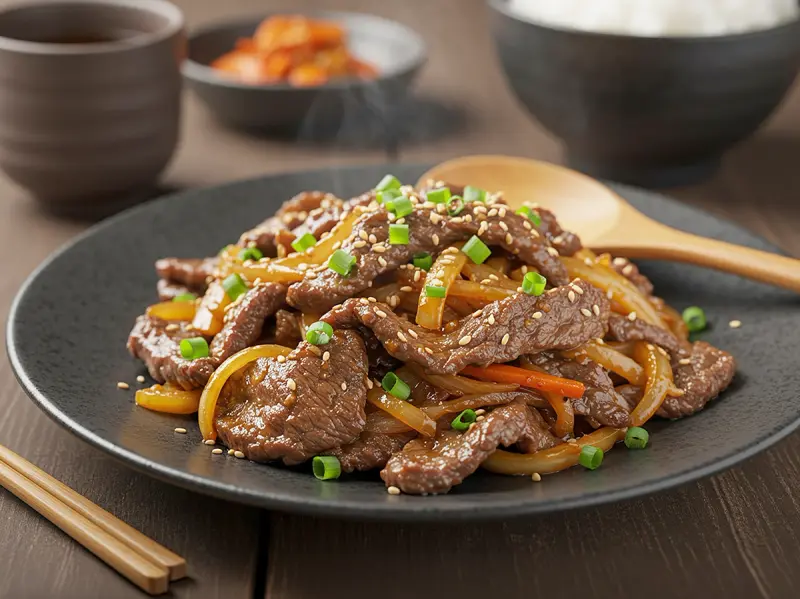
Beef Bulgogi

Korea's most beloved BBQ dish — paper-thin slices of ribeye marinated in soy sauce, sesame oil, sugar, garlic, and ginger, then seared on a blazing hot pan until caramelized at the edges. Sweet, savory, smoky, and intensely flavorful. Serve with rice, lettuce leaves, and kimchi.

25 min280 kcal2 serves
💪High protein⚡Quick🥑Keto
Bibim Guksu (Korean Spicy Cold Noodles) with somyeon or thin wheat noodles, gochujang and kimchi — Korea recipe
🇰🇷KoreaMedium
Cereal and Pasta Dishes

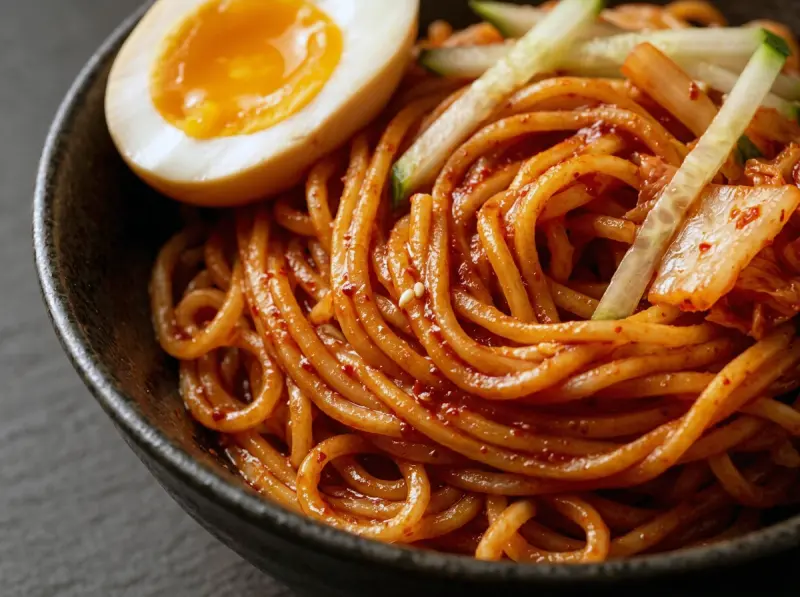
Bibim Guksu (Korean Spicy Cold Noodles)

Bibim guksu is the Korean summer dish that takes fifteen minutes and requires almost no cooking. Thin wheat noodles, shocked in ice water until they bounce back against your teeth, coated in a gochujang sauce that is simultaneously hot, sour, sweet, and faintly fermented. Topped with kimchi, cucumber, and a soft-boiled egg. The word bibim means mixed — everything goes in the bowl and you toss it with your hands.

15 min380 kcal2 serves
🌶️Spicy⚡Quick💪High protein
Bibimbap (Korean Mixed Rice Bowl) with short grain white rice, beef and gochujang — Korea recipe
🇰🇷KoreaAdvanced
Meat Dishes

Bibimbap (Korean Mixed Rice Bowl)

Korea's most celebrated rice dish: a bowl of short-grain rice topped with individually seasoned and cooked vegetables (namul), thinly sliced marinated beef, a sunny-side-up egg, and gochujang sauce — then mixed together at the table before eating. The name says it exactly: bibim means 'mixing', bap means 'cooked rice'. Each vegetable component is prepared separately to preserve its own color, texture, and flavor. The dolsot version (stone bowl bibimbap) adds one more element: the rice touching the bowl's searing hot walls forms nurungji — a golden crispy crust at the bottom, considered the best bite in the dish. Considered the national dish of Jeonju, the city in South Korea's Jeolla province regarded as bibimbap's birthplace.

60 min570 kcal4 serves
🌶️Spicy💪High protein
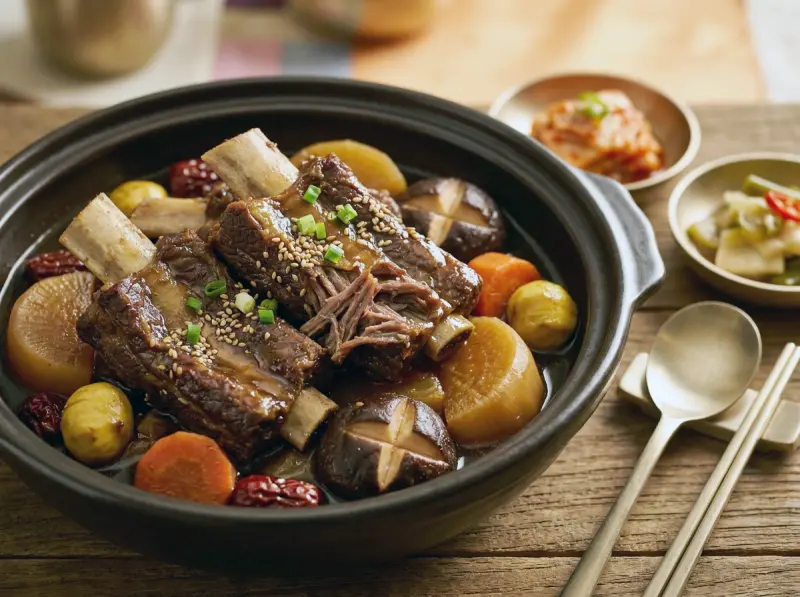
Galbi-jjim (Korean Braised Short Ribs) with beef short ribs, korean pear and korean radish — Korea recipe
🇰🇷KoreaAdvanced
Meat Dishes

Galbi-jjim (Korean Braised Short Ribs)

Galbi-jjim is Korea's celebration dish — beef short ribs braised low and slow in a dark, glossy soy sauce until the meat slides from the bone. Grated Korean pear tenderizes the beef and lends a clean sweetness that balances the salt, while radish, carrot, shiitake, chestnuts, and jujubes soak up the sauce alongside it. Served at holidays and family gatherings, it's the kind of dish that fills a house with its smell for hours.

150 min620 kcal6 serves
💪High protein
Gochujang Mayo (Korean Spicy Mayonnaise Sauce) with Kewpie mayonnaise, gochujang paste and toasted sesame oil — Korea recipe
🇰🇷KoreaEasy
Sauces and Dips

Gochujang Mayo (Korean Spicy Mayonnaise Sauce)

Gochujang mayo is a Korean-inspired spicy condiment built on Japanese Kewpie mayonnaise, fermented gochujang chili paste, rice vinegar, toasted sesame oil, and garlic. The mayo cools and rounds out the heat, the gochujang brings deep fermented umami, sesame oil signs the sauce as Korean. Whisks together in five minutes, lives in the fridge for a week, and works on Korean fried chicken, sweet potato fries, poke bowls, burgers, sushi, and as a sandwich spread. Serves about eight as a dipping sauce. The 30 minute rest in the fridge before serving is what separates a punchy mix from a balanced sauce.

5 min110 kcal8 serves
🌶️Spicy⚡Quick
Japchae (Korean Glass Noodle Stir-Fry) with dangmyeon, soy sauce and sesame oil — Korea recipe
🇰🇷KoreaAdvanced
Cereal and Pasta Dishes

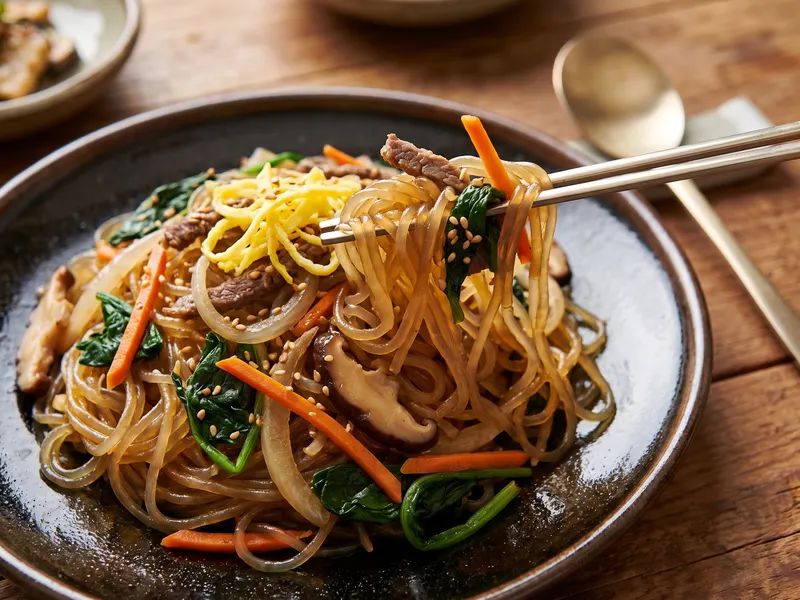
Japchae (Korean Glass Noodle Stir-Fry)

Korean sweet potato glass noodles stir-fried with colourful vegetables, marinated beef, and a savory-sweet sesame-soy dressing. Japchae (잡채, literally 'mixed vegetables') is one of Korea's most beloved festive dishes — served at holidays, birthdays, and celebrations, but easy enough for any weeknight. The dangmyeon noodles are the star: made from sweet potato starch, they are naturally gluten-free, translucent when cooked, and have a distinctly springy, slightly slippery chew unlike any other noodle. The dish is traditionally assembled in a large bowl rather than continuously stir-fried, because each vegetable is cooked separately to preserve its color and texture. The effort is real but the result — a glossy, sesame-fragrant tangle of textures and colors — is worth every pan.

40 min420 kcal4 serves
Jjajangmyeon (Korean Black Bean Noodles with Pork and Vegetables) with pork belly, chunjang and jjajangmyeon noodles — Korea recipe
🇰🇷KoreaAdvanced
Cereal and Pasta Dishes

Jjajangmyeon (Korean Black Bean Noodles with Pork and Vegetables)

Jjajangmyeon is a Korean-Chinese noodle dish of thick chewy wheat noodles topped with a glossy black sauce of fried chunjang (Korean fermented black soybean paste), pork belly, onions, potato, zucchini, and cabbage. The dish was developed in 1905 by Chinese immigrants at the Gonghwachun restaurant in Incheon's Chinatown, adapted from Beijing zha jiang mian to suit Korean tastes — sweeter, with caramelized chunjang and starchier vegetables. Today it is one of Korea's national comfort foods, sold in every neighbourhood and traditionally eaten on Black Day (April 14) by single people who got no Valentine's gift. Active work is 35 minutes, no long simmer needed. Serves 4 with 200 g noodles and 250 ml sauce per portion, topped with julienned cucumber for fresh contrast.

35 min720 kcal4 serves
💪High protein
Khe (Korean Marinated Fish) with salmon, vinegar and garlic — Korea recipe
🇰🇷KoreaMedium
Appetizers and Sandwiches

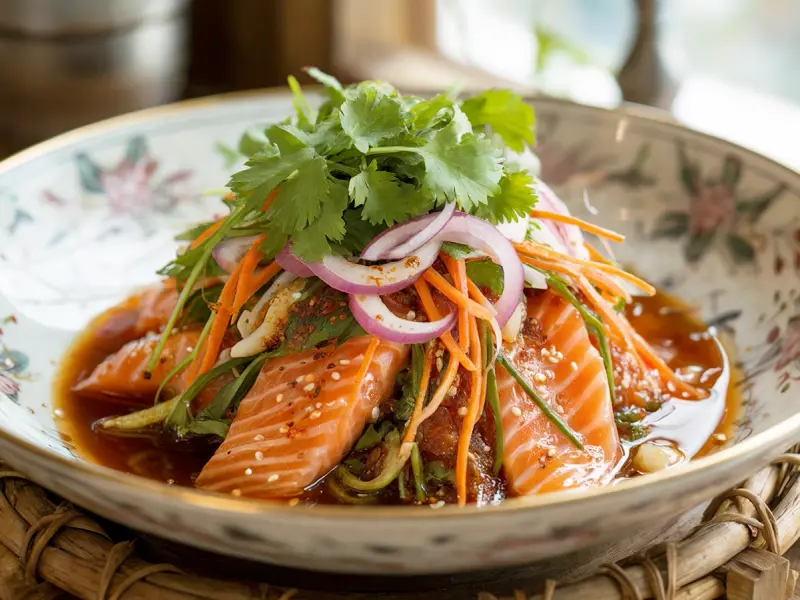
Khe (Korean Marinated Fish)

A Korean-style marinated salmon salad where fish is cured in vinegar then tossed with vegetables, garlic, chili and soy sauce. Bold, spicy and fresh — best after marinating for at least 4 hours.

35 min120 kcal6 serves
🌶️Spicy💪High protein
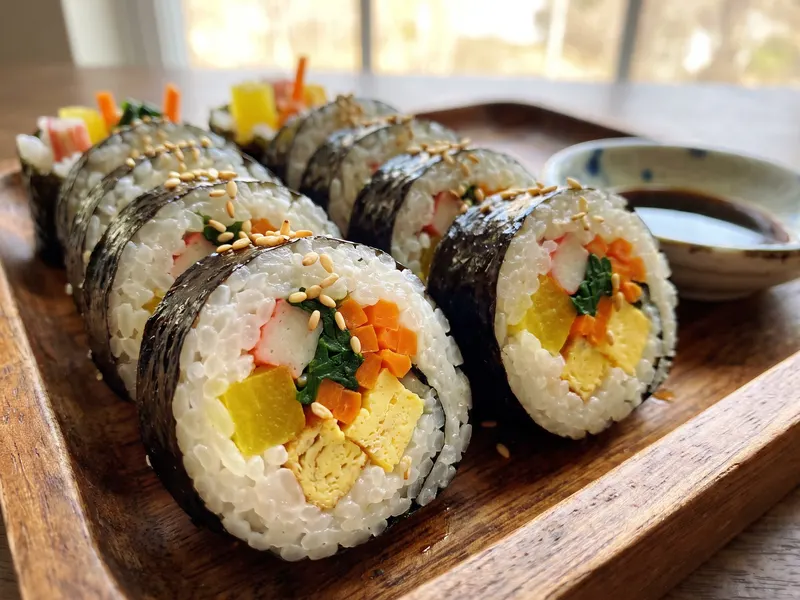
Kimbap with short grain rice, nori and pickled radish — Korea recipe
🇰🇷KoreaMedium
Appetizers and Sandwiches

Kimbap

The Korean seaweed rice roll built for lunchboxes and picnics: short-grain rice seasoned with sesame oil, rolled in a sheet of gim with strips of yellow pickled radish, carrot, spinach, egg, and crab, then sliced into rounds. It looks like sushi, but the sesame-oil rice makes it nutty and savoury, and the fillings are cooked, pickled or crisp fresh vegetables, so the roll packs neatly into a lunchbox.

50 min320 kcal4 serves
Kimchi with napa cabbage, gochugaru and garlic — Korea recipe
🇰🇷KoreaMedium
Vegetable and Mushroom Dishes

Kimchi

Kimchi is a traditional Korean dish — fermented Peking cabbage with spicy spices and seasonings. Characterized by a bright tangy flavor with sour notes, crisp texture and intense aroma.

45 min50 kcal4 serves
🌶️Spicy💪High protein🌾Gluten-free
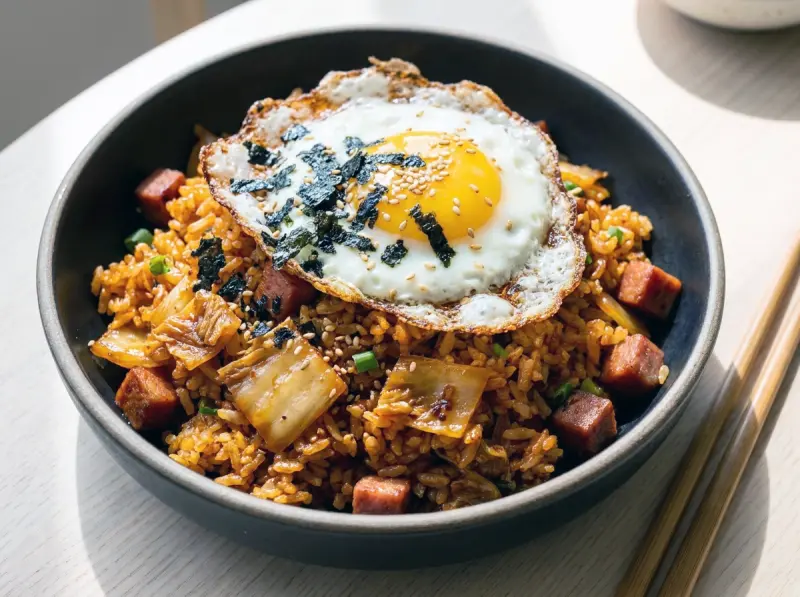
Kimchi Fried Rice with kimchi, short grain rice and gochujang — Korea recipe
🇰🇷KoreaMedium
Cereal and Pasta Dishes

Kimchi Fried Rice

The definitive Korean way to use up sour kimchi and day-old rice: the kimchi is fried until it caramelises, seasoned with gochujang, tossed with cold rice, and topped with a runny fried egg. It's a five-minute weeknight plate built entirely from fridge and pantry staples, and it lives or dies on how fermented the kimchi is.

20 min480 kcal2 serves
⚡Quick🌶️Spicy🌿Vegetarian
Kimchi Jjigae (Korean Kimchi Stew) with napa cabbage kimchi, pork belly and firm tofu — Korea recipe
🇰🇷KoreaMedium
Soups

Kimchi Jjigae (Korean Kimchi Stew)

Kimchi jjigae is a Korean stew built around well-fermented napa cabbage kimchi, pork belly and tofu. Frying the kimchi with the pork first turns its sharp brine into a deep red broth; the tofu goes in late so it stays in soft, generous pieces. Rice and a few banchan are all it needs.

45 min395 kcal4 serves
🌶️Spicy💪High protein

Nearby flavors

Four kitchens with overlapping ingredients and similar rhythms to Korean cooking.