


Korean Carrot Salad
Korean carrot salad (morkovcha, or morkov po-koreyski in Russian) is a spicy salad of thin raw carrot strips dressed with hot oil, garlic, coriander and vinegar. It was created by the Koryo-saram, the Soviet Koreans of Central Asia. The carrots are salted and left for 15 minutes to release their juice, then the finished salad needs at least 6 hours in the fridge, and it tastes better still the next day. The strips stay firm and crunchy the whole time.
Ingredients
- 1000 gcarrots
- 200 gonion
- 120 mlvegetable oil
- 3 tbspvinegar
- 1 head of garlic
- 1 tspground coriander
- 1-2 tspground red chili pepper
- 2 tbspsugar
- 2 tspsalt
Method
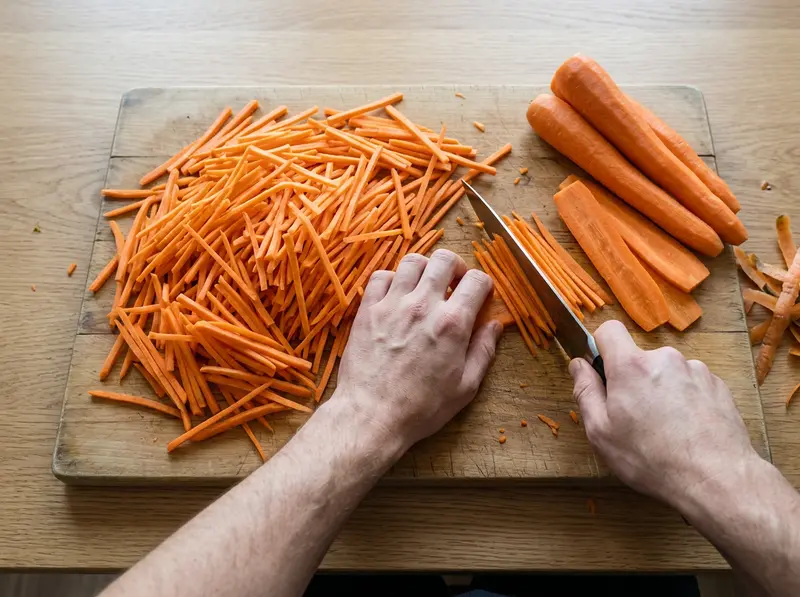
- Julienne the carrots into long, thin matchsticks using a Korean-style grater or a sharp knife. The strands should be fine enough to absorb the dressing but sturdy enough to stay crunchy. Place them in a large heatproof bowl.
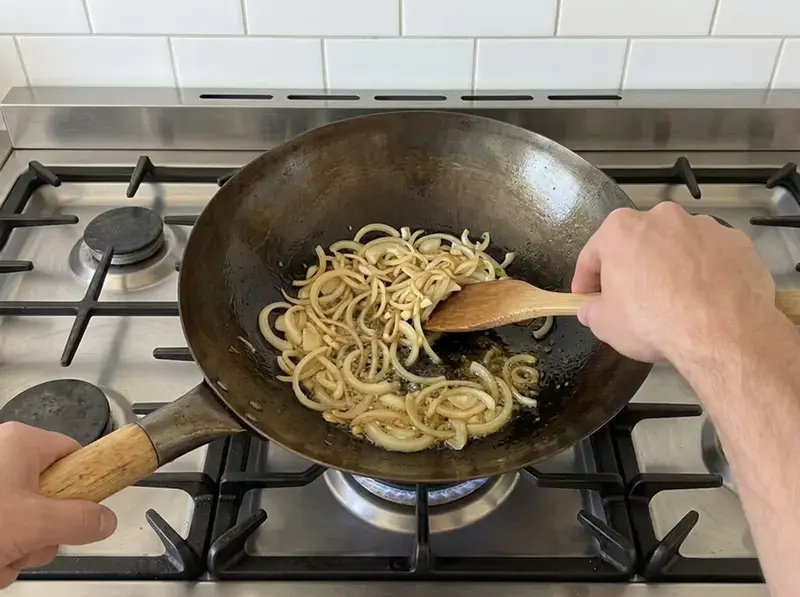
- Sprinkle the carrots with the salt and sugar and rub them in with your hands. Leave them for 15 minutes to release their juice. Meanwhile, slice the onion into thin half-rings, heat the vegetable oil in a wok or small pan and fry the onion, stirring, until golden and fragrant, 3–4 minutes. Lift the onion out with a slotted spoon and take the pan off the heat. You can keep the onion for the salad or throw it away; it has already flavored the oil.
- Squeeze the carrots lightly and pour off the juice. Add the vinegar (ordinary 9% table vinegar) and toss. Finely chop or press the cloves of the garlic head, then pile the garlic, ground coriander and chili on top of the carrots without mixing them in.
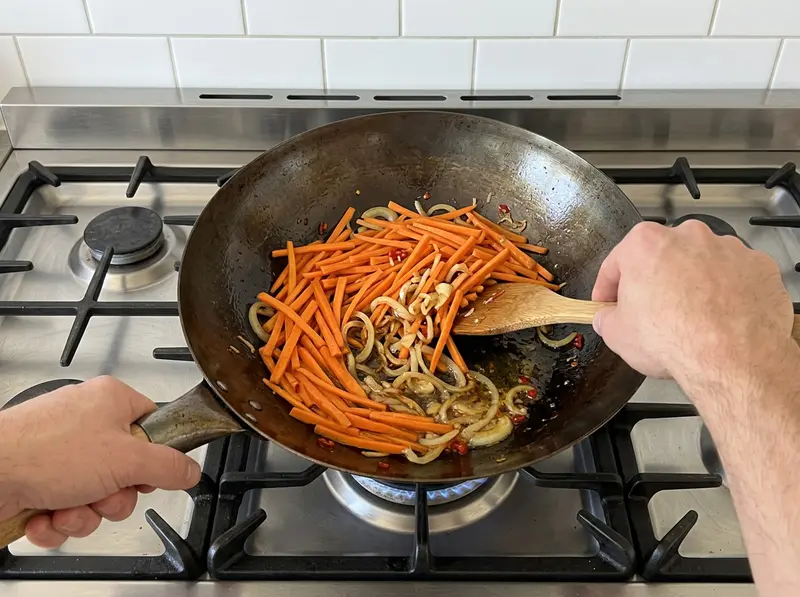
- Put the pan with the onion oil back over high heat until the oil is very hot and shimmering. Pour it straight over the garlic and spices: they should sizzle hard, and that burst of heat is what releases their aroma. Toss everything well, and stir the fried onion back in if you kept it.
- Pack the salad into a glass or enamel container, cover tightly and refrigerate for at least 6 hours, ideally overnight. The carrots soak up the dressing and the garlic mellows as it sits.
Cooked it? Rate the recipe
FAQ
Soft carrots result from strips cut thinner than about 2 mm or from marinating too long. Shred the carrots into 2–3 mm strips — a dedicated Korean carrot grater gives the ideal result. After adding the salt and sugar, let the carrots rest for 15 minutes, then squeeze them with your hands to get rid of the juice. Marinate for at least 6 hours but no more than 24 — beyond that the carrots begin to soften. Keeping the salad in the refrigerator helps preserve the crunch.
Vinegar substitutes: lemon or lime juice (softer, fresher), apple cider vinegar (less sharp, slight fruitiness), or rice vinegar (traditional Asian option, mild taste). For a less acidic result, cut the vinegar to 1 tbsp; the sugar already in the recipe softens what's left. Without any vinegar at all, the carrots lose their characteristic pickled taste that defines the dish.
In a tightly sealed container, Korean carrot salad keeps in the refrigerator for 5–7 days. The flavor deepens and becomes more pronounced on days 2–3 as the spices infuse further. Do not add fresh onion to the main batch — it spoils quickly. Freezing is not recommended: the carrots lose their crunch and texture after thawing. Stir before serving and add fresh garlic if desired.
Yes. Reduce red pepper to ¼ tsp or replace it with sweet paprika (1 tsp) for color without heat. For a completely mild version, use only ground coriander and black pepper — you get an aromatic but non-spicy salad. For a child-friendly version, leave the pepper out entirely; the sugar in the recipe already balances the vinegar. Note that spiciness mellows with time: the heat is stronger right after preparation than after a day in the refrigerator.
The marinade works beautifully with: daikon radish (shred the same way, marinate 2–3 hours), cucumber (remove seeds, marinate 1–2 hours maximum), beet (will add a vivid color to the carrots), and bell pepper. Mixed versions work well too: carrot + daikon, carrot + cucumber. This is a plant-based dish rich in fiber — excellent as a side for meat or as a standalone appetizer.
Keep browsing
More dishes from the Korean archive — picked by overlap with what you're cooking now.



Recipes by email
One letter a week: a recipe picked for your taste, plus whatever is new on the site. You can stop the letters in one click.
Welcome gift: Sergei's cookbook (e-book).
By signing up for the newsletter you agree to the privacy policy.
Tell us what you like to cook (30 seconds) →
Join the conversation
Comments
No comments yet — be the first!