
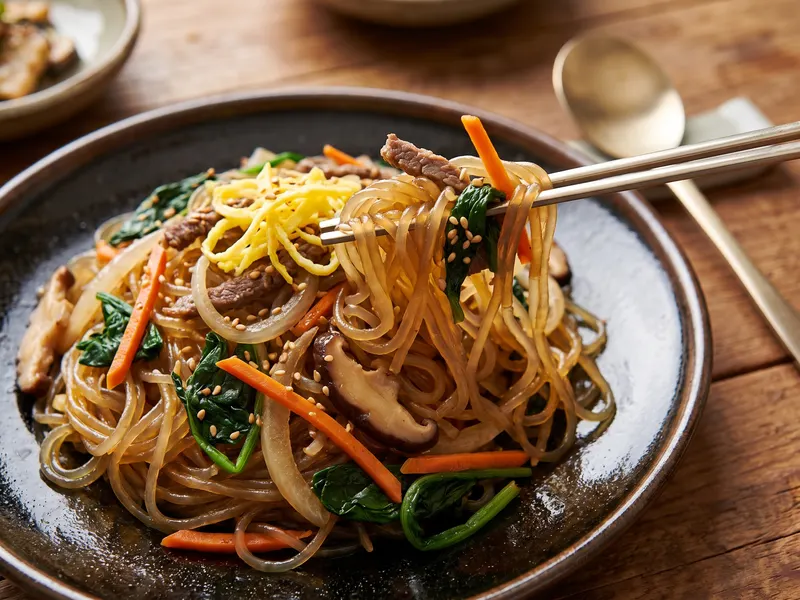
Japchae (Korean Glass Noodle Stir-Fry)
Korean sweet potato glass noodles stir-fried with colorful vegetables, marinated beef, and a savory-sweet sesame-soy dressing. Japchae (잡채, literally 'mixed vegetables') is one of Korea's most beloved festive dishes — served at holidays, birthdays, and celebrations, but easy enough for any weeknight. The dangmyeon noodles are the star: made from sweet potato starch, they are naturally gluten-free, translucent when cooked, and have a distinctly springy, slightly slippery chew unlike any other noodle. The dish is traditionally assembled in a large bowl rather than continuously stir-fried, because each vegetable is cooked separately to preserve its color and texture. The effort is real but the result — a glossy, sesame-fragrant tangle of textures and colors — is worth every pan.
Ingredients
- 200 gdangmyeon
- 150 gbeef sirloin or ribeye, very thinly sliced against the grain
- 3 tbspsoy sauce
- 2 tbspsugar
- 2 tbspsesame oil
- 3 garlic cloves
- 100 gfresh spinach
- 1 medium carrot
- 1 medium onion
- 100 gshiitake mushrooms, stems removed
- 2 scallions
- 1 tbsptoasted sesame seeds
- 2 tbspneutral oil
- 1 egg
- 1 pinchsalt, to season the vegetables
Method
- Make the sauce and marinate the beef. Mix together the soy sauce, sugar, sesame oil, and minced garlic in a small bowl — this is both the beef marinade and the noodle dressing. Taste it: savory, sweet, sesame-forward. If you want it sweeter, add a little more sugar; if saltier, more soy. Reserve two-thirds of this mixture in a large bowl (this will season the final assembled dish). Use the remaining third to marinate the beef: toss and let it sit for at least 10 minutes while you prepare everything else (in the fridge if your kitchen is warm).
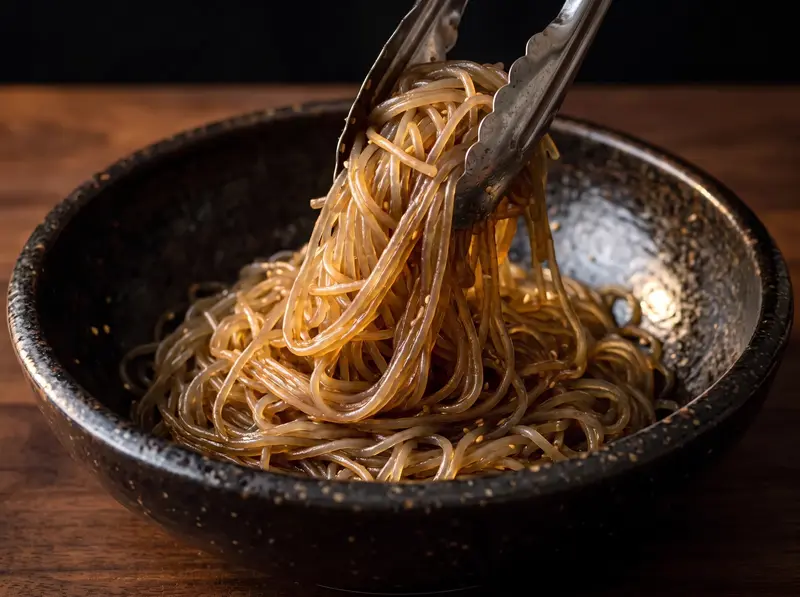
- Cook the noodles. Cook dangmyeon in a large pot of boiling water for 6 to 8 minutes until soft, springy, and translucent — not al dente, these noodles should be fully cooked and slightly slippery. Drain, rinse under cold water, and cut into roughly 15 cm lengths with kitchen scissors (long noodles are unwieldy in the final dish). Toss the noodles in the large bowl with the reserved sauce. This pre-seasoning is important: the noodles need to absorb the dressing.
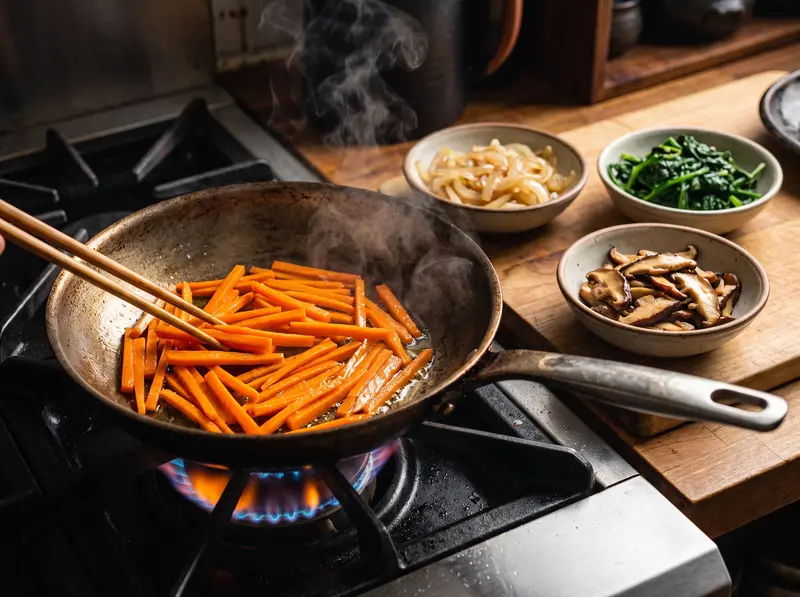
- Cook each ingredient separately. This is the heart of japchae — each component gets its own brief time in the pan to preserve color and texture. Use the same pan for all, adding a small amount of neutral oil each time. Order: (1) Onion, cut into thin half-moons: medium-high heat, 2 to 3 minutes until soft and just starting to color. Season with a pinch of salt. Add to the bowl. (2) Carrot, cut into thin matchsticks: medium-high, 1 to 2 minutes, still slightly crisp. Season with salt. Add to the bowl. (3) Shiitake caps, thinly sliced: medium-high, 2 to 3 minutes until tender and fragrant. Season with a tiny splash of soy sauce. Add to the bowl. (4) Spinach: blanch 10–15 seconds in boiling water, until just wilted, rinse cold, squeeze very dry and season with a few drops of sesame oil; then toss briefly in the hot pan for 30 seconds just to warm through. Add to the bowl. (5) Scallions, cut into 5 cm lengths: 30 seconds. Add to the bowl.
- Cook the beef. Increase heat to high. Add a little oil and the marinated beef. Sear in a single layer — do not stir immediately. Let it color on one side for 60 seconds, then toss and cook 1 to 2 minutes more, until no pink remains. Add to the large bowl.
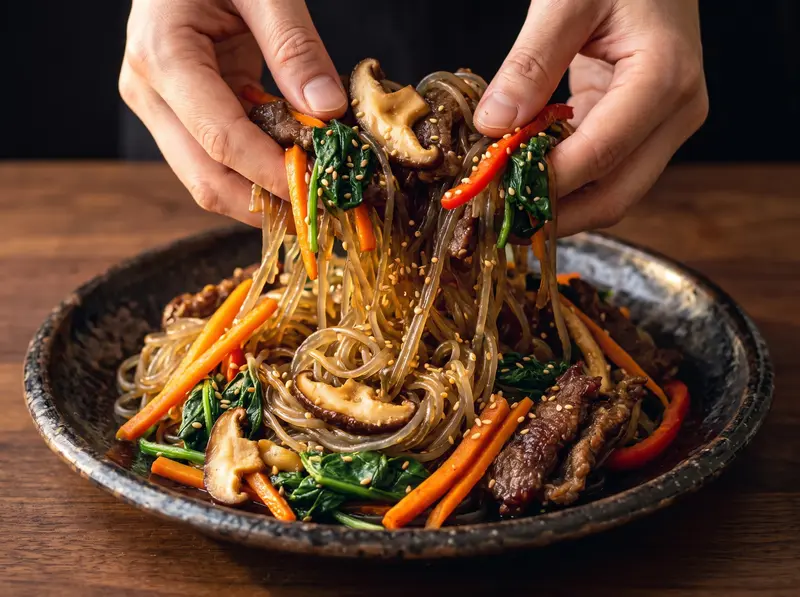
- Assemble and serve. For the egg garnish, beat the egg and cook it as a very thin omelette in an oiled pan, about 1 minute per side; roll it up and slice into thin strips. Add the sesame seeds to the bowl. Toss everything together with your hands or two large spoons — this is the satisfying final step, getting everything mixed and the pre-seasoned noodles evenly coated. Taste and adjust: more soy sauce for salt, sesame oil for richness, sugar for sweetness. Japchae can be served warm, at room temperature, or even cold — it is excellent all three ways. Top with the egg strips (jidan) and a few more sesame seeds.
FAQ
Dangmyeon (당면) are Korean sweet potato starch noodles, made from sweet potato starch and water. They are naturally gluten-free, thick (about 2 mm diameter), and cook into translucent, shiny strands with a springy, slippery chew unlike any wheat noodle. They absorb sauce without going mushy. They are sold in Korean supermarkets and increasingly in large general supermarkets. Substitutes: regular glass noodles (mung bean starch) are the closest — thinner and less chewy but similar character. Rice vermicelli works but the texture is softer. Wheat noodles, spaghetti, or udon are not good substitutes — they produce a completely different dish.
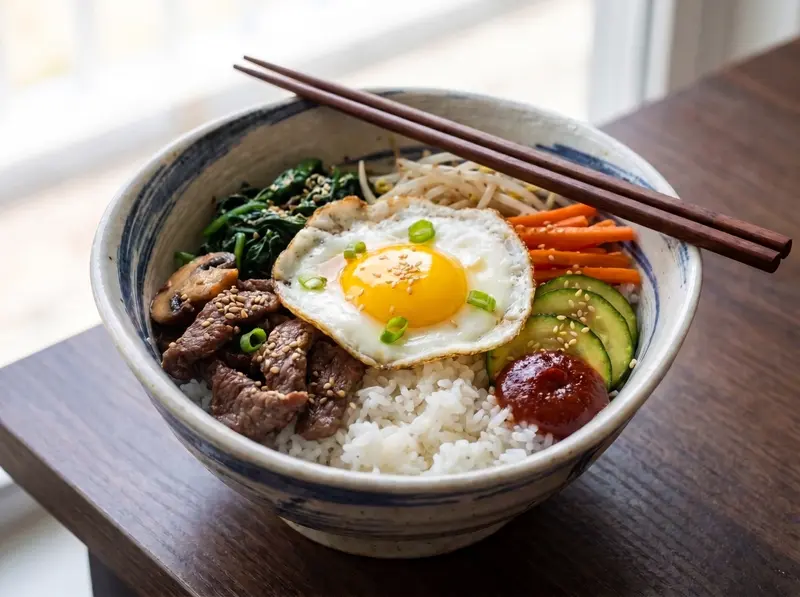
Yes, very easily. Simply omit the beef and the egg garnish. The dish is naturally meat-free without them — the flavor comes primarily from the sesame oil, soy sauce, garlic, and the variety of vegetables. You can add extra mushrooms (shiitake, oyster, or king oyster all work well) or firm tofu to compensate for the protein. The noodles themselves are gluten-free, but ordinary soy sauce is brewed with wheat. For a gluten-free japchae use tamari or a soy sauce labelled gluten-free. A Korean dish that works just as well without meat is bibimbap.
Yes — it is one of the best make-ahead noodle dishes. The flavor actually deepens as it sits. Make it fully assembled up to 2 days ahead. Store covered in the fridge; the noodles will firm up when cold. To serve: bring to room temperature (30 minutes out of the fridge) or reheat gently in a pan with a small splash of water and a few drops of sesame oil to loosen. Japchae is also excellent eaten cold or at room temperature, which is why it is such a popular potluck and party dish in Korea.
Japchae has been a prestigious dish since the Joseon Dynasty (17th century), when it was served at royal court banquets. The original version had no noodles — it was purely mixed vegetables. Noodles were added later and became the defining feature. Because of its labor-intensive preparation (cooking each ingredient separately), its colorful presentation, and its use of expensive ingredients like beef and sesame oil, japchae was traditionally reserved for celebrations. Today it appears at every major Korean holiday — Chuseok (harvest festival), Seollal (Lunar New Year), birthdays, and weddings.
Fully cooked, soft, springy, and slightly slippery — not al dente. Dangmyeon should be cooked until uniformly soft throughout with no opacity in the center. They should have a bouncy, elastic chew but no chalky or gummy core. 6 to 8 minutes in boiling water is typically right, depending on the brand and thickness. After cooking, rinse in cold water to stop cooking and remove excess surface starch, then cut into 15 cm lengths with scissors for easy serving. Undershooting the cooking time is the most common mistake with these noodles.
Rate this
Recipes by email
One letter a week: a recipe picked for your taste, plus whatever is new on the site. Unsubscribe in one click.
Welcome gift: Sergei's cookbook (e-book).
By subscribing you agree to the privacy policy.
Tell us what you like to cook (30 seconds) →Keep browsing
More dishes from the Korean archive — picked by overlap with what you're cooking now.
Join the conversation
Comments (1)
The widest pan you own works best for japchae. Maximum surface area means faster evaporation, more concentrated sauce, and better coating. A deep pot keeps things too wet.