
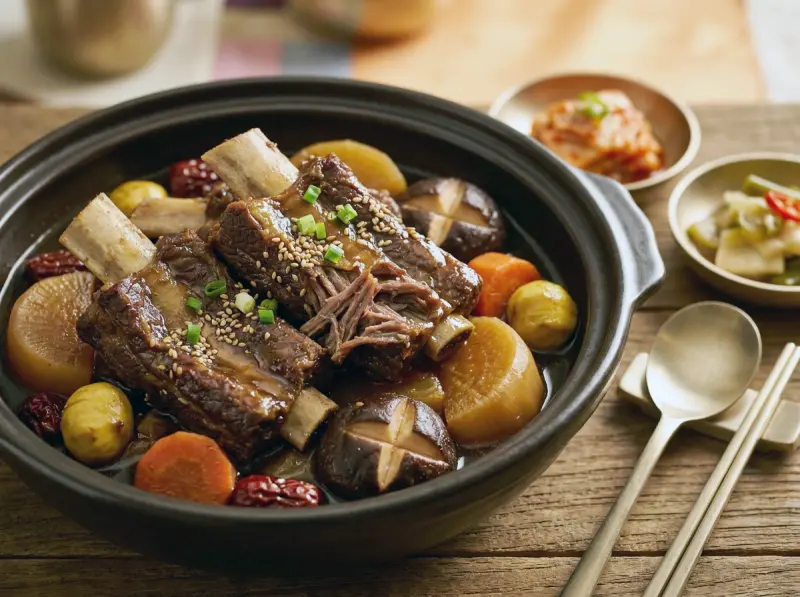
Galbi-jjim (Korean Braised Short Ribs)
Galbi-jjim is Korea's celebration dish — beef short ribs braised low and slow in a dark, glossy soy sauce until the meat slides from the bone. Grated Korean pear tenderizes the beef and lends a clean sweetness that balances the salt, while radish, carrot, shiitake, chestnuts, and jujubes soak up the sauce alongside it. Served at holidays and family gatherings, it's the kind of dish that fills a house with its smell for hours.
Ingredients
- 1200 gbeef short ribs
- 1 pcskorean pear
- 120 mlsoy sauce
- 300 gkorean radish
- 1 pcscarrot
- 6 pcsshiitake mushrooms
- 10 pcschestnuts
- 6 pcsjujubes
- 8 clovesgarlic
- 20 gginger
- 0.5 onion
- 1 tbspsesame oil
- 3 tbspbrown sugar
- 1 tbspsesame seeds
- 2 spring onion
Method
- Soak the short ribs in cold water 1–2 hours, changing the water once or twice, to draw out the blood. This is what keeps the finished sauce clean rather than murky.
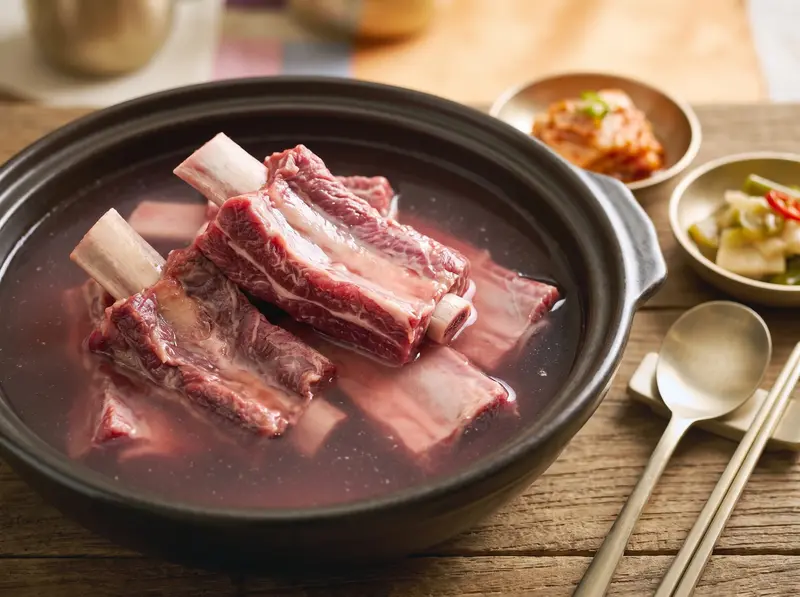
- Boil the drained ribs in fresh water 5 minutes, skimming the scum. Drain, rinse the ribs under cold water, and wash out the pot.
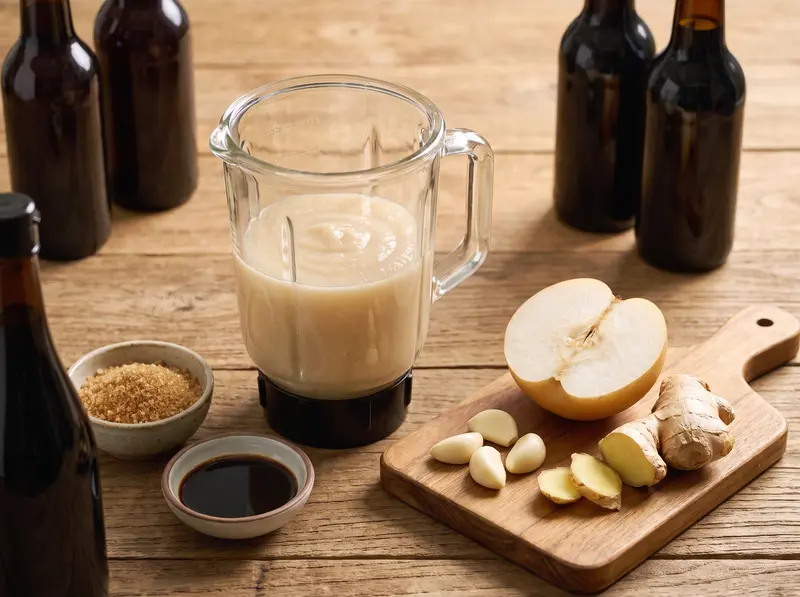
- Blend the peeled Korean pear with the garlic, ginger, and half an onion to a smooth puree. Mix with the soy sauce, brown sugar, sesame oil, and 500 ml water to make the braising liquid.
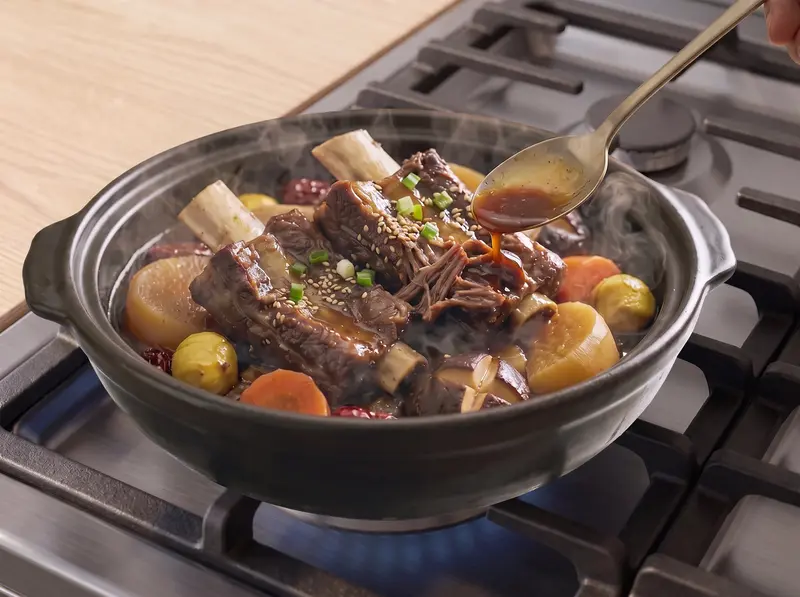
- Return the ribs to the clean pot, pour over the braising liquid, and bring to a boil. Cover, lower to a gentle simmer, and cook 45–60 minutes, turning the ribs occasionally.
- Cut the radish and carrot into large chunks and round off the edges so they don't break apart. Quarter the shiitake caps.
- Add the radish, carrot, shiitake, chestnuts, and jujubes to the pot and simmer another 30 minutes, uncovered towards the end, until the vegetables are tender and the meat is nearly falling off the bone.
- Raise the heat and reduce the sauce until it thickens to a shiny glaze that coats the ribs. Taste for salt and sugar, scatter with sesame seeds and spring onion, and serve with steamed rice.
FAQ
Both steps are about clarity and clean flavour. Soaking bone-in short ribs in cold water for an hour or two, changing the water once or twice, draws out residual blood that would otherwise make the sauce taste irony and look muddy. The five-minute parboil then releases scum and excess fat, which you skim and discard along with the water. Rinse the ribs and wash the pot before starting the braise proper — this is the step that separates a glossy, clear sauce from a cloudy one.
Korean (Asian) pear is a traditional Korean meat tenderizer: it contains enzymes that break down proteins, so the beef turns meltingly soft, and it adds a clean, mild sweetness that rounds out the soy sauce without tasting sugary. Grate or blend it into the marinade. If you can't find one, a Bosc pear, a crisp apple like Fuji, or a little grated kiwi (used sparingly, as it's much stronger) all work. Pineapple juice is another option but tenderizes very fast.
Use Korean-style cross-cut bone-in short ribs — thick, chunky pieces cut across the bone, sold specifically for braising. This is different from the thin flanken cut used for grilled LA galbi. The bone adds body and flavour to the sauce, and the marbling turns fall-apart tender over the long braise. Boneless short ribs work too but need less time. Chuck can substitute in a pinch, though it's leaner and can dry out.
The classic version isn't spicy at all — it's sweet and savoury, built on soy sauce, pear, and aromatics, which makes it popular with children and at family gatherings. There is, however, a well-known spicy variation: add gochujang and gochugaru to the braising liquid, sometimes with fresh chilies, for the fiery restaurant-style dish often served with rice cakes and melted cheese on top. Both are authentic; start with the classic if it's your first time.
Yes — it's arguably better the next day, once the meat has absorbed more of the sauce and the flavours have settled. Cool and refrigerate for up to 3 days; the fat solidifies on top and can be lifted off easily, which is a bonus. Reheat gently on the stove, adding a splash of water if the sauce has thickened too much. It also freezes well for 2–3 months. Make it a day ahead for a party and simply reheat and glaze before serving.
Rate this
Recipes by email
One letter a week: a recipe picked for your taste, plus whatever is new on the site. Unsubscribe in one click.
Welcome gift: Sergei's cookbook (e-book).
By subscribing you agree to the privacy policy.
Tell us what you like to cook (30 seconds) →Keep browsing
More dishes from the Korean archive — picked by overlap with what you're cooking now.


Join the conversation
Comments
No comments yet — be the first!