
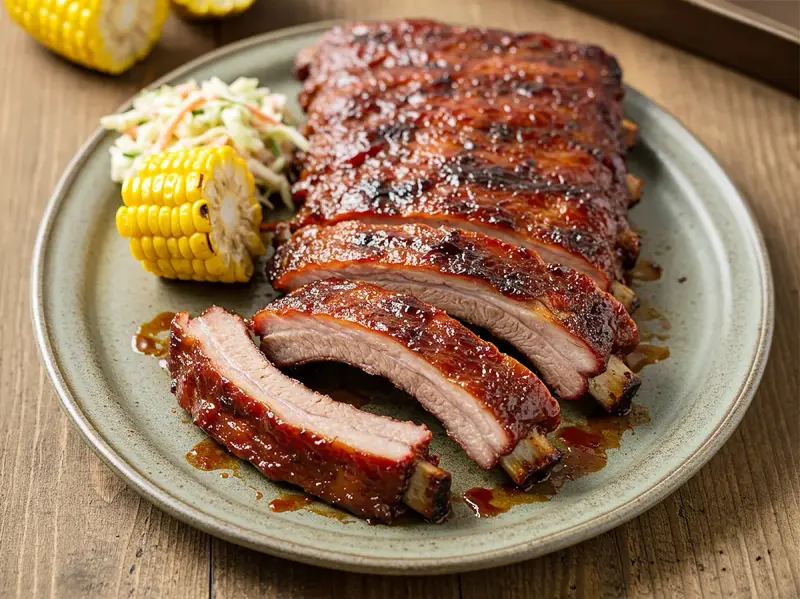
Spare Ribs
Slow-cooked pork ribs covered in a flavorful BBQ sauce. Rich flavor and juiciness make them a favorite treat for all meat lovers.
Ingredients
- 2-2.5 kgpork ribs
- 2 tbspolive oil
- 2 tbspbrown sugar
- 2 tbsppaprika
- 1 tbspgarlic powder
- 1 tbsponion powder
- 1 tspblack pepper
- 1 tspsalt
- 1/2 tspcayenne pepper
- 1 cupketchup
- 1/4 cupapple cider vinegar
- 2 tbspbrown sugar
- 1 tbspWorcestershire sauce
- 1 tspgarlic powder
1 cup = 240 ml
Method
- Remove the membrane from the back of the ribs. Mix the dry marinade: brown sugar (2 tbsp), paprika (2 tbsp), garlic powder (1 tbsp), onion powder (1 tbsp), black pepper (1 tsp), salt (1 tsp) and cayenne pepper (½ tsp). Rub the ribs with olive oil, then apply the marinade evenly on all sides. Marinate for 1-2 hours at room temperature or overnight in the refrigerator.

- Preheat the oven to 150°C. Wrap the ribs in foil and place on a baking tray. Bake for 2.5-3 hours until soft.
- Meanwhile, prepare the sauce: mix the ketchup (1 cup), apple cider vinegar (¼ cup), brown sugar (2 tbsp), Worcestershire sauce (1 tbsp) and garlic powder (1 tsp) in a small saucepan and simmer over low heat for 15-20 minutes until thickened.

- Preheat the grill to medium-high heat. Remove the ribs from the oven, unwrap the foil and brush with the sauce.
- Grill the ribs for 5-7 minutes on each side, brushing with sauce occasionally, until caramelized. Let rest for 10 minutes before serving.
FAQ
Tough ribs mean they were not cooked long enough or at too high a temperature. Pork spare ribs need at least 2.5–3 hours at 150°C (300°F) wrapped in foil to break down the collagen into gelatin. Baby back ribs are thinner and need 2–2.5 hours. The 3-2-1 method is reliable: 3 hours unwrapped at 120°C, 2 hours wrapped tightly in foil with a splash of apple juice, then 1 hour unwrapped with glaze. The meat is ready when it has pulled back from the bone by about 1 cm and a toothpick slides in with no resistance. 'Fall-off-the-bone' texture comes from wrapping in foil — without it, the ribs will have more chew.
Yes, removing the membrane (the thin silvery skin on the bone side) makes a noticeable difference. During cooking it turns tough and chewy, creates a barrier that prevents rubs and smoke from penetrating the meat, and makes the finished ribs harder to eat. To remove it: dry the ribs, slide a butter knife under the edge of the membrane at one end, grab it with a paper towel (for grip) and pull it off in one smooth motion. If it tears, use pliers or repeat from a new edge. Some racks have the membrane already removed — check when buying.
The oven broiler (grill function) is the best tool for indoor glazing. After the ribs have finished their long low-temperature cook, brush a generous layer of BBQ sauce or honey glaze all over the meat side, then place under the broiler at maximum heat for 3–5 minutes, watching closely, until the glaze bubbles and caramelizes. Repeat with a second layer of glaze for a stickier, deeper color. Alternatively, finish the ribs in a very hot oven (230–240°C) uncovered for 10–15 minutes. The key is to apply the glaze only at the end — adding it early causes burning because of the sugar content.
Boiling ribs is a debated shortcut. It does reduce total cooking time by 30–40 minutes, but it also leaches out a significant amount of the flavor and fat into the water, leaving the meat drier and less rich. If you do boil, keep the time to 20–30 minutes maximum and add aromatics to the water (onion, garlic, bay leaf, peppercorns) to compensate for flavor loss. A much better alternative for tenderising quickly is the foil-wrapping method — wrap the ribs tightly with a splash of apple cider vinegar or apple juice and bake at 150°C for 2 hours. This produces similar tenderness without discarding the flavor.
The ideal oven temperature for pork ribs is 135–150°C (275–300°F) — low and slow. Higher temperatures cook the outside faster than the collagen can melt, resulting in tough, dry meat. Ribs are done when: the meat has pulled back from the tips of the bones by about 1 cm, a skewer or toothpick slides in with zero resistance, and when you pick up the rack by one end with tongs it flexes and almost cracks in the middle. The internal temperature should be around 90–95°C — much higher than food safety requires (63°C), because it is the collagen-to-gelatin conversion temperature that matters for texture.
Rate this
Recipes by email
One letter a week: a recipe picked for your taste, plus whatever is new on the site. Unsubscribe in one click.
Welcome gift: Sergei's cookbook (e-book).
By subscribing you agree to the privacy policy.
Tell us what you like to cook (30 seconds) →Keep browsing
More dishes from the American archive — picked by overlap with what you're cooking now.

Join the conversation
Comments (1)
Pork dries out faster than you'd expect in spare ribs. I pull it off heat at 63°C internal temperature and let carryover cooking take it to the safe 65°C. Those 2 degrees of rest make the difference between moist and sawdust.