

Sukiyaki (Japanese Beef Hot Pot)
Sukiyaki (すき焼き, 寿喜烧 in Chinese) is a Japanese one-pot dish in which thin slices of marbled beef, tofu, negi, mushrooms and shungiku simmer in a sweet-salty sauce of soy sauce, mirin, sake and sugar called warishita, and every bite is dipped in beaten raw egg. At home you don't need a tabletop burner: a wide, deep skillet on the stove does the job, cooked in two rounds. This is the Kanto style, where the sauce is mixed in advance; the Kansai way of seasoning the beef directly in the pan is explained in the author's note. Prep and cooking together take about 35 minutes.
Ingredients
- 400 gbeef, thinly sliced marbled (ribeye or chuck)
- 300 ggrilled tofu (yaki-dofu) or firm tofu
- 200 gjapanese long onion (negi) or leek, white and pale green part
- 6 fresh shiitake mushrooms
- 100 genoki mushrooms
- 100 gshungiku (garland chrysanthemum) or spinach
- 200 gshirataki noodles
- 1 tbspbeef fat or neutral oil
- 100 mlsoy sauce
- 100 mlmirin
- 100 mlsake
- 3 tbspsugar
- 300 mlwater or cold-brewed kombu water
- 4 very fresh eggs, for dipping
Method
- Drain the shirataki, boil it for 2 minutes and drain again; this removes the faint smell of the packing liquid. Cut it into bite-sized lengths. Slice the negi on the diagonal into 4 cm pieces, cut the tofu into 8 pieces, trim the shiitake and halve them, separate the enoki into small bunches and cut the shungiku into 5 cm lengths. Arrange everything on a platter and keep the beef on a separate plate, because it goes into the pan in two batches.
- Make the warishita first: in the Kanto style the sauce is ready before anything touches the pan. Simmer the sake and mirin in a small pot for about a minute to cook off the alcohol, then add the soy sauce, sugar and water. Stir until the sugar dissolves and switch off as soon as it starts to bubble. Because the sauce is mixed separately, every batch of beef and vegetables gets the same seasoning, however unevenly the pan heats.
- Break the eggs into four small bowls and beat each one lightly with chopsticks until the white no longer hangs in strings. Set them out at the table with the sauce. Read the note on raw egg in the author's note below and decide now whether you will use them, because the dish works either way.
- Set a wide, deep skillet (about 28 cm) over medium heat. Melt the beef fat in it, or heat the oil, then add the negi and brown it for 1 to 2 minutes, until the edges are golden and the pan smells sweet. The browned negi flavours the fat that the beef is about to cook in.
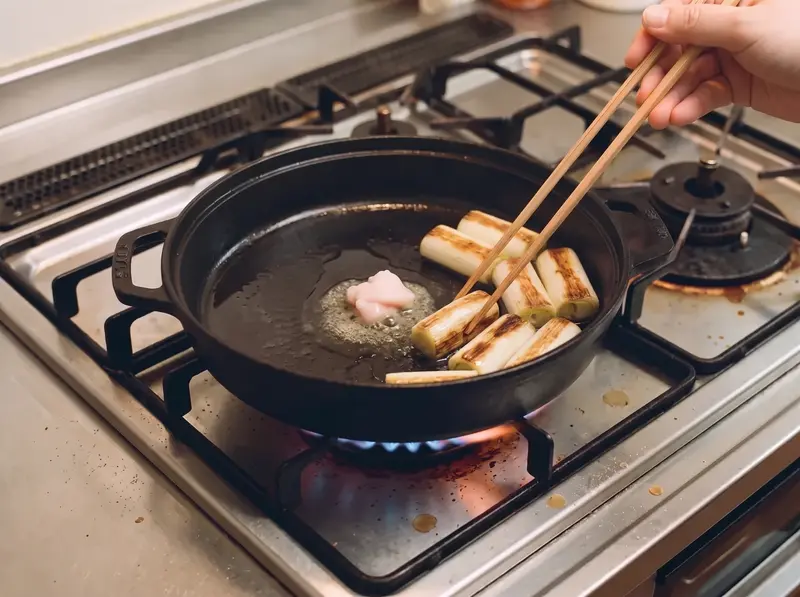
- Lay half of the beef in a single layer without overlapping and pour in about a third of the warishita. Cook for 30 to 60 seconds, only until the pink is gone, and eat these first slices straight away, dipped in egg. Thin marbled beef turns from tender to tough within a minute or two in hot sauce, so this is the moment to take it out rather than keep cooking.
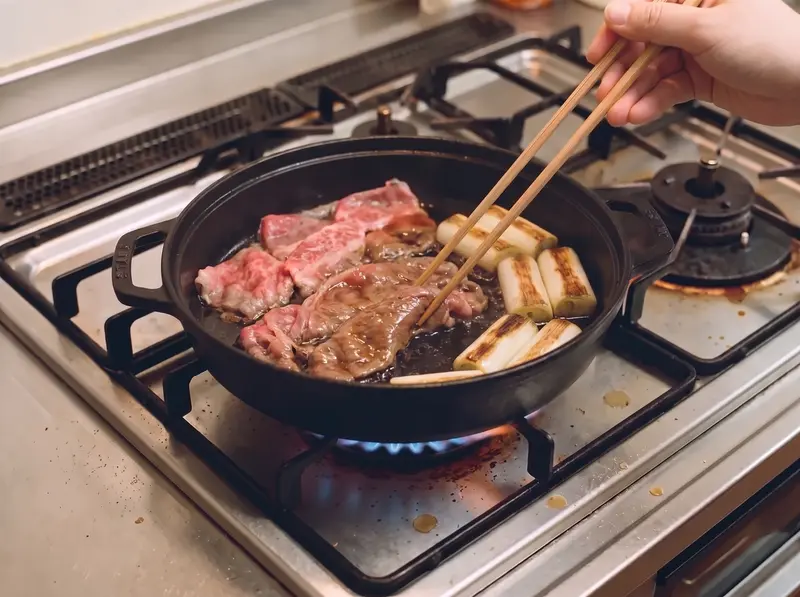
- Push the beef to one side and add the tofu, shirataki, shiitake, enoki and half of the shungiku, arranging them in groups instead of piling them up. Pour in another third of the warishita and lower the heat to medium-low. Simmer for 6 to 8 minutes, until the shiitake are soft and the tofu has taken on a brown colour at the edges; tofu and shirataki need this time to soak up the sauce.
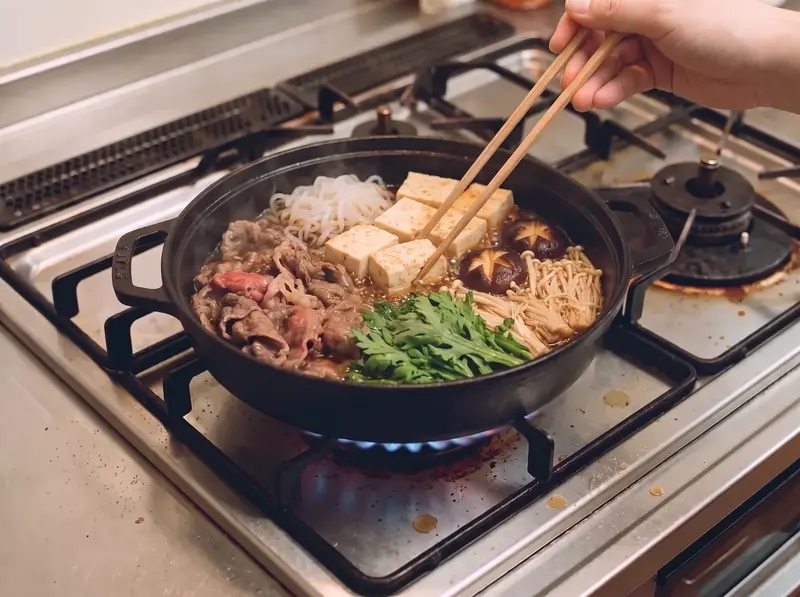
- Taste the broth. Vegetables release water while the sauce reduces, so if it turns too salty add a few tablespoons of water at a time, and if it tastes flat add a spoonful of the remaining warishita. Add the rest of the beef and the remaining shungiku, cook for 1 to 2 minutes and eat. The greens go in last because they wilt in about a minute. Keep eating in rounds, topping up the sauce as needed.
FAQ
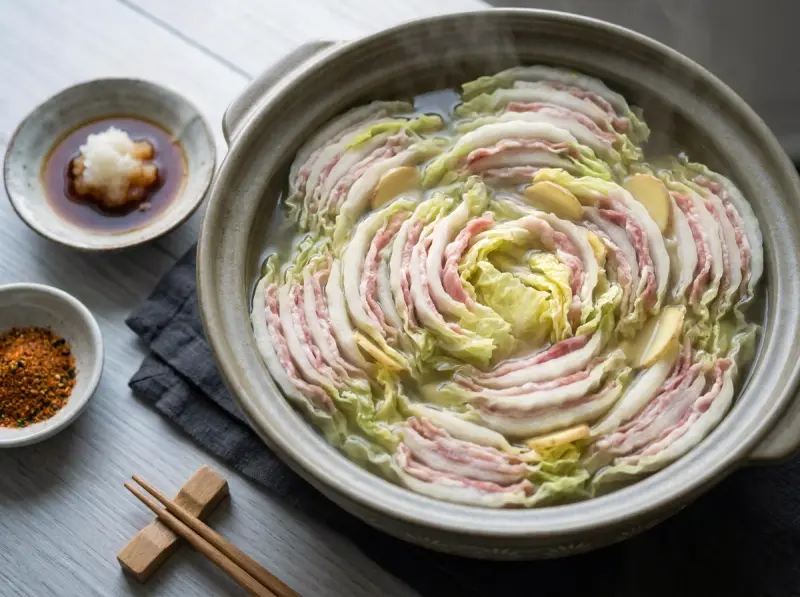
Sukiyaki (すき焼き) is a Japanese dish cooked in a shallow pot: thin slices of beef, tofu, negi, mushrooms, shungiku and shirataki simmer in warishita, a sweet-salty sauce of soy sauce, mirin, sake and sugar. Each piece is dipped in beaten raw egg before eating, which softens the sweetness and coats the beef. It is eaten in rounds, cooking a few ingredients at a time. Another Japanese dish cooked at the table in one pot is mille-feuille nabe, which is quieter in flavour and has a clear dashi broth instead of a sweet sauce.
In the Kanto style the warishita is mixed in advance, poured into the pot, and the beef and vegetables simmer in it together. It is the easier version for a beginner, since the seasoning is measured beforehand. In the Kansai style the beef is grilled in melted beef fat, sugar is sprinkled on it, and soy sauce (and sake) is added right in the pot; there is no premixed sauce or dashi, and you adjust the seasoning as the vegetables release water. The Kansai way gives the beef more browned flavour but needs more judgement. This recipe uses the Kanto style, with the negi browned first for aroma.
Dipping in raw beaten egg is the usual way to eat sukiyaki in Japan, but raw egg can carry bacteria that cause food poisoning, so treat it as a choice, not an obligation. If you want the dip, use very fresh eggs or pasteurised eggs, which are commonly sold in the US and some other countries. If you don't want raw egg, or you are cooking for children, older people or someone pregnant, skip it: eat the beef straight from the pan, or lay a soft-cooked egg beside it.
Shungiku is the most seasonal item, and spinach, watercress or bok choy all work in its place; add them last so they only wilt. Yaki-dofu can be replaced with firm tofu, browned lightly in a pan for a minute on each side so it doesn't fall apart in the sauce. Shirataki can be left out with no real loss, and negi can be replaced with the white part of a leek, sliced thick. Napa cabbage, potatoes and bean sprouts are other vegetables that suit the pot. Only the beef should not be compromised: choose marbled, paper-thin slices.
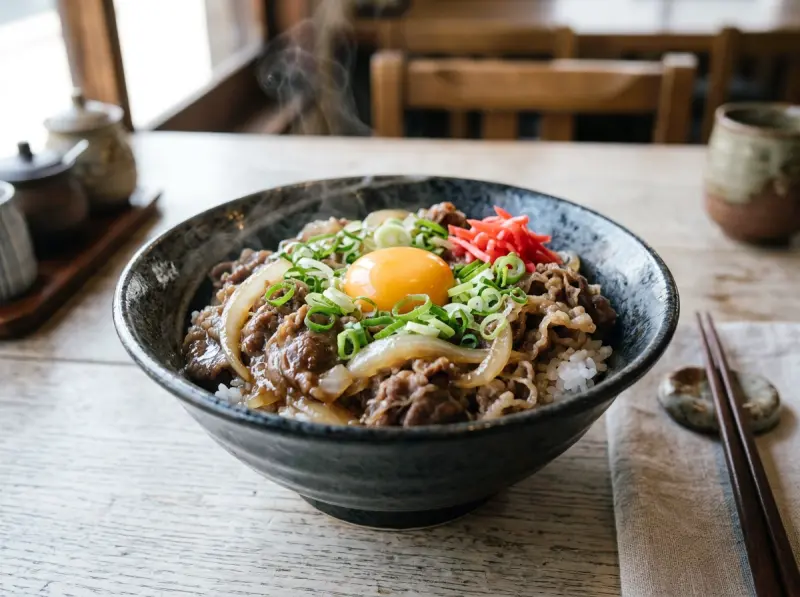
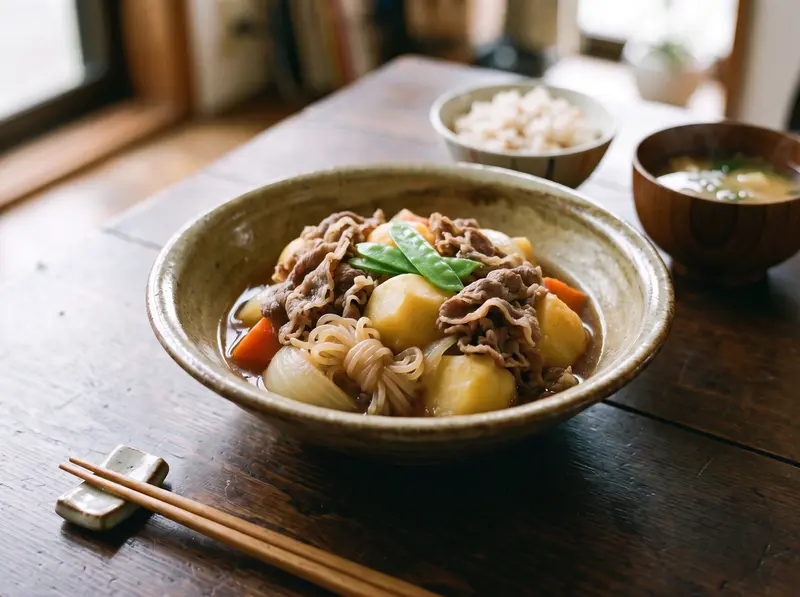
If the broth is too salty, add water or kombu water a few tablespoons at a time; if it is too sweet, add a small splash of soy sauce. Do this gradually, because the liquid reduces while you eat. The leftover broth is not wasted: boil udon in it for a second course, or simmer thinly sliced onion and a little beef in it and spoon it over rice for something close to gyudon. Don't keep broth that has had raw egg dripped into it; use only the untouched part, in the fridge for a day or two. For another home-style Japanese beef dish in a soy-mirin broth, try nikujaga.
Rate this
Recipes by email
One letter a week: a recipe picked for your taste, plus whatever is new on the site. Unsubscribe in one click.
Welcome gift: Sergei's cookbook (e-book).
By subscribing you agree to the privacy policy.
Tell us what you like to cook (30 seconds) →Keep browsing
More dishes from the Japanese archive — picked by overlap with what you're cooking now.
Join the conversation
Comments
No comments yet — be the first!