
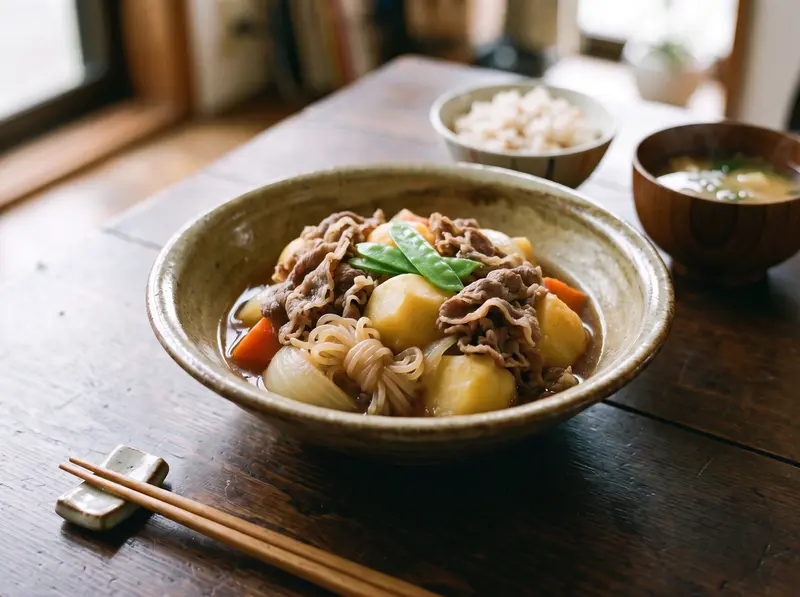
Nikujaga (Japanese Meat and Potato Stew)
Nikujaga (肉じゃが, also written nikujyaga, literally "meat and potatoes") is a Japanese home-style stew of thinly sliced beef, potatoes, onion and carrot simmered in a broth of dashi, soy sauce, mirin, sake and sugar. In western Japan it is usually made with beef, in eastern Japan more often with pork. You sauté the onion and meat first, simmer everything under a drop lid for about 15 minutes, then let the pot stand off the heat so the potatoes soak up the broth.
Ingredients
- 250 gbeef, thinly sliced (ribeye or chuck)
- 500 gpotatoes
- 200 gonion
- 120 gcarrot
- 200 gshirataki noodles (optional)
- 8 snow peas
- 1 tbspneutral oil
- 400 mldashi
- 4 tbspsoy sauce
- 4 tbspmirin
- 2 tbspsake
- 1 tbspsugar
Method
- Peel the potatoes, cut them into chunks about 4 cm across and soak in cold water for 5 minutes; this rinses off surface starch so the broth stays clearer. Cut the carrot into irregular bite-sized pieces (rangiri: give the carrot a quarter turn after each diagonal cut, which exposes more surface to the broth) and the onion into 1 cm wedges. Cut the beef into bite-sized pieces.
- Bring a pot of water to the boil and blanch the snow peas for 1 minute, then lift them into cold water. In the same water boil the drained shirataki for 1 minute, drain and cut the strands in half; this takes away the faint smell of the packing liquid. Skip the shirataki step if you leave them out.
- Heat the oil in a wide, deep pan over medium heat. Cook the onion for 2 to 3 minutes until it starts to soften, then add the beef and stir until no pink is left. Frying first spreads the beef fat through the pan and gives the broth more flavour than simply boiling everything.
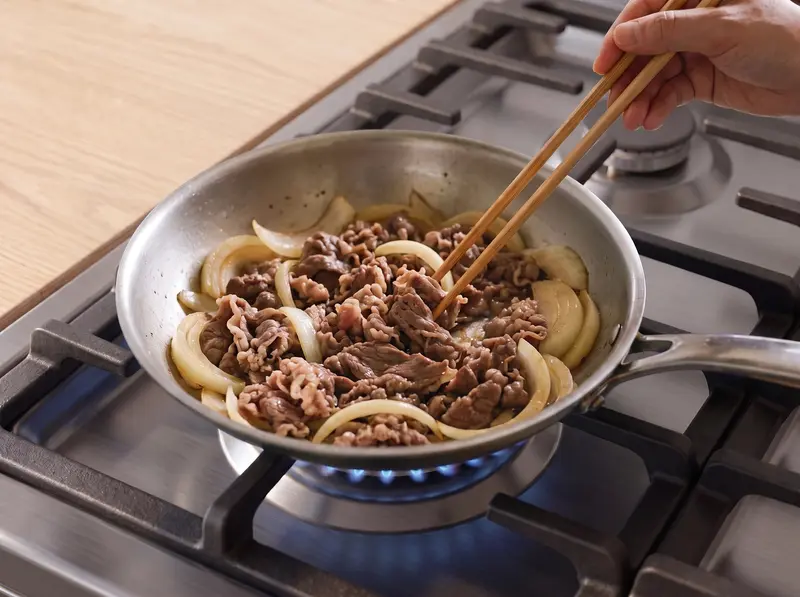
- Add the drained potatoes, then the carrot and shirataki, and stir for 1 to 2 minutes until everything is coated with oil. This way the vegetables pick up the flavour of the meat before any liquid goes in.
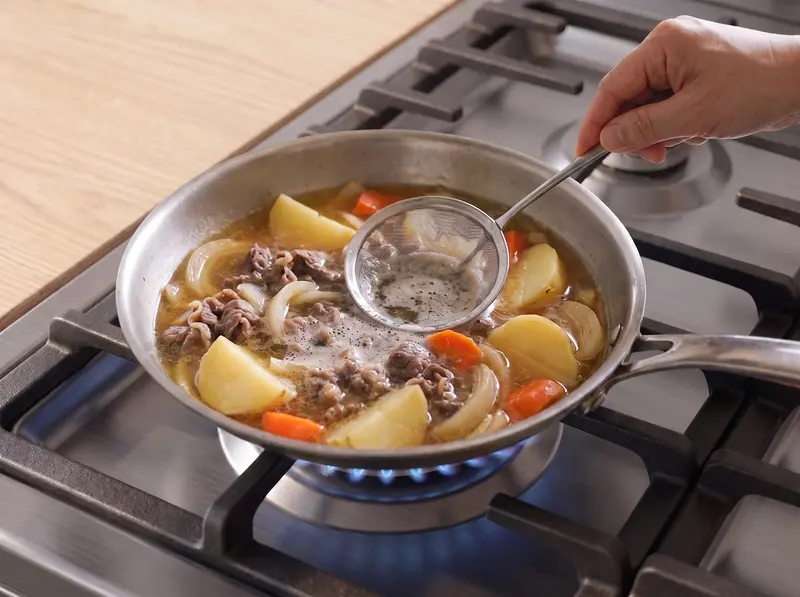
- Pour in the dashi and bring to the boil over medium heat. Skim off the grey foam with a spoon, otherwise it clouds the broth. Add the sugar, sake, mirin and soy sauce and stir once.
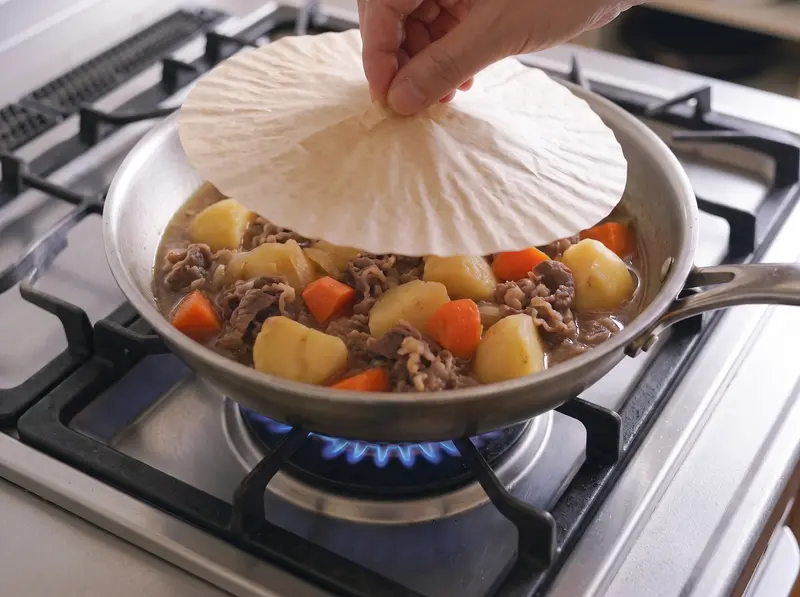
- Cover with an otoshibuta, a drop lid that rests directly on the food. If you have none, cut a circle of parchment paper or foil slightly smaller than the pan. Turn the heat to low and simmer for 15 minutes without stirring, until a skewer slides easily into the largest potato. The lid keeps the top pieces under the surface of the broth so they season evenly, and stirring would break the potatoes apart.
- Turn off the heat, remove the lid and let the pot stand for 30 minutes; the potatoes keep absorbing the broth as it cools. Reheat gently for a few minutes with the snow peas and serve warm in shallow bowls with some of the broth.
FAQ
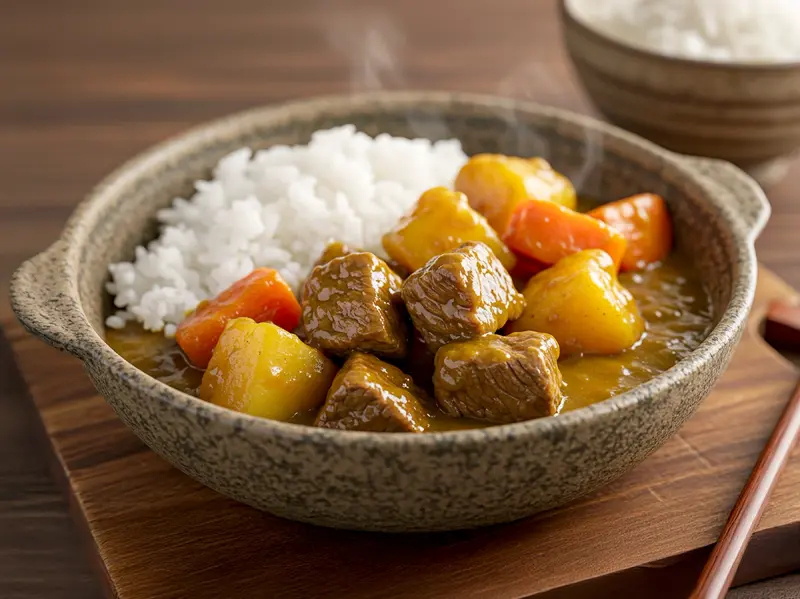
Nikujaga (肉じゃが) is a Japanese home-style dish of thinly sliced beef or pork, potatoes, onion and carrot simmered in dashi, soy sauce, mirin, sake and sugar. The broth is sweet-savoury and fairly thin, with no thickener, and the potatoes are the part that soaks up the most flavour. It is meant to be eaten warm, not piping hot, and tastes even better the day after you make it. If you know Japanese curry rice, the vegetables are similar, but nikujaga is seasoned with soy sauce and mirin instead of curry roux.
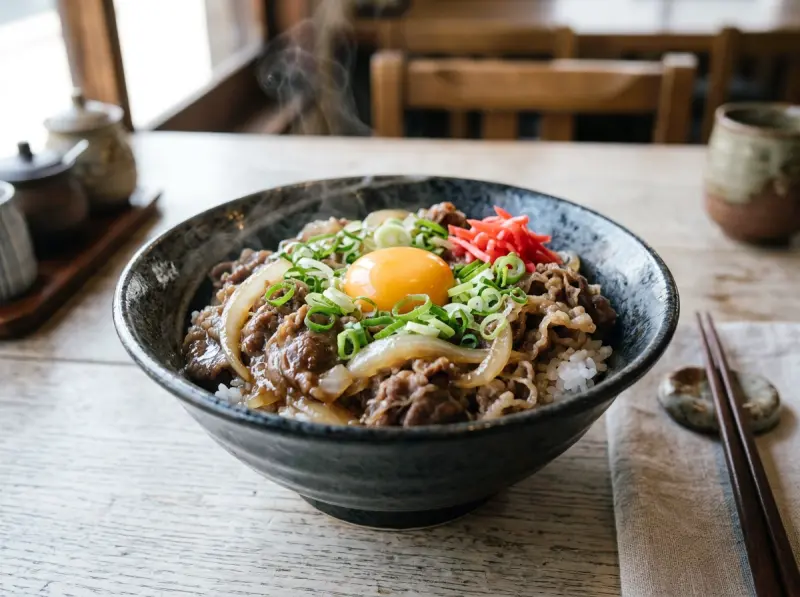
Both are correct: in western Japan nikujaga is typically made with beef and in eastern Japan more often with pork, so use whichever you like. Japanese recipes call for thin slices of beef shoulder, sirloin or ribeye, or pork belly or pork scraps. At an Asian grocery the pre-sliced beef sold for hot pot works well, the same one you would use for gyudon.
The usual causes are boiling too hard, stirring, and pieces cut too small. Cut the potatoes into chunks about 4 cm across, simmer on low under a drop lid for 12 to 15 minutes and do not stir once the liquid is in. One Japanese recipe recommends Meiqueen potatoes because they hold their shape better; Yukon Gold is what Just One Cookbook uses outside Japan. Soaking the cut potatoes for 5 minutes and draining them well before frying also helps.
Yes to all three. Shirataki are optional: the Kikkoman English, Ajinomoto and Kurashiru recipes leave them out. Instant dashi granules replace homemade dashi, at about 1½ tsp for 400 ml of water. Instead of an otoshibuta, cut a circle of parchment paper or aluminum foil slightly smaller than your pan and lay it on the food; a regular lid also works, but the food at the top gets less broth.
Nikujaga keeps 3 to 4 days in an airtight container in the fridge, and the flavour improves after the first night. To freeze it, take the potatoes out first: they change texture when frozen, so freeze only the meat, carrot and broth, for up to 1 month. Reheat gently on the stove over low heat, adding a spoonful of water if the broth has thickened, and do not stir hard or the potatoes will crumble.
Rate this
Recipes by email
One letter a week: a recipe picked for your taste, plus whatever is new on the site. Unsubscribe in one click.
Welcome gift: Sergei's cookbook (e-book).
By subscribing you agree to the privacy policy.
Tell us what you like to cook (30 seconds) →Keep browsing
More dishes from the Japanese archive — picked by overlap with what you're cooking now.
Join the conversation
Comments
No comments yet — be the first!