

Beef Stew
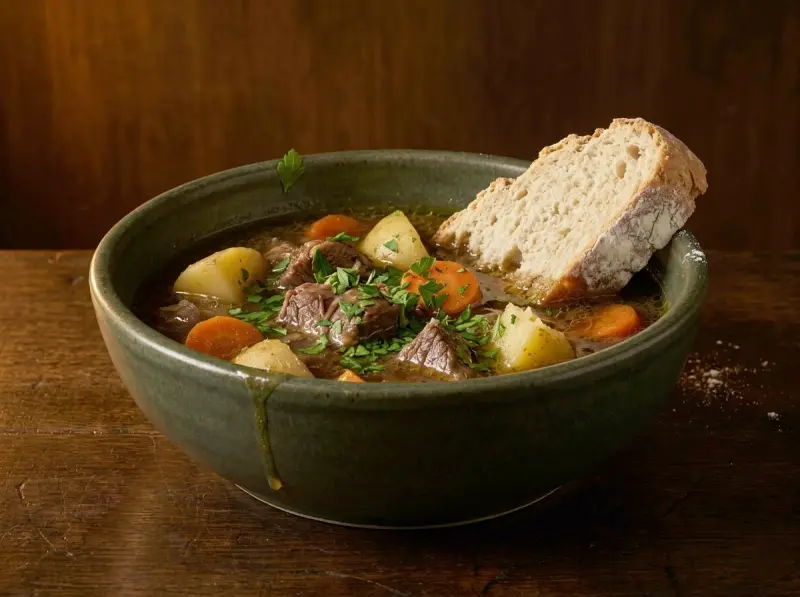
Beef stew is a one-pot braise of chuck beef, potatoes and carrots simmered in beef broth with tomato paste, garlic, thyme and bay leaves. The beef is browned in batches first, then cooked for about 90 minutes until the collagen melts into a thick, glossy sauce. It tastes better the next day, and works with any root vegetables you have on hand.
Ingredients
- 700 gbeef chuck
- 500 gpotato
- 3 carrots
- 1 onion
- 3 garlic cloves
- 2 tbsptomato paste
- 500 mlbeef broth
- 2 tbspflour
- 2 tbspvegetable oil
- 3 thyme sprigs
- 2 bay leaves
- 1 tspsalt
- 0.5 tspblack pepper
Method
- Cut the beef into 4 cm chunks, removing any large sinew. Pat completely dry with paper towels — wet meat steams instead of browning. Season generously with salt and pepper, then toss with flour to coat.
- Heat oil in a heavy Dutch oven over medium-high heat until shimmering. Brown the beef in 2–3 batches, leaving space between pieces. Cook undisturbed for 3 minutes per side until a deep brown crust forms. Don't rush this — it's where the flavor of the whole stew comes from. Set meat aside.

- Reduce heat to medium. Add diced onion to the same pot and cook 5 minutes, scraping up the browned bits. Add garlic and tomato paste, cook 2 minutes until the paste darkens. Pour in the broth and stir, scraping the bottom clean.
- Return the beef to the pot. Add thyme and bay leaves. Bring to a gentle simmer — small bubbles, not a rolling boil. Cover and cook on the lowest heat for 60 minutes.

- Add carrots cut into large chunks and waxy potatoes quartered. Cover and cook another 30–35 minutes until the vegetables are tender and the beef pulls apart easily with a fork.
- Remove bay leaves and thyme. Taste and adjust salt. If the sauce is too thin, simmer uncovered for 10 minutes. Serve in deep bowls with crusty bread or over mashed potatoes.

FAQ
Chuck roast needs low, steady heat — not a rolling boil. If the liquid bubbles hard the whole time, the muscle fibres contract and squeeze out moisture, leaving the meat dry and chewy even after hours of cooking. The right temperature is a bare simmer: a few lazy bubbles breaking the surface every few seconds. The second issue is time. Chuck has a lot of collagen that takes 90 minutes to fully convert to gelatin — pull it at 60 minutes and it's still tough. If the meat is still firm at 90 minutes, give it another 30: there's a specific moment when it goes from resistant to yielding, and it happens quickly.
Chuck roast (shoulder) is the most reliable: it has enough fat and collagen to stay juicy and turn tender in 90 minutes to 2 hours. Brisket takes longer — 2.5 to 3 hours — but the result is silkier because it has even more connective tissue. Shin (beef shank) produces the richest, most gelatinous sauce of all three, but it needs 3+ hours. Avoid lean cuts like sirloin or tenderloin for stew: they have no collagen to break down, so they dry out instead of softening. When in doubt, choose the cut with the most visible marbling and connective tissue. For a wine-based braise of the same cut, see beef bourguignon.
Floury or starchy potatoes (russet, King Edward, any large mealy variety) disintegrate after 30–40 minutes of simmering. For stew, use waxy varieties: red-skinned potatoes, Yukon Gold, Charlotte, or any small 'salad' potato. They hold their shape even after an hour of cooking. Cut them into large chunks — 3–4 cm — because small pieces break down regardless of variety. The other fix: add potatoes later, not at the start. Add them when the beef has already been braising for 60 minutes, then cook for 30–35 minutes more. That timing works for any variety. The same method with lamb is Irish stew.
The easiest method: remove the lid and simmer over medium heat for 10–15 minutes. Liquid evaporates and the sauce concentrates naturally. A second option: mash 2–3 chunks of cooked potato directly in the pot and stir them in — potato starch thickens the broth without any additives and keeps the flavor clean. Third: make sure you browned the flour-coated beef properly at the start — that coating dissolves into the broth during braising and thickens it as it cooks. If you skipped flouring the beef, the sauce will always be thinner. A splash of balsamic vinegar (1 tablespoon) stirred in at the end won't thicken the sauce but will concentrate the flavor and make it taste richer.
Yes — and it's worth doing. Beef stew made a day ahead is noticeably better: the collagen that dissolved during braising sets overnight in the fridge into a thick, almost gelatinous sauce that coats the meat completely. Reheat on low heat with the lid on, adding 3–4 tablespoons of water or broth because the sauce will have thickened in the cold. Stir every few minutes and stop as soon as it's hot through — don't bring it to a boil. Boiling reheated stew tightens the beef fibres and undoes the tenderness you built during the long braise. The stew keeps in the fridge for up to 4 days and freezes well for 3 months.
Rate this
Recipes by email
One letter a week: a recipe picked for your taste, plus whatever is new on the site. Unsubscribe in one click.
Welcome gift: Sergei's cookbook (e-book).
By subscribing you agree to the privacy policy.
Tell us what you like to cook (30 seconds) →Keep browsing
More dishes from the French archive — picked by overlap with what you're cooking now.

Join the conversation
Comments (2)
Cooked this for 3 hours on low and it was falling apart tender. I used half wine half stock and added some pearl onions at the end. The leftovers the next day were even better, let it sit in the fridge overnight.
Rest the beef for at least 5 minutes after cooking beef stew. Cutting immediately lets all those precious juices run onto the board. A loose foil tent keeps it warm without steaming the crust.