
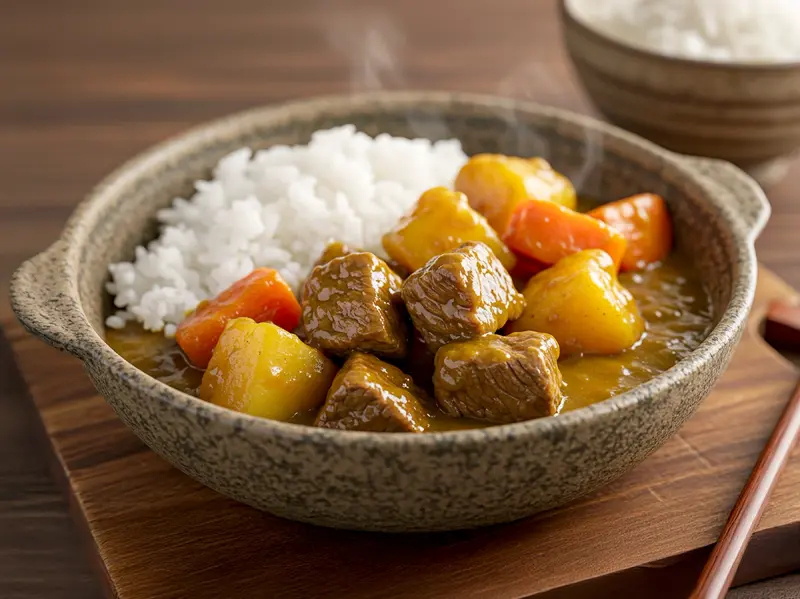
Japanese Curry Rice
Japan's most beloved comfort food — tender beef, potato, carrot, and onion slow-braised in a rich, mildly sweet curry sauce thickened with a flour roux. Milder and silkier than Indian or Thai curry, served over steamed rice or udon noodles. Japanese curry arrived from India via Britain in the 19th century and was completely reimagined.
Ingredients
- 500 gbeef brisket or neck
- 1 large potato, cut into large chunks
- 1 carrot, cut into thick rounds
- 1 onion, cut into half-rings
- 2 tbspvegetable oil
- 2 tbspflour
- 1 tbspcurry powder
- 500 mlbroth or water
- 1 tbspsoy sauce
- 1 tspsugar
- salt and pepper to taste
Method
- Heat oil in a large pot. Brown the beef on all sides until golden. Remove and set aside.
- In the same pan, fry the onion until golden, then add the potato and carrot.
- In a small separate pan, fry the flour until it smells nutty. Add curry powder and fry 30 more seconds.
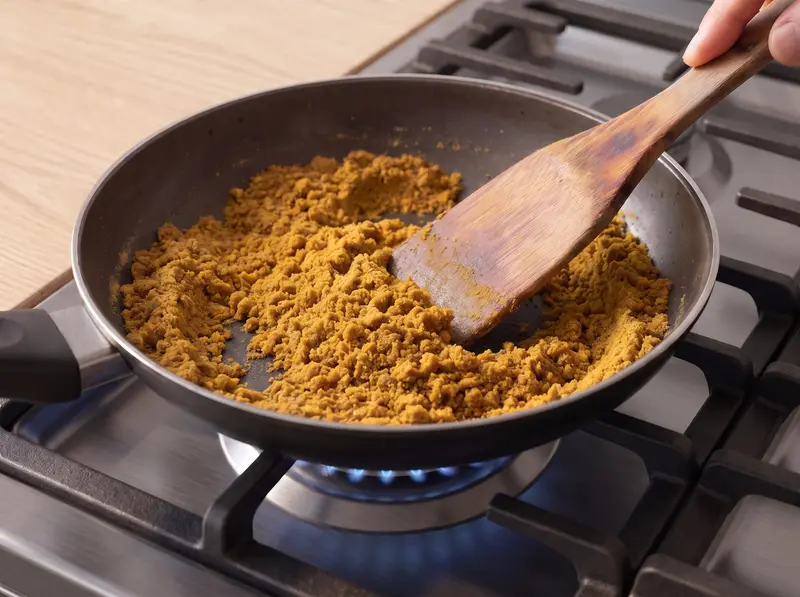
- Combine the meat, vegetables, and curry paste in the main pot. Pour in the broth. Add soy sauce, sugar, salt and pepper.
- Braise covered on low heat for 1–1.5 hours until the meat is very tender and the sauce is thick and glossy.
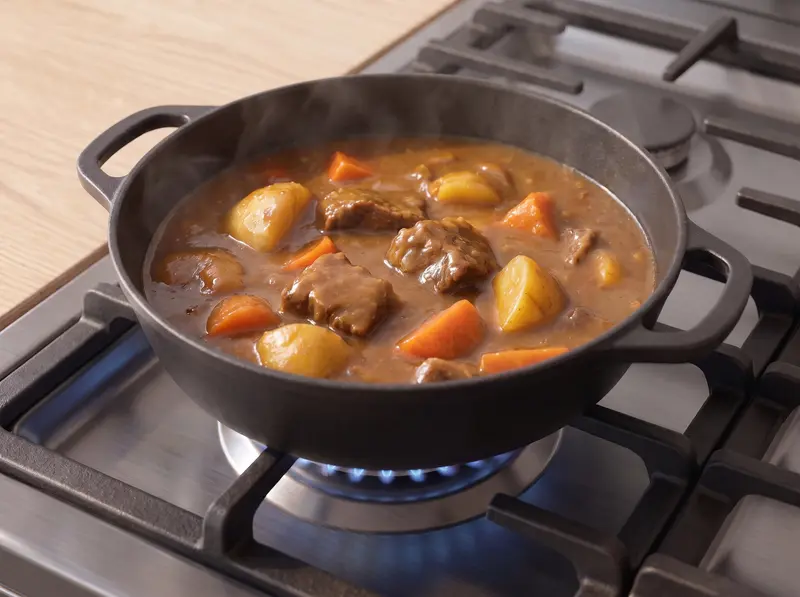
- Serve with steamed rice or udon noodles.
FAQ
Japanese curry is the mildest and sweetest of all. It is thicker in texture, contains potato and carrot, and is served with rice or udon noodles. Indian curry is aromatic and spicy with whole spices. Thai curry is coconut-based and herby. Japanese curry was brought from India via Britain in the 19th century and completely reimagined.
Frying flour in oil creates a roux which thickens the sauce and removes the raw flour taste. Frying the curry powder at the same time blooms its aroma. Skip this step and the sauce will be thin and flat.
Yes — curry cubes are a Japanese hack: they already contain roux, spices, and thickener. Simply dissolve the cubes in the hot broth at the last stage. The result is more authentic than using loose powder.
Over 1–1.5 hours of braising, collagen from the meat converts to gelatin making the sauce silky. The vegetables partially break down, thickening the broth. The flavors fully merge. Japanese curry does not tolerate being rushed.
Classically with rice (kare-raisu) or udon noodles (kare-udon). Also popular is kare-pan — a bread roll filled with curry. Restaurants often serve it with a thin pork cutlet on top — this is katsu-kare, one of the most popular variations.
Rate this
Recipes by email
One letter a week: a recipe picked for your taste, plus whatever is new on the site. Unsubscribe in one click.
Welcome gift: Sergei's cookbook (e-book).
By subscribing you agree to the privacy policy.
Tell us what you like to cook (30 seconds) →Keep browsing
More dishes from the Japanese archive — picked by overlap with what you're cooking now.


Join the conversation
Comments (1)
The pan needs to be properly hot before the beef brisket goes in for japanese curry rice. A lukewarm pan steams instead of sears. Wait until you see the faintest wisp of smoke — that's your signal.