
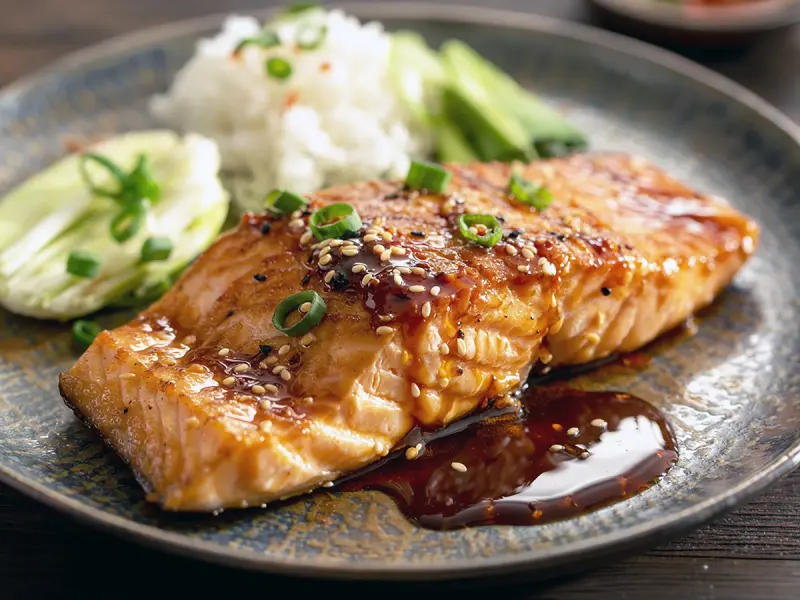
Mellow Teriyaki Fish
White fish fillets glazed with a homemade teriyaki sauce that caramelizes under high heat into a sticky, sweet-savory coating. The sauce reduces to a glossy lacquer while the fish stays flaky and moist inside.
Ingredients
- 2 piecesfish
- 2 tbspsake
- 2 tbspsoy sauce
- 2 tbspmirin
- 1 tbspsugar
- 2 tbspolive oil
- optionalgarlic and ginger
- for garnishingsesame seeds and shallots, sliced into rings
- to tastesalt and black pepper
Method
- Salt and pepper the fish on both sides. Set aside for 10 minutes.
- In a small saucepan, combine sake, soy sauce, mirin and sugar. Bring to a boil over medium heat and simmer until the sauce thickens slightly, about 3-5 minutes. Set aside.
- Heat a skillet with olive oil over medium-high heat. Place the fish in the pan and fry on each side for 3-4 minutes until golden. Add garlic and ginger if using.

- Pour teriyaki sauce over the fish and cook for another 1-2 minutes until the fish is done.

- Sprinkle with sesame seeds and shallots before serving.
FAQ
Teriyaki sauce contains sugar and mirin that caramelize quickly and burn at high heat. Cook over medium heat, not high. Apply the sauce only at the end (the last 2–3 minutes) — do not marinate the fish in it or pour it in at the start. Flip the fish 2–3 times, brushing with sauce each time. The pan should not be too hot.
Salmon is the most popular choice for teriyaki because its fat content pairs beautifully with the sweet sauce. Excellent substitutes: yellowtail (hamachi), mackerel, sea bass, or cod. Lean white fish (tilapia, pangasius) also works but requires more care — it is drier and breaks apart more easily. For a firm crust, choose skin-on fish.
Classic homemade sauce: 3 tbsp soy sauce + 2 tbsp mirin + 1 tbsp sake + 1 tbsp sugar. Combine and simmer over medium heat for 3–5 minutes until slightly thickened. If you have no mirin, substitute rice vinegar + a pinch of sugar. If you have no sake, use dry sherry or chicken broth. The sauce keeps in the refrigerator for up to 2 weeks.
Oven: bake at 200°C for 12–15 minutes, brush with teriyaki sauce in the last 3 minutes and switch to broil for a glaze. Air fryer: 180°C for 8–10 minutes, brush with sauce 2 minutes before the end. Both methods give good results, though the crust will be less glossy than pan-fried.
Traditional Japanese serving: steamed rice, pickled ginger, cucumber salad with rice vinegar. Also popular: steamed edamame, miso soup, thinly sliced daikon. In restaurants the fish is presented on a wooden tray with small sauce dishes. Sprinkle with sesame seeds and nori strips for an authentic look.
Rate this
Recipes by email
One letter a week: a recipe picked for your taste, plus whatever is new on the site. Unsubscribe in one click.
Welcome gift: Sergei's cookbook (e-book).
By subscribing you agree to the privacy policy.
Tell us what you like to cook (30 seconds) →Keep browsing
More dishes from the Japanese archive — picked by overlap with what you're cooking now.

Join the conversation
Comments (1)
Fresh seafood should smell like the ocean, not like fish. If your fish smells strongly when you buy it for mellow teriyaki fish, it's past its prime. Your nose is the most reliable freshness test.