
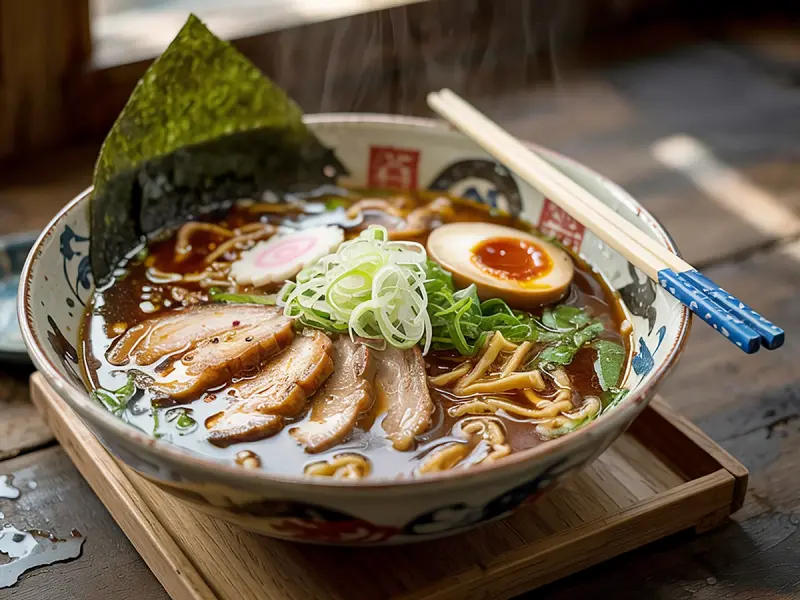
Ramen
Ramen is a traditional Japanese dish consisting of Chinese noodles served in a hot broth with various toppings. Each region of Japan has its own unique recipes.
Ingredients
- 1 kgchicken bones or pork bones
- 2 lwater
- 1 onion
- 1 headgarlic
- 1 slicefresh ginger
- 2-3 scallions
- 1 carrot
- 1/2 cupsoy sauce
- 1/4 cupmirin
- 1/4 cupsake
- 1/4 cupdashi, diluted
- 200 gpork brisket or chicken breast
- 4 eggs
- 1 packramen noodles
- 1/2 cupbamboo shoots
- 1/2 cupseaweed
- optionaltoasted sesame seeds
1 cup = 240 ml
Method
- Rinse the bones under cold water. Place in a large saucepan, fill with water and bring to a boil. Boil for 10 minutes, then drain and rinse the bones.
- Return the bones to the pot, add 2 liters of fresh water, onion, garlic, ginger, green onions and carrots. Bring to a boil, then simmer on low heat for 4-6 hours (chicken) or 10-12 hours (tonkotsu). Strain the broth and keep warm.

- For the tare sauce: mix soy sauce, mirin, sake and dashi in a small saucepan. Bring to a boil, simmer for 5 minutes and let cool.
- Fry the pork brisket or chicken breast until golden, then slice thinly. Boil eggs for 6 minutes, rinse with cold water, peel and halve.

- Boil the ramen noodles until al dente, rinse with cold water. In each bowl, add 1-2 tbsp of tare sauce, then the noodles, meat slices, egg halves, bamboo shoots, seaweed and green onions. Pour the hot broth over everything. Sprinkle with toasted sesame seeds.
FAQ
The difference lies in the broth base. Shio (salt) is the lightest and most delicate, often made with chicken or seafood; shoyu (soy sauce) is brownish, slightly salty and umami-rich, the classic Tokyo style; miso is rich and slightly sweet, originating from Sapporo, added at the end to preserve its flavor; tonkotsu is pork-based, milky-white, simmered for 12+ hours to yield a creamy, thick texture. For home cooking, shoyu or miso are the easiest starting points as they do not require hours of simmering.
There are two honest approaches. First, a combined broth: simmer a chicken carcass with onion, ginger, and garlic for 1–1.5 hours, then add dashi (kombu and katsuobushi steeped for 5 minutes), miso or soy sauce, and sesame oil. Second, buy a ready-made tare (seasoning concentrate) and blend it with homemade chicken broth. The result will be 70–80% of a restaurant bowl in about 2 hours rather than 12.
Ramen requires alkaline wheat noodles (made with kansui or baking soda) — this is what gives them their characteristic springy bite and slight yellow color. If unavailable, substitute with egg noodles (tagliatelle, Thai Ba Mee noodles). Rice noodles are not ramen; they are too soft. A useful trick: boil regular wheat noodles in water with 1 tablespoon of baking soda to achieve a similar texture.
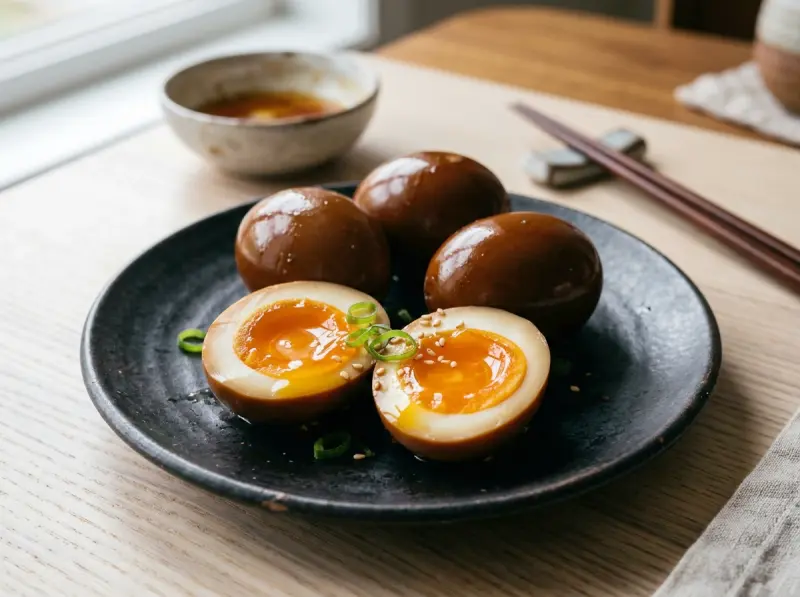
The brown color comes from the marinade: soft-boiled eggs (6.5–7 minutes, then shocked in ice water) are peeled and soaked in a mixture of soy sauce, mirin, sugar, and water (1:1:0.5:4) for at least 4 hours, preferably overnight. The yolk should remain soft and almost runny — that is the hallmark of quality. A firm yolk means overcooked. Make 6–8 at a time: lifted out of the marinade after about 12 hours, they keep for 3–4 days in the fridge. The full method is in our ramen eggs recipe.
Ramen is seasoned in the bowl, not in the pot — that is a key principle. The tare (seasoning base) goes into the empty bowl first, then the broth is poured over it. If it still tastes flat: add 1 teaspoon of white miso, a few drops of dark sesame oil, a dash of fish sauce, or extra soy sauce. Spice lovers add chili oil (la-yu). Often, a pinch of flaky sea salt directly in the bowl is all it takes.
Rate this
Recipes by email
One letter a week: a recipe picked for your taste, plus whatever is new on the site. Unsubscribe in one click.
Welcome gift: Sergei's cookbook (e-book).
By subscribing you agree to the privacy policy.
Tell us what you like to cook (30 seconds) →Keep browsing
More dishes from the Japanese archive — picked by overlap with what you're cooking now.
Join the conversation
Comments (4)
チャーシューが柔らかくて最高。でも6時間煮込むのは正直しんどい…圧力鍋使えばいいのかな?
スープが本当に美味しい。でも6時間は長すぎる。圧力鍋で2時間にしました。結果は同じくらい良かったです。
Рамен из пакетика и домашний рамен — это как самокат и мотоцикл. Оба едут, но ощущения разные. Бульон тонкоцу варится 12 часов, и нет, никакой скороварки-заменителя не существует. Яйцо маринуется ночь. Если вы не готовы к этому — варите из пакетика, я не осуждаю. Ладно, немного осуждаю.
The broth is everything in ramen — I simmer the bones for a minimum of 4 hours, skimming every 30 minutes for the first hour. That cloudy, collagen-rich liquid is what separates real ramen from instant. You cannot shortcut this step and expect the same result.