
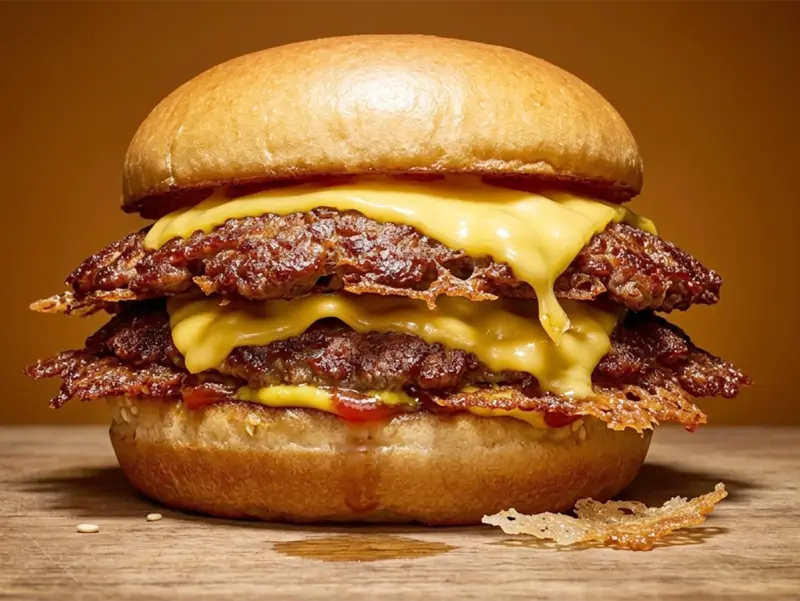
Hamburger Patties
80/20 ground beef seasoned with salt, pepper and Worcestershire, cooked two ways: as a thick classic patty with a thumb-print dimple to stay flat, or as a smash burger pressed thin on screaming-hot cast iron for maximum crust. Both from the same ingredients.
Ingredients
- 600 gground beef
- 1 tbspWorcestershire sauce
- 0.5 tspgarlic powder
- 1 tspsalt
- 0.5 tspblack pepper
Method
- Combine the Worcestershire sauce and garlic powder in a large bowl. Add the ground beef and mix gently with your hands until just combined — overworking makes the patties tough and dense. Do not add salt yet.
- FOR CLASSIC THICK PATTIES: Divide into 4 equal balls (about 150 g each). Press each ball into a disc roughly 2 cm thick and slightly wider than your bun — they shrink during cooking. Press a deep thumbprint into the center of each patty. This prevents the middle from puffing up. Refrigerate for 15 minutes.
- Season both sides generously with salt and pepper just before cooking. Heat a cast iron skillet or grill over high heat until very hot. Cook 3–4 minutes per side without pressing or moving to build the crust, then check the center with an instant-read thermometer: ground beef needs 71°C. If it is not there yet, lower the heat to medium and keep turning every minute until it is. Rest 3 minutes before serving.
- FOR SMASH BURGERS: Divide the beef into 4 loose balls (about 150 g each). Do not compact them. Refrigerate until needed — cold beef smashes better.
- Heat a cast iron skillet over the highest heat possible until it visibly smokes. Place one ball in the pan, season with salt and pepper, immediately cover with a sheet of parchment paper and press firmly with a heavy spatula or small pot until 6–8 mm thin. Hold pressure for 10 seconds.
- Cook undisturbed for 90 seconds until the edges are visibly brown and crispy. Scrape and flip — get under the crust. Add a slice of American cheese. Cook 60 more seconds. Serve immediately on a toasted bun.
FAQ
Fat content determines juiciness. 80/20 (80% lean, 20% fat) is the minimum for a proper burger: the fat renders during cooking, creating moisture and flavor. 85/15 is acceptable, 90/10 gives a dry, flavourless result regardless of technique. Ground chuck (shoulder) is the best cut — it has the right ratio and a rich, beefy flavor. The second cause of tough patties is overworking: the longer you mix the beef, the more the protein bonds develop and the denser and drier the cooked patty becomes. Mix only until combined.
The center of a burger patty rises because it contracts faster than the edges during cooking. The fix: press a deep thumbprint into the center of each raw patty — about 1 cm deep. As the patty cooks, the center rises to meet the edges and the whole thing stays level. The second method is the smash technique: drop a loose ball of beef onto a screaming-hot surface and press it flat immediately with a spatula. A 6–8 mm patty physically cannot dome.
They produce different results. A classic thick patty (2–2.5 cm) is juicy and tender inside with a thick, beefy bite — the steakhouse burger experience. Because it is thick, it needs a thermometer to confirm the center has reached 71°C, plus resting time. A smash burger (6–8 mm) is pressed flat onto screaming-hot metal, maximising surface contact and producing a deep brown Maillard crust across the entire patty with crispy, lacy edges. It cooks in 90 seconds per side. At home on a cast iron skillet, the smash method is more forgiving: it always produces a crust and works well with standard supermarket ground beef.
For a burger patty specifically, they are unnecessary and counterproductive. Egg and breadcrumbs are needed in meatballs and meat loaf where the beef is leaner or diluted with other ingredients. In an 80/20 burger patty the fat itself acts as the binder when it renders under heat. Onion and garlic mixed into the patty release moisture while cooking, which steams the meat from inside and prevents a proper crust from forming. The correctly made burger patty is beef, salt and pepper. Worcestershire sauce and garlic powder are a minor enhancement, but the simpler the mix, the beefier the result.
Cook ground beef to 71°C in the center — that is the USDA figure for ground meat. Unlike a steak, mincing spreads surface bacteria through the whole patty, so the rare and medium temperatures that work for a whole steak don't apply here. Color is not a reliable signal: a patty can turn brown before it reaches 71°C, and the finger-press test only tells you how firm the meat is. An instant-read thermometer pushed into the side of the patty to the center is the one dependable check. Juiciness comes from 80/20 beef and not overworking it, not from a pink center. After removing from heat, rest the patty 2–3 minutes before putting it on the bun.
Rate this
Recipes by email
One letter a week: a recipe picked for your taste, plus whatever is new on the site. Unsubscribe in one click.
Welcome gift: Sergei's cookbook (e-book).
By subscribing you agree to the privacy policy.
Tell us what you like to cook (30 seconds) →Keep browsing
More dishes from the American archive — picked by overlap with what you're cooking now.
Join the conversation
Comments (1)
The pan needs to be properly hot before the ground beef goes in for hamburger patties. A lukewarm pan steams instead of sears. Wait until you see the faintest wisp of smoke — that's your signal.