

Pot Roast
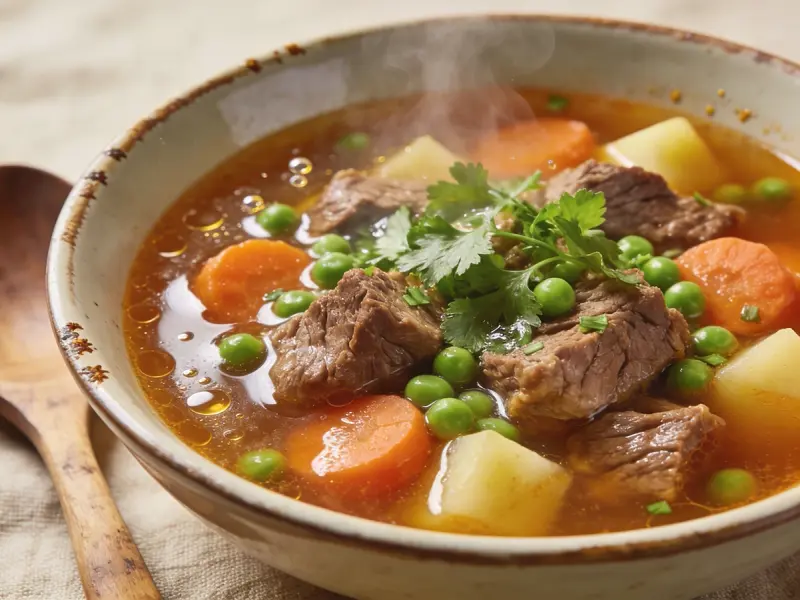
A classic American home-cooked dish — tender, juicy beef slowly braised with vegetables until softened. Cooked in its own juices with carrots, onions, potatoes and aromatic herbs for a rich, full flavor.
Ingredients
- 1.5-2 kgbeef
- 2 tbspvegetable oil
- 2 largeonions
- 4 carrots
- 3 stalkscelery
- 4 clovesgarlic
- 2 cupbeef broth
- 1 cupdry red wine
- 2 bay leaves
- 2 sprigsfresh rosemary
- 2 sprigsfresh thyme
- 1 kgpotatoes
- to tastesalt and black pepper
1 cup = 240 ml
Method
- Preheat the oven to 160°C. Season the meat on all sides with salt and pepper.
- Heat the oil in a large ovenproof pan and fry the meat on all sides until crusty, about 3-4 minutes per side. Remove and set aside.

- In the same pan, fry the onion, carrots, celery and garlic until soft, about 5-7 minutes. Return the meat to the pot. Add the broth, wine, bay leaves, rosemary and thyme.

- Cover with a lid and place in the oven for 2.5 hours. Add the potatoes and cook for another 45-60 minutes, until the meat is very soft and easily separates with a fork.
- Remove the meat and vegetables. Strain the sauce and boil on the stove to the desired consistency. Slice the meat, place on a platter with the vegetables and pour the sauce over it.
FAQ
Tough pot roast almost always means it was not cooked long enough. The collagen in tough cuts like chuck or brisket needs at least 2.5–3 hours of moist heat at a low temperature to convert into gelatin, which is what makes the meat tender and fall-apart. If you cut the cooking time short, the collagen has started to melt but hasn't finished — leaving the meat tough and chewy rather than silky. The fix is simple: put it back in the oven covered with liquid and cook for another 45–60 minutes, checking every 30 minutes. Also make sure the liquid level stays at least one-third up the side of the roast throughout the cook.
The best cuts for pot roast are those rich in connective tissue and fat, which break down during long braising to create a tender, flavourful result. Chuck roast (shoulder) is the top choice — it has good fat marbling and plenty of collagen. Brisket is another excellent option, especially the flat cut. Bottom round and rump roast work well too but are slightly leaner, so add a bit more liquid. Avoid tender premium cuts like ribeye or sirloin — they have little collagen, become dry and grainy when braised for hours, and are a waste of money for this technique.
Searing is not strictly required, but it makes a significant difference to the final flavor. Browning the roast in a hot, lightly oiled pan for 3–4 minutes per side (including the ends) creates hundreds of new flavor compounds through the Maillard reaction — giving the dish a deep, savory, caramelized base that braising alone cannot achieve. The browned bits stuck to the bottom of the pan, dissolved with wine or broth during deglazing, are packed with flavor. If you skip searing, the pot roast will still be tender but will taste noticeably milder and less complex.
The ideal oven temperature for pot roast is 150–160°C (300–325°F). At this low temperature, collagen converts slowly and evenly without the liquid boiling aggressively, which would make the meat fibrous and dry. A 1.5 kg chuck roast takes about 3 hours; a 2 kg roast needs 3.5–4 hours. The meat is done when a fork inserted with no resistance slides in and the roast pulls apart easily into thick shreds. Always braise with the lid on or the pot tightly covered with foil to keep the steam inside.
Yes, the slow cooker is an excellent tool for pot roast. Sear the meat first in a separate pan for best flavor, then transfer to the slow cooker with vegetables and liquid. Cook on LOW for 8–10 hours or on HIGH for 4–5 hours — the low setting produces more tender, pull-apart meat. Use about half the liquid you would use in the oven, as the slow cooker traps all evaporation. The result is very similar to the oven version, though the liquid will be thinner; if you want a thicker sauce, pour it into a saucepan and reduce for 10–15 minutes after cooking.
Rate this
Recipes by email
One letter a week: a recipe picked for your taste, plus whatever is new on the site. Unsubscribe in one click.
Welcome gift: Sergei's cookbook (e-book).
By subscribing you agree to the privacy policy.
Tell us what you like to cook (30 seconds) →Keep browsing
More dishes from the American archive — picked by overlap with what you're cooking now.


Join the conversation
Comments (2)
Нормуль получилось
The pan needs to be properly hot before the beef goes in for pot roast. A lukewarm pan steams instead of sears. Wait until you see the faintest wisp of smoke — that's your signal.