
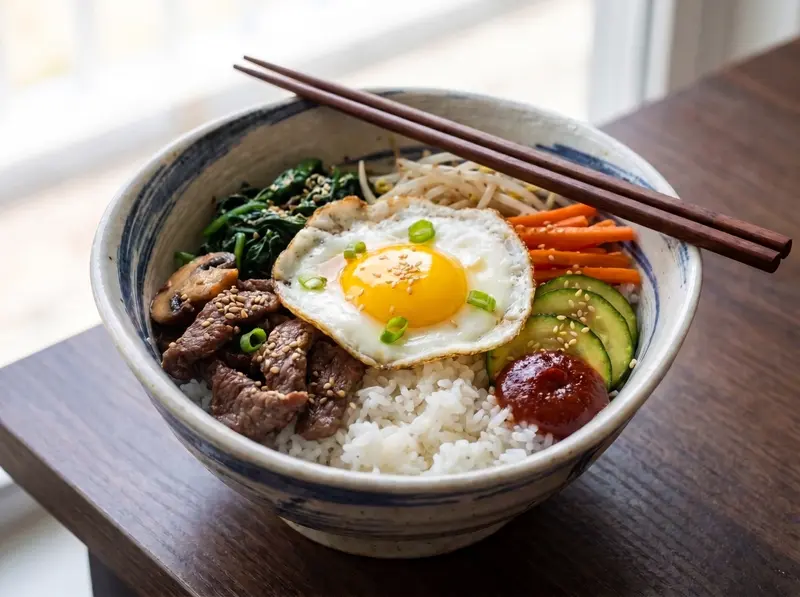
Bibimbap (Korean Mixed Rice Bowl)
Korea's most celebrated rice dish: a bowl of short-grain rice topped with individually seasoned and cooked vegetables (namul), thinly sliced marinated beef, a sunny-side-up egg, and gochujang sauce — then mixed together at the table before eating. The name says it exactly: bibim means 'mixing', bap means 'cooked rice'. Each vegetable component is prepared separately to preserve its own color, texture, and flavor. The dolsot version (stone bowl bibimbap) adds one more element: the rice touching the bowl's searing hot walls forms nurungji — a golden crispy crust at the bottom. The best-known regional version comes from Jeonju, in the south-west of South Korea, where it is made with soybean sprouts and often topped with raw beef.
Ingredients
- 400 gshort-grain white rice, uncooked
- 200 gbeef, very thinly sliced
- 2 tbspsoy sauce
- 1 tbspsesame oil
- 1 tbspsugar
- 2 garlic cloves
- 150 gbaby spinach
- 150 gbean sprouts
- 1 large carrot
- 1 zucchini
- 100 gshiitake mushrooms
- 4 eggs
- 3 tbspgochujang
- 1 tbspsesame oil
- 1 tbsphoney or sugar
- 1 tbsprice vinegar
- 1 tbsptoasted sesame seeds
- 1 tspsesame oil
- 1 tspsoy sauce, for the mushrooms
- 1.5 tspsesame oil, for the namul
- 0.5 tspgarlic, minced, for the spinach
- 2 tbspneutral oil, for frying the vegetables and eggs
Method
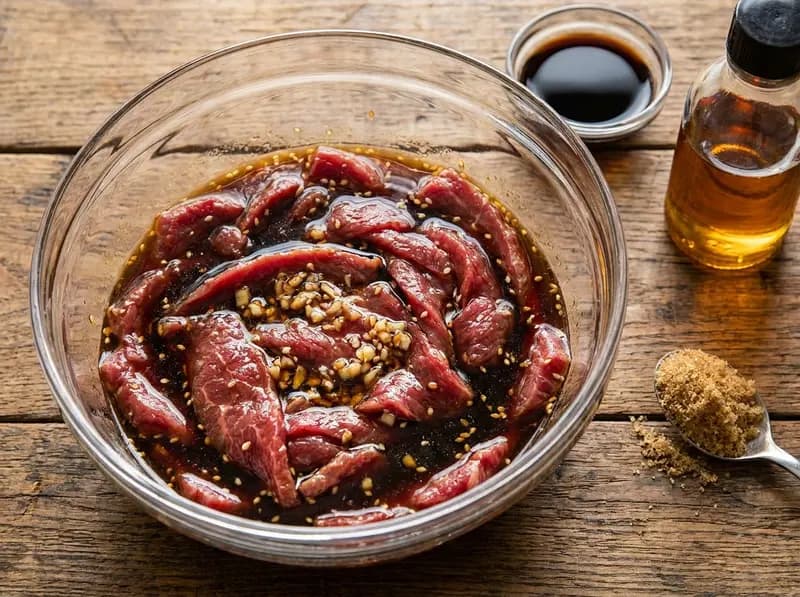
- Start with the rice: rinse it until the water runs almost clear, cook it in a rice cooker or according to the package directions, and keep it warm and covered. Meanwhile, marinate the beef. Use a tender cut such as sirloin or rib eye; half-freeze it for 30 minutes to slice it thinly across the grain. Combine 2 tbsp soy sauce, 1 tbsp sesame oil, 1 tbsp sugar and the 2 garlic cloves, finely chopped. Add the sliced beef and toss to coat. Marinate at least 15 minutes. Cook in a very hot pan or wok for 2 to 3 minutes until slightly caramelized at the edges. Set aside.
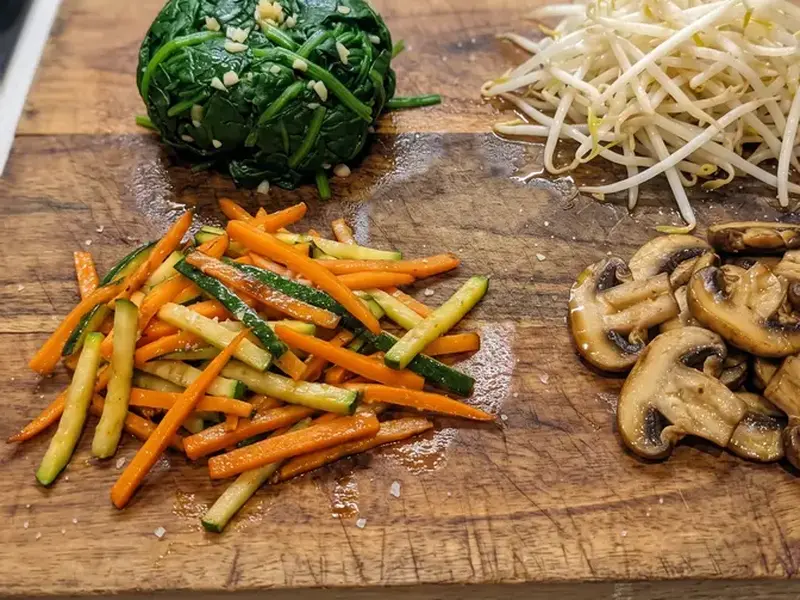
- Prepare the namul (seasoned vegetables) with their own seasonings, listed separately at the end of the ingredients — the soy sauce, sesame oil and garlic above are already used in the marinade and the sauce. Cut the carrot and the zucchini into thin matchsticks about 5 cm long and slice the mushroom caps thinly, discarding the tough stems. Each vegetable is cooked and seasoned separately — this is what makes bibimbap taste distinct from a simple rice bowl. Blanch the spinach in boiling water for 30 seconds, rinse under cold water, squeeze firmly dry, toss with 0.5 tsp garlic and 0.5 tsp sesame oil. Blanch the bean sprouts until just tender: 1 minute for mung bean sprouts, 2 to 3 minutes for soybean sprouts (kongnamul), which must lose their raw bean smell; neither kind goes into the bowl raw. Drain, then season with salt and 0.5 tsp sesame oil. Stir-fry the carrot in a hot pan with a little neutral oil for 2 minutes with a pinch of salt. Stir-fry the zucchini the same way. Stir-fry the mushrooms with 1 tsp soy sauce and 0.5 tsp sesame oil until golden. Season each component with salt to taste.
- Make the gochujang sauce. Stir together the 3 tbsp gochujang, 1 tbsp sesame oil, 1 tbsp honey (or sugar) and 1 tbsp rice vinegar until smooth. Taste — it should be spicy, sweet, and lightly acidic. Add 1 to 2 teaspoons of water to adjust consistency to a drizzleable sauce. Set aside.
- Assemble the bowls. Fry the eggs sunny-side up in a little neutral oil until the whites are set and the yolks still runny. Cook the yolks through if you are serving small children, pregnant women, older people or anyone with a weakened immune system. Divide the warm rice among 4 bowls. Arrange the five vegetable namul and the beef around the rice in neat separate sections — the color contrast is part of the dish. Place a fried egg in the center. Drizzle the last teaspoon of sesame oil over the four bowls and scatter over the sesame seeds. Add a spoonful of gochujang sauce.
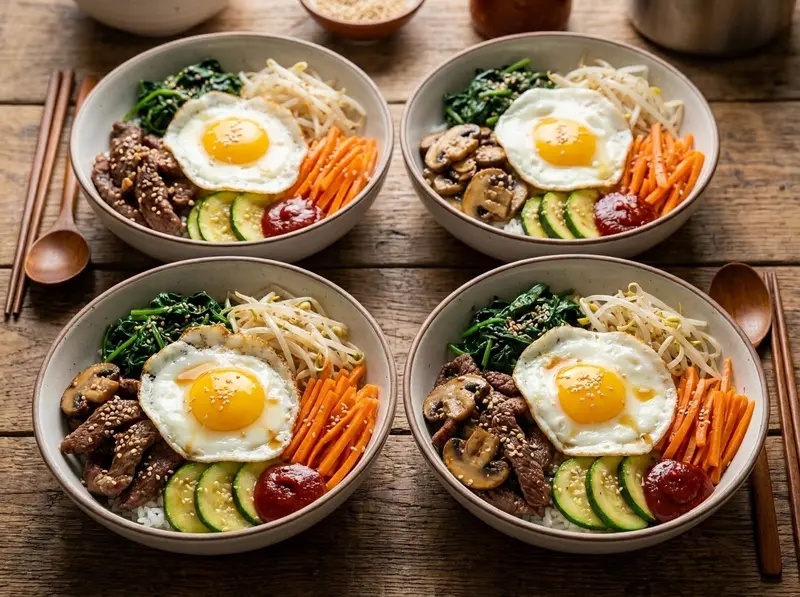
- Mix and eat. Serve immediately. Each diner mixes the entire bowl together with a spoon before eating — the runny egg yolk coats the rice, the gochujang sauce distributes into every grain, and the vegetables integrate. Serve extra gochujang on the side. For dolsot bibimbap: brush a stone bowl or cast-iron pan with sesame oil, heat until very hot, add the rice, assemble toppings, and heat on the stove for 5 minutes until you hear the rice crackling — then add the egg and serve immediately. The bowl stays very hot: carry it on a trivet and do not touch it with bare hands.
FAQ
Gochujang (고추장) is a Korean fermented chili paste made from red chili powder, glutinous rice, fermented soybeans, and salt. It is sweet, spicy, savory, and deeply umami from the fermentation — it is not simply hot. Available in Korean supermarkets and many large Asian grocery stores, usually in red plastic tubs. There is no direct substitute that provides all three dimensions: the closest approximation is 1 tablespoon of sriracha mixed with 1 teaspoon of white miso paste and a little honey — spicy and savory but lacking the fermented depth. Gochujang keeps for over a year refrigerated once opened.
Each vegetable namul is prepared separately to give it its own distinct flavor, texture, and color. Bean sprouts blanched in water taste completely different from bean sprouts stir-fried in oil. Spinach needs only 30 seconds in boiling water; carrots need 2 minutes in a hot pan. If cooked together, everything ends up at the same temperature, the same oil level, and with blurred flavors. The mixing happens at the table, not in the kitchen.
Regular bibimbap is served in an ordinary ceramic or metal bowl — the rice and egg are warm, the vegetables at room temperature. Dolsot bibimbap (돌솥비빔밥) is served in a thick stone bowl heated directly on the stove. The bowl is so hot that the rice touching its oiled interior caramelizes into nurungji — a golden, crackling crust. The bowl continues to cook and sizzle at the table throughout the meal, keeping everything warm.
Yes, and easily. Omit the beef and replace with more mushrooms (king oyster, portobello, or a combination) seasoned with soy sauce, sesame oil, and a little garlic — mushrooms provide the umami that beef contributes. Replace the egg with pan-fried firm tofu for protein. Gochujang itself is plant-based; make the sauce with sugar instead of honey. Use the same vegetable namul components. Vegan bibimbap with five well-seasoned vegetable components, mushrooms, and tofu is a complete and satisfying meal.
Short-grain white rice is essential. Its slightly sticky texture allows the gochujang sauce to coat every grain when mixed, and its firmness holds up when the vegetables, egg, and sauce are stirred in. Long-grain rice (basmati, jasmine) does not have the necessary stickiness — the components slide off the grains and the bowl becomes loose and wet. Korean short-grain rice (usually labelled sushi rice outside Korea) is the first choice; Japanese short-grain rice works equally well. Brown rice is sometimes used but changes the texture and takes longer to cook.
Rate this
Recipes by email
One letter a week: a recipe picked for your taste, plus whatever is new on the site. Unsubscribe in one click.
Welcome gift: Sergei's cookbook (e-book).
By subscribing you agree to the privacy policy.
Tell us what you like to cook (30 seconds) →Keep browsing
More dishes from the Korean archive — picked by overlap with what you're cooking now.
Join the conversation
Comments (2)
The stone bowl is not a gimmick — it is the whole point. The scorching hot dolsot creates a crust of crispy rice at the bottom called nurungji, and that contrast between crunchy rice, cool vegetables, and runny egg yolk is what bibimbap is about. If you do not have a stone bowl, heat a cast iron skillet until it smokes, add oiled rice, and press it down. You will get a decent crust in about 5 minutes.
Бибимбап выглядит сложно но на самом деле каждый элемент готовиться отдельно и быстро. Я готовлю овощи заранее вечером а утром просто собираю. Главное — горячий камеяный горшок, рис на дне должен поджариться до хруста. Если нет горшка, можно в обычной сковороде но не тот эфект.