
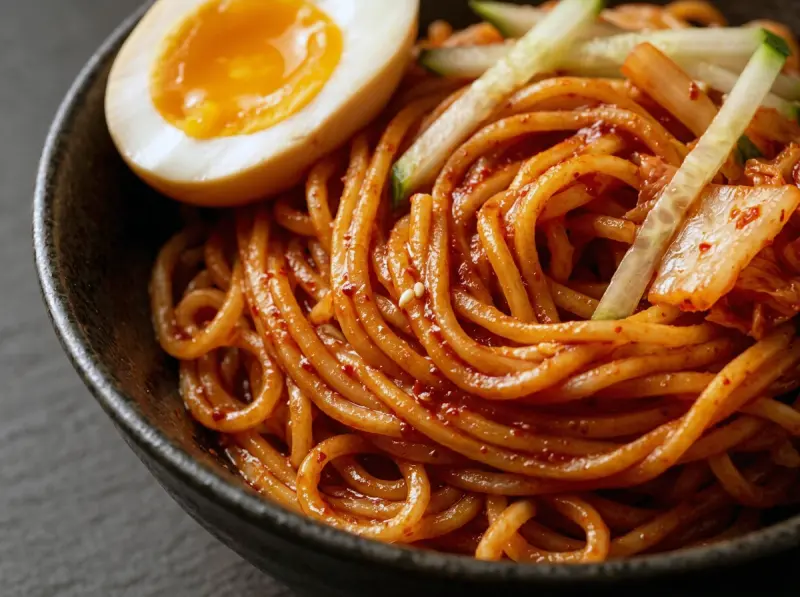
Bibim Guksu (Korean Spicy Cold Noodles)
Bibim guksu is the Korean summer dish that takes fifteen minutes and requires almost no cooking. Thin wheat noodles, shocked in ice water until they bounce back against your teeth, coated in a gochujang sauce that is simultaneously hot, sour, sweet, and faintly fermented. Topped with kimchi, cucumber, and a soft-boiled egg. The word bibim means mixed — everything goes in the bowl and you toss it with your hands.
Ingredients
- 200 gsomyeon or thin wheat noodles
- 3 tbspgochujang
- 1 tbsprice vinegar
- 1 tbspsoy sauce
- 1 tbspsesame oil
- 1 tbspsugar
- 2 garlic cloves
- 2 tbspkimchi brine
- 100 gkimchi
- 0.5 cucumber
- 2 eggs
- 1 tbspsesame seeds
- 1 tspgochugaru
Method
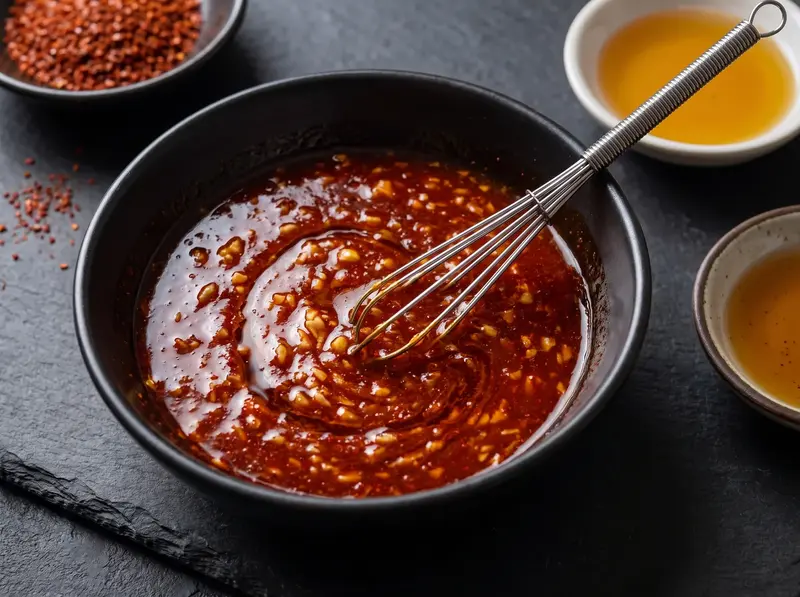
- Make the sauce. Combine the gochujang, rice vinegar, soy sauce, sesame oil, sugar, minced garlic, kimchi brine, and gochugaru in a bowl. Whisk until smooth. Taste: the sauce should be spicy, tangy, slightly sweet, and deeply savoury. Adjust with more vinegar for acid, more sugar to balance heat, or more gochujang for depth. The sauce can be made up to a week ahead and refrigerated — it improves with time.
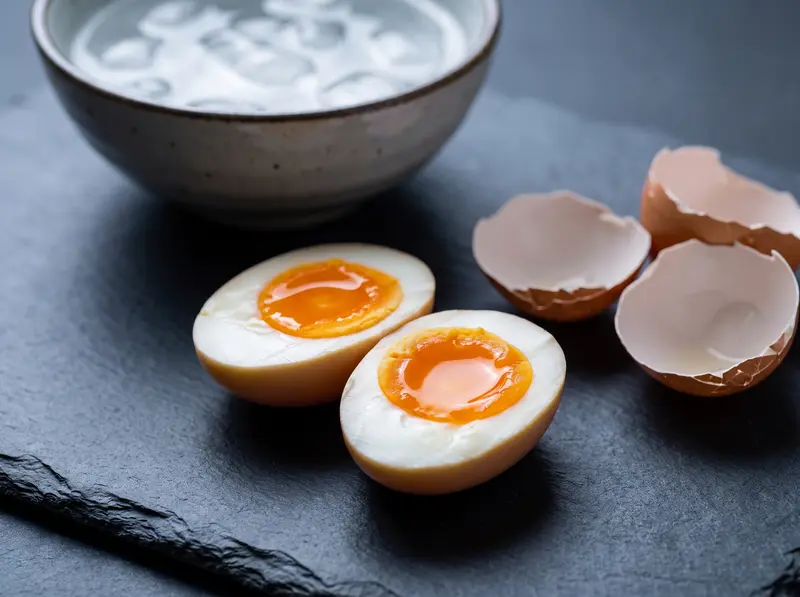
- Soft-boil the eggs. Lower eggs into gently boiling water and cook for exactly 7 minutes for a jammy yolk. Transfer immediately to ice water for 2 minutes, then peel. Set aside.
- Cook the noodles. Bring a large pot of unsalted water to a full rolling boil. Add the somyeon and cook for 3 to 4 minutes. Do not walk away: these noodles overcook quickly. Drain immediately.
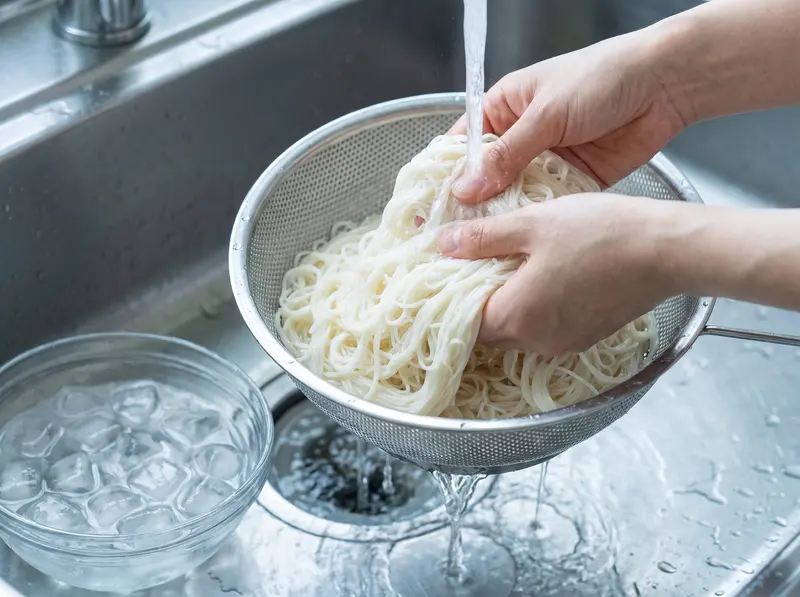
- Rinse and shock. Rinse the noodles under cold running water while rubbing them vigorously between your hands for 30 seconds. This removes surface starch and tightens the gluten, giving the noodles their characteristic bounce. Transfer to a bowl of ice water for 30 seconds, then drain thoroughly and shake off excess water.
- Assemble and serve. Add the sauce to the noodles and toss with your hands or tongs until every strand is evenly coated. Divide between two bowls. Top with chopped kimchi, julienned cucumber, halved soft-boiled eggs, and a scatter of sesame seeds. Eat immediately: the noodles soften within 20 minutes of being sauced.
FAQ
Both are Korean spicy cold noodle dishes but they use different noodles. Bibim guksu is made with somyeon — thin wheat noodles that cook in 3 to 4 minutes, are soft and light, and absorb the sauce quickly. Bibim naengmyeon uses very firm buckwheat noodles that require scissors to cut at the table and are often served with a small amount of chilled broth. Guksu is the quick home-style version; naengmyeon is more of a restaurant dish requiring more prep. For a first introduction to Korean cold noodles, bibim guksu is the easier entry point.
Gochujang is a fermented paste of red pepper, rice, and soybean. It provides spice, umami depth, and natural sweetness simultaneously — all three are difficult to replicate with a single ingredient. An approximate substitute for one tablespoon: one tablespoon of tomato paste plus one teaspoon of cayenne or chilli powder plus half a teaspoon of white miso paste plus half a teaspoon of sugar. Sriracha alone gives spice but none of the fermented depth. The substitute will produce a serviceable but noticeably different dish.
Two effects. First, it stops the cooking immediately and chills the noodles to the right temperature for a cold dish. Second, rubbing the noodles under cold water removes surface starch. Without this step, the noodles stick together in a clump and form a cloudy starchy coating that prevents the sauce from adhering. Properly rinsed noodles are springy, slightly glossy, and separate. After rinsing, drain well and add the sauce quickly before they begin to clump again.
The base dish with somyeon noodles and the gochujang sauce is vegan if the gochujang contains no anchovy extract. Some commercial brands include fish-based ingredients, so check the label. Standard gochujang without fish additives is fully plant-based. Kimchi also needs checking: traditional Korean kimchi is often made with fish sauce or fermented shrimp. Look for kimchi labelled vegan or make your own. The dish without kimchi, topped with cucumber and sesame seeds only, is also very good.
The sauce can be made up to a week ahead and kept in the fridge — it tastes better after 24 hours as the garlic mellows. The noodles should not be sauced in advance: mixed with the sauce, they soften significantly within 20 to 30 minutes and lose their texture. The best approach for meal prep is to store the sauce and cooked rinsed noodles separately in the fridge for up to one day, then mix them at the moment of serving. If taking to lunch, keep the sauce in a separate container and combine just before eating.
Rate this
Recipes by email
One letter a week: a recipe picked for your taste, plus whatever is new on the site. Unsubscribe in one click.
Welcome gift: Sergei's cookbook (e-book).
By subscribing you agree to the privacy policy.
Tell us what you like to cook (30 seconds) →Keep browsing
More dishes from the Korean archive — picked by overlap with what you're cooking now.

Join the conversation
Comments
No comments yet — be the first!