
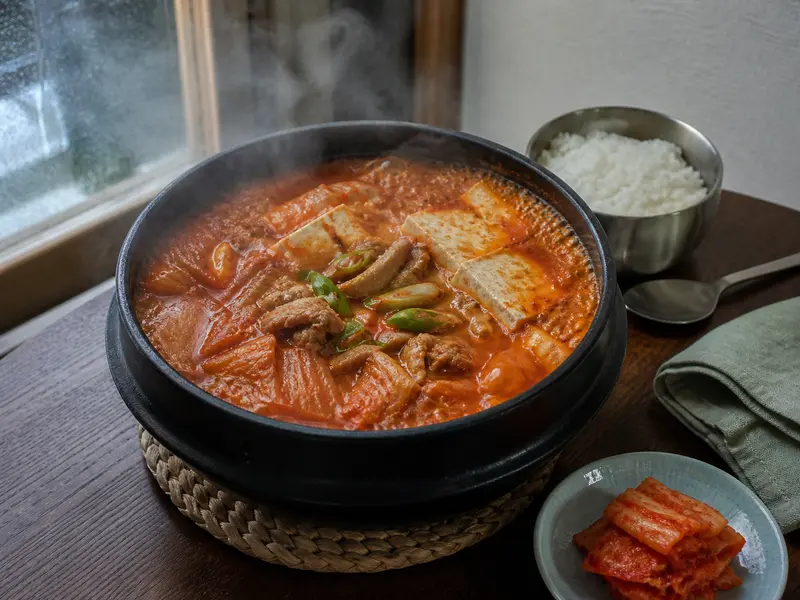
Kimchi Jjigae (Korean Kimchi Stew)
Kimchi jjigae is a Korean stew built around well-fermented napa cabbage kimchi, pork belly and tofu. Frying the kimchi with the pork first turns its sharp brine into a deep red broth; the tofu goes in late so it stays in soft, generous pieces. Rice and a few banchan are all it needs.
Ingredients
- 300 gpork belly
- 500 gnapa cabbage kimchi
- 120 mlkimchi brine
- 300 gfirm tofu
- 1 onion
- 2 scallions
- 4 clovesgarlic
- 1 tbspgochugaru
- 1 tbspgochujang
- 750 mlanchovy stock
- 1 tsptoasted sesame oil
Method
- Prepare the base. Slice the pork belly into 2 cm pieces, slice the onion, mince the garlic and cut the tofu into 2 cm slabs. Keep the kimchi brine in a separate cup; that salty, sour liquid seasons the stew far more reliably than extra salt.
- Render the pork. Put the pork belly in a heavy pot over medium heat and cook for 6 minutes, stirring until the fat turns glossy and the edges take on pale golden spots. Do not let it become crisp; the rendered fat is for frying the kimchi, while the pork should stay tender in the finished stew.

- Fry the kimchi. Add the kimchi, onion and garlic and cook over medium heat for 7 minutes, stirring often, until the cabbage softens and its juices look darker and slightly sticky on the bottom of the pot. This short fry removes the raw sharpness and gives the broth its rounded flavour.
- Bloom the seasonings. Stir in the gochugaru and gochujang for 30 seconds, until the pepper flakes smell toasted and the paste coats the cabbage. Keep the heat moderate: gochugaru burns quickly and then tastes bitter rather than smoky.

- Simmer the stew. Pour in the anchovy stock and kimchi brine, scrape up the red fond, then bring the pot to a full boil. Lower to a steady simmer, cover loosely and cook for 18 minutes; the broth should become brick-red and the pork should yield easily when pressed with a spoon.
- Add the tofu. Slide in the tofu without stirring hard, then simmer uncovered for 5 minutes until the slabs are hot through and the broth bubbles around their edges. Tofu breaks easily at this point, so use the pot handle to gently swirl rather than a spoon.

- Finish and serve. Add the scallions and sesame oil, simmer for 1 minute, then taste the broth before adding anything else. Serve immediately in warm bowls with steamed rice; kimchi brands vary wildly in salt, so a final splash of water is often better than more seasoning.
FAQ
Use ripe napa cabbage kimchi that tastes distinctly sour, not a fresh, mild batch. Kimchi that has fermented in the refrigerator for two to four weeks gives the stew enough acidity and depth. Save every spoonful of its brine, because it seasons the broth and gives it the right red colour.
Most often the kimchi was too young, or the stew went straight from pot to broth without frying the kimchi first. Cook the kimchi with pork fat for the full 7 minutes and use its brine before reaching for more gochujang. If the stew is already sweet, add 1 teaspoon rice vinegar and simmer it for 2 minutes.
Yes. Use 185 g canned tuna, 250 g sliced beef, or 250 g mushrooms and add a little more sesame oil if the pot lacks fat. Tuna goes in during the final 5 minutes, while beef or mushrooms should fry with the kimchi. For a vegetarian version, use mushroom-kombu stock and check that the kimchi contains no fish sauce or salted shrimp.
Cool the stew quickly, transfer it to a sealed container and refrigerate it for up to 3 days. The flavour gets deeper overnight, but tofu becomes more fragile, so reheat it gently rather than boiling it hard. Freeze the broth and pork for up to 2 months, then add fresh tofu after reheating.
Steamed short-grain rice is the essential partner because it softens the heat and catches the broth. Korean homes often set out simple banchan such as seasoned spinach, cucumber salad or roasted seaweed alongside it. A raw egg cracked into each very hot bowl is optional, but it makes the broth silkier.
Rate this
Recipes by email
One letter a week: a recipe picked for your taste, plus whatever is new on the site. Unsubscribe in one click.
Welcome gift: Sergei's cookbook (e-book).
By subscribing you agree to the privacy policy.
Tell us what you like to cook (30 seconds) →Keep browsing
More dishes from the Korean archive — picked by overlap with what you're cooking now.

Join the conversation
Comments
No comments yet — be the first!