Skip to content
GetCookMatch
⌘K
Ingredient

Pork belly Recipes

14 recipes with pork belly for weeknights, meal prep, and quick ingredient searches. Choose by time, cuisine, and what is in your kitchen.

14 recipes
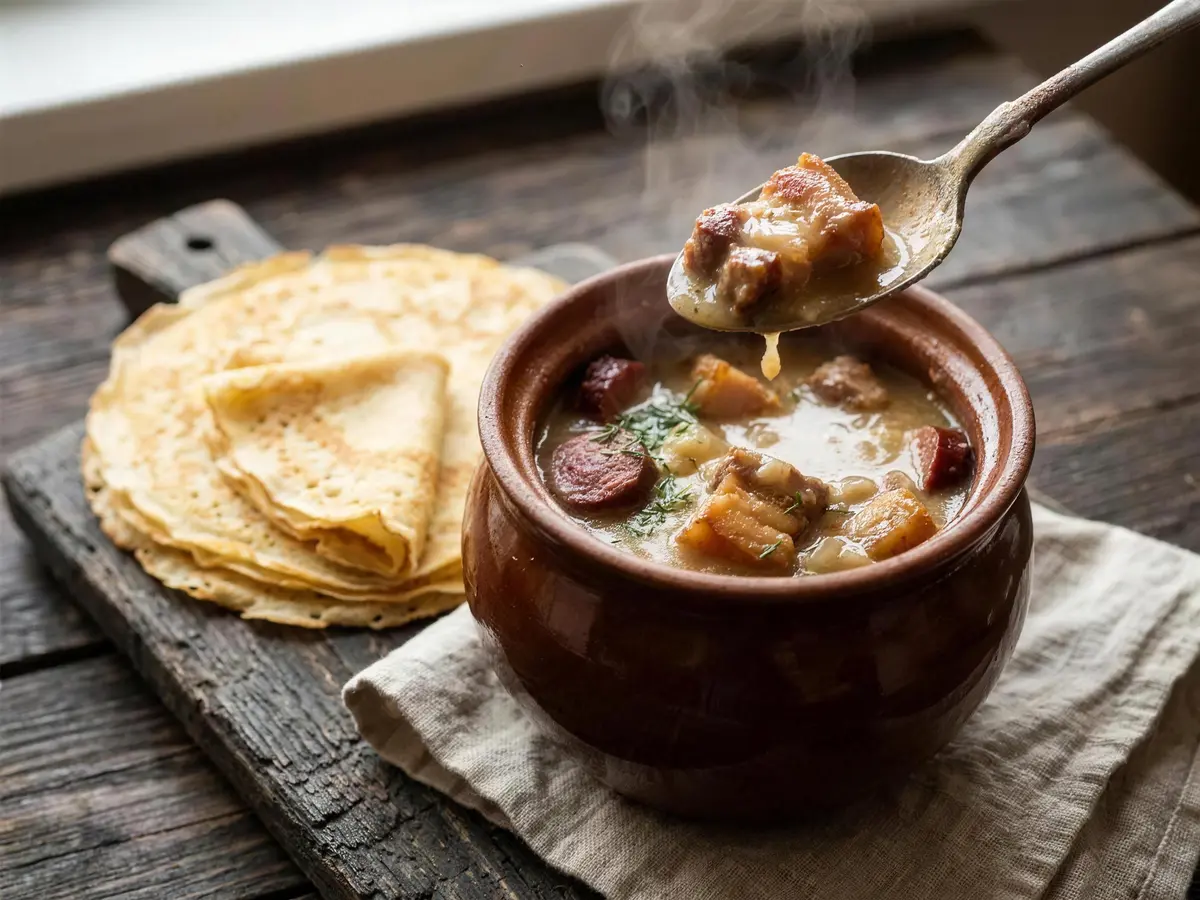
Machanka (Belarusian Pork Sauce with Pancakes) with pork belly, sour cream and sausages — Belarus recipe
🇧🇾BelarusMedium
Meat Dishes

Machanka (Belarusian Pork Sauce with Pancakes)

A traditional Belarusian dish — thick, rich pork and sausage sauce in sour cream, served hot over thin homemade pancakes. Hearty, warming, and deeply satisfying village food.

60 min1100 kcal4 serves
💪High protein
★★★★★
Yakisoba (Japanese Stir-Fried Noodles) with noodles, Worcestershire sauce and oyster sauce — Japan recipe
🇯🇵JapanMedium
Cereal and Pasta Dishes

Yakisoba (Japanese Stir-Fried Noodles)

Yakisoba (焼きそば) is a Japanese dish of steamed wheat noodles stir-fried with pork belly, cabbage, onion and carrot in a tangy-sweet Worcestershire-based sauce. The name means 'grilled noodles'. The sauce is what makes it yakisoba: Worcestershire gives the tang, oyster sauce the umami, ketchup a fruity sweetness and soy sauce the salt. At home it takes 20 minutes and one pan. Finish it the traditional way, with pickled red ginger and dried seaweed flakes.

20 min770 kcal2 serves
⚡Quick
Bánh Xèo (Vietnamese Sizzling Crêpes) with rice flour, turmeric and coconut milk — Vietnam recipe
🇻🇳VietnamAdvanced
Appetizers and Sandwiches

Bánh Xèo (Vietnamese Sizzling Crêpes)

Bánh xèo is a Vietnamese sizzling crêpe: a thin batter of rice flour, coconut milk and turmeric fried until shatteringly crisp around pork belly, shrimp and bean sprouts, then folded and eaten wrapped in lettuce with mint and cilantro, dipped in nước chấm. The name means 'sizzling cake': the xèo is the sound the rice flour batter makes the instant it hits the hot oil. Without that sound, the pan is not hot enough. Getting the crêpe genuinely crisp rather than soft and chewy requires three things: a thin batter, very hot oil, and patience — the crêpe needs 5 to 6 minutes before it is ready to fold. The batter makes 8 to 10 crêpes, two per person, and rests for at least 30 minutes before frying.

90 min850 kcal4 serves
🌾Gluten-free
Bún Chả with ground pork, pork belly and fish sauce — Vietnam recipe
🇻🇳VietnamAdvanced
Meat Dishes

Bún Chả

Bún chả is Hanoi's grilled-pork noodle dish: smoky pork patties (chả băm) and caramelized pork belly slices (chả miếng) in a warm, sweet-sour dipping broth, eaten with cool rice vermicelli, pickled carrot and daikon and a heap of fresh herbs. The components arrive separately and each diner builds their own bite — a tangle of noodles and herbs dipped into the broth with a piece of pork and pickle, all in one mouthful. It gained international fame when Barack Obama and Anthony Bourdain ate it at a Hanoi street stall in 2016. The version that gained that fame is a Hanoi recipe, distinct from the southern bún thịt nướng: no lemongrass in the pork, the pork served in its dipping broth, patties alongside sliced belly. The pork marinates in the fridge for at least 30 minutes before it goes on the grill.

60 min790 kcal4 serves
💪High protein
★★★★★
Gỏi Cuốn (Vietnamese Fresh Spring Rolls) with pork belly, shrimp and rice vermicelli — Vietnam recipe
🇻🇳VietnamAdvanced
Appetizers and Sandwiches

Gỏi Cuốn (Vietnamese Fresh Spring Rolls)

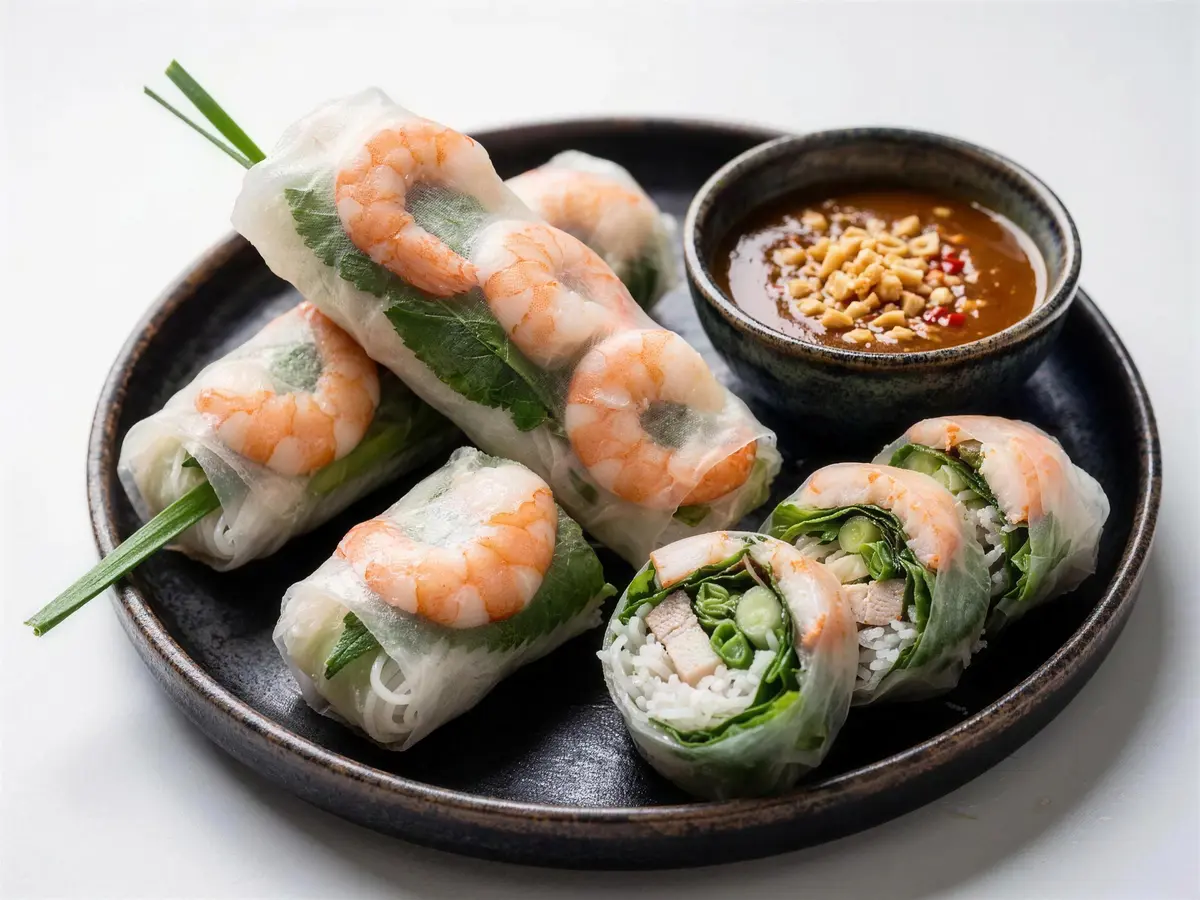
Gỏi cuốn are fresh Vietnamese rolls from the south of the country: translucent rice paper wrapped around poached pork belly, boiled shrimp split lengthwise, rice vermicelli, soft lettuce, mint and Thai basil, with garlic chives trailing from one end. The shrimp is placed at the top before rolling so it shows through the paper like a window — pink, curved, vivid. Everything inside is cooked, cooled, and assembled cold. The roll is eaten with a rich peanut-hoisin dipping sauce. The recipe makes 12 rolls, three per serving. Gỏi cuốn translates literally as 'salad rolls' (gỏi = salad, cuốn = to roll), not spring rolls — the name reflects the herb-forward lightness of the filling rather than the season. They are served fresh, at room temperature, within minutes of rolling; the rice paper hardens and the roll becomes difficult to eat if it sits more than 20 to 30 minutes.

50 min700 kcal4 serves
Sundubu Jjigae (Korean Soft Tofu Stew) with sundubu, kimchi and gochugaru — Korea recipe
🇰🇷KoreaMedium
Soups

Sundubu Jjigae (Korean Soft Tofu Stew)

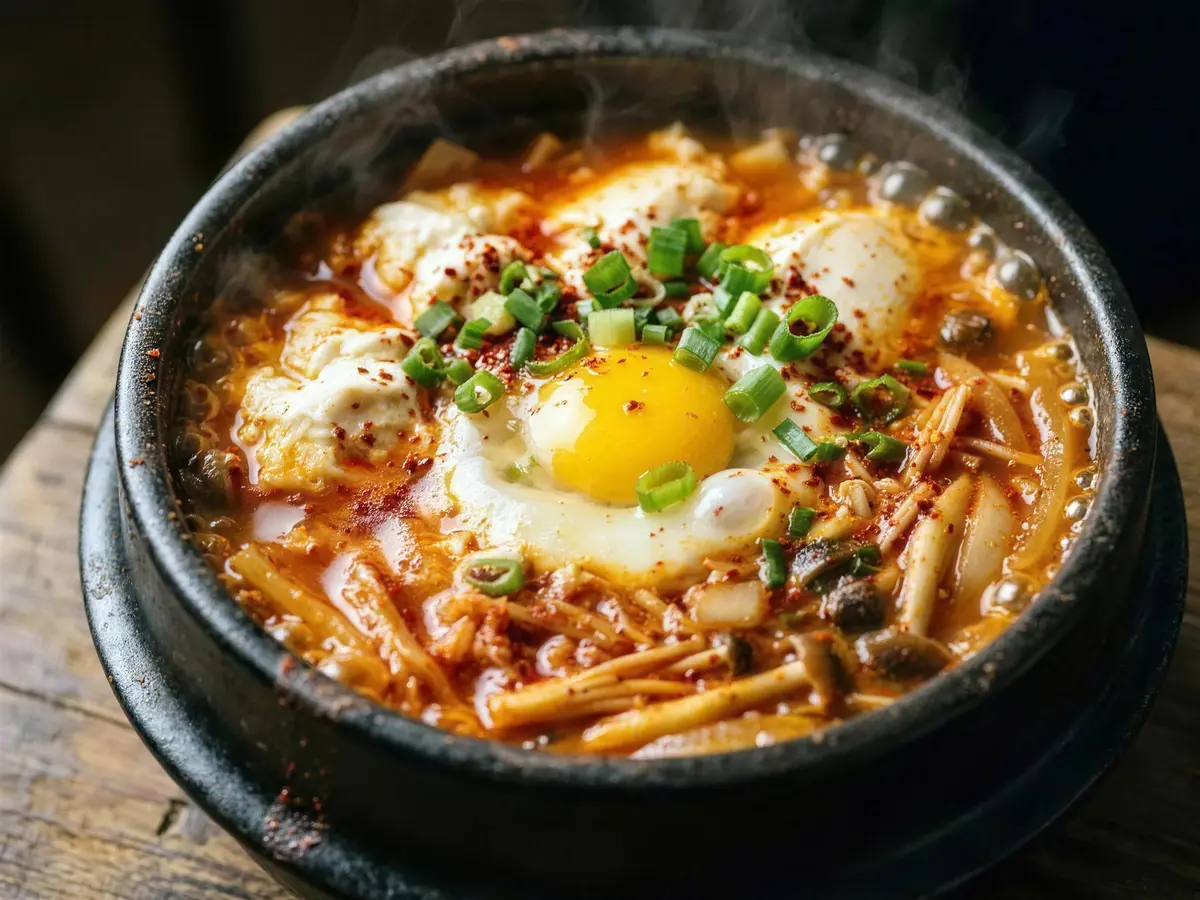
One of the most popular Korean stews: silky unpressed soft tofu (sundubu) spooned in large chunks into a fiery gochugaru-and-anchovy broth with kimchi, pork belly, zucchini, and mushrooms. Eggs are cracked into the gently boiling stew at the end and soft-set in the bubbling broth in a minute or two. The stew arrives bubbling in a clay pot (ttukbaegi), surrounded by rice and banchan. Jjigae means stew in Korean; sundubu is unpressed, extra-soft tofu. The tofu gives no flavor of its own — it is a soft, silent canvas that absorbs the intensely seasoned broth and contrasts its silkiness against the spice and the chew of pork and vegetables.

35 min410 kcal4 serves
🌶️Spicy🌾Gluten-free
Jjajangmyeon (Korean Black Bean Noodles with Pork and Vegetables) with pork belly, chunjang and jjajangmyeon noodles — Korea recipe
🇰🇷KoreaAdvanced
Cereal and Pasta Dishes

Jjajangmyeon (Korean Black Bean Noodles with Pork and Vegetables)

Jjajangmyeon is a Korean-Chinese noodle dish of thick chewy wheat noodles topped with a glossy black sauce of fried chunjang (Korean fermented black soybean paste), pork belly, onions, potato, zucchini, and cabbage. The dish was first sold in 1905 at the Gonghwachun restaurant in Incheon's Chinatown, brought by immigrants from Shandong as zha jiang mian; the sweeter caramel-dark chunjang that defines it today came later, in 1948. Today it is one of Korea's national comfort foods, sold in every neighbourhood and traditionally eaten on Black Day (April 14) by single people who got no Valentine's gift. Active work is about 45 minutes, no long simmer needed. Serves 4 with 200 g noodles and about 400 ml sauce per portion, topped with julienned cucumber for fresh contrast.

45 min1330 kcal4 serves
💪High protein
Sisig (Filipino Sizzling Pork) with pork belly, chicken liver and calamansi — Philippines recipe
🇵🇭PhilippinesAdvanced
Meat Dishes

Sisig (Filipino Sizzling Pork)

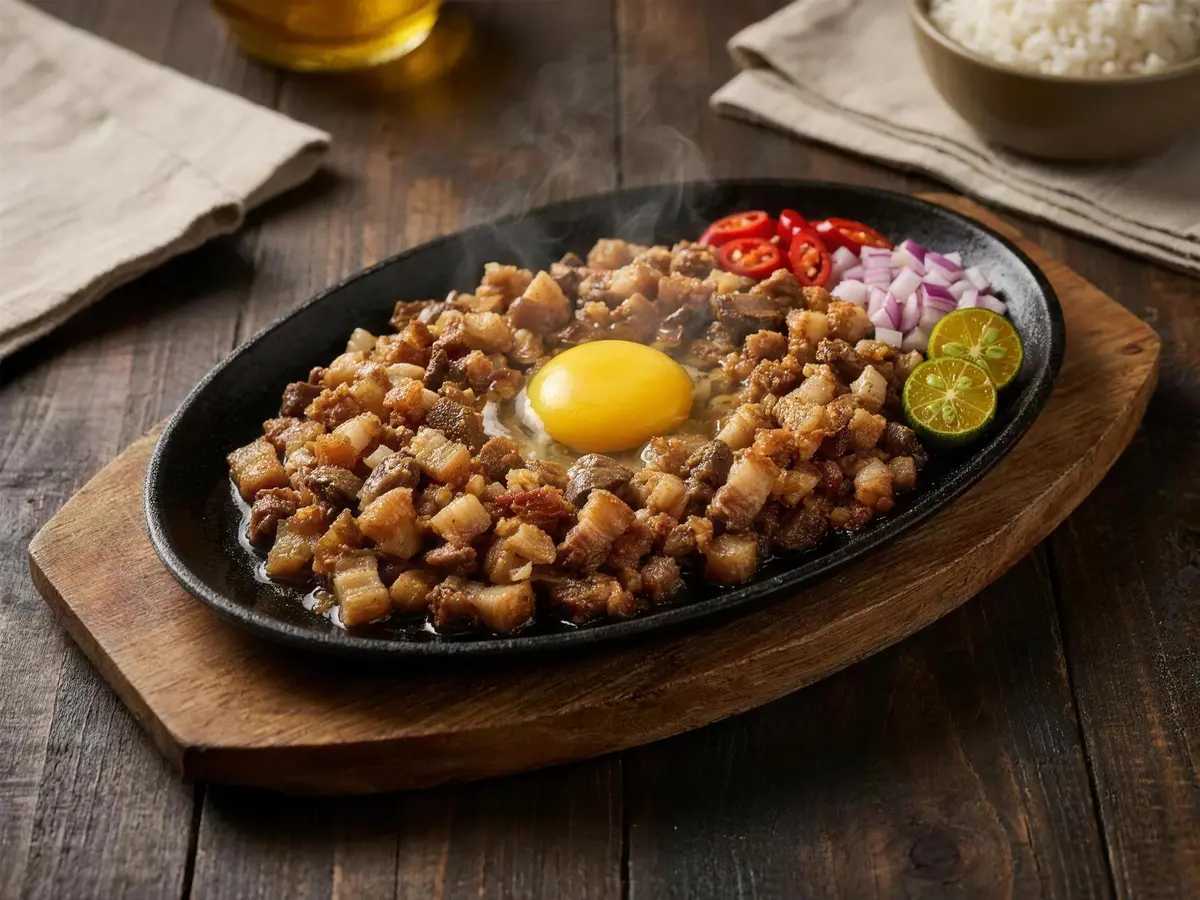
Sisig is a Filipino dish from Pampanga: boiled, grilled and finely chopped pork mixed with chicken liver, calamansi, raw onion and bird's eye chili, served on a sizzling-hot plate, often with an egg stirred through at the table. The word itself is old. A Kapampangan dictionary of 1732 already lists it, for a sour salad of green papaya or guava, while the pork version made from boiled and grilled pig's head goes back to Aling Lucing's eatery in Angeles in the 1970s. It's sour, savoury, fatty and spicy all at once, a classic pulutan to eat with cold beer and rice.

90 min950 kcal4 serves
💪High protein🌶️Spicy
★★★★★
Mille-Feuille Nabe (Japanese Cabbage and Pork Hot Pot) with napa cabbage, pork belly and dashi — Japan recipe
🇯🇵JapanMedium
Soups

Mille-Feuille Nabe (Japanese Cabbage and Pork Hot Pot)

Mille-feuille nabe borrows its name from the French pastry of a thousand leaves, but here the layers are napa cabbage and paper-thin pork belly, packed upright into a pot so the cut edges spiral outwards like a flower. One small napa cabbage of about 1.2 kg is enough for a pot 24–26 cm across. A clear dashi broth is poured over and everything simmers for twenty minutes until the cabbage collapses into sweetness and the pork melts. It looks like far more work than it is, and the leftover broth makes the best bowl of udon you'll have all winter.

45 min770 kcal4 serves
★★★★★
Feijoada with black beans, carne seca and paio sausage — Brazil recipe
🇧🇷BrazilAdvanced
Meat Dishes

Feijoada

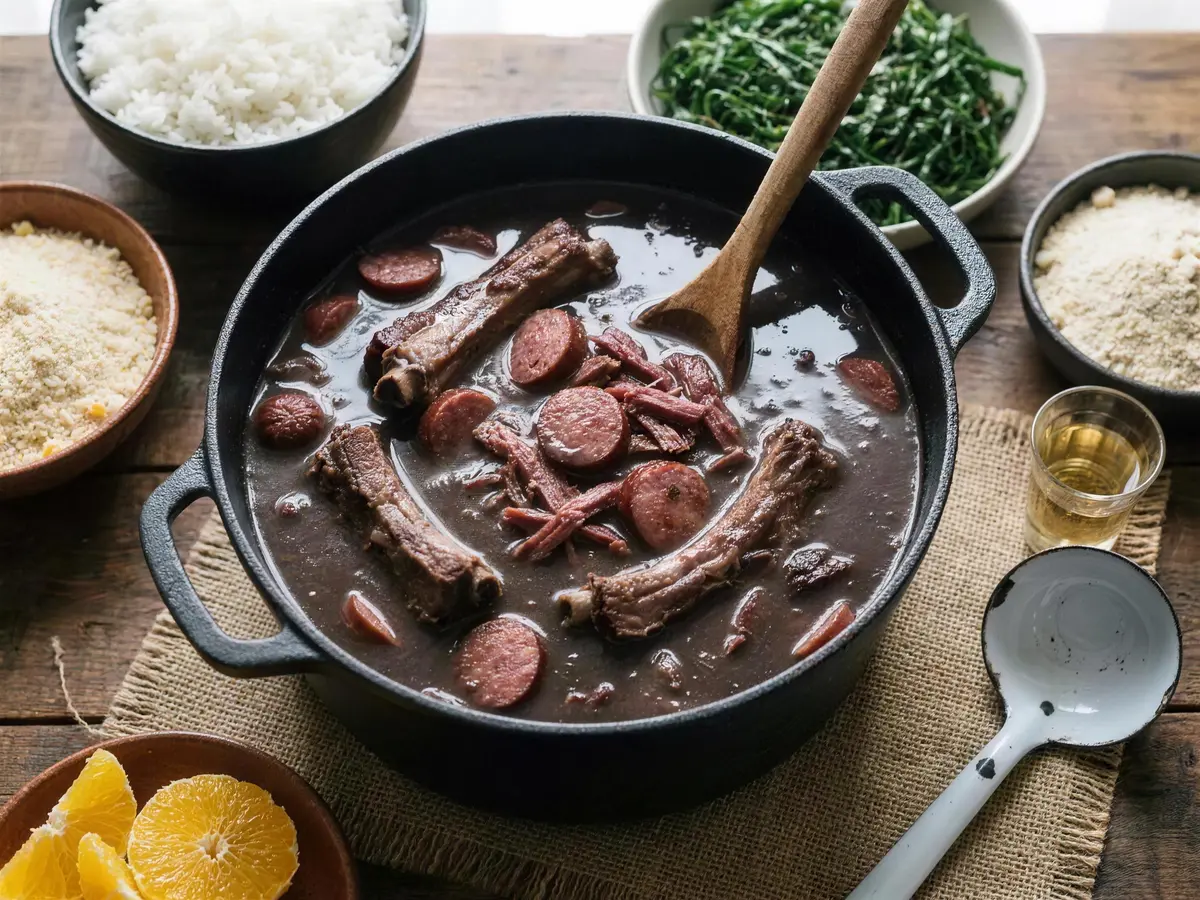
Feijoada is the black bean and pork stew eaten across Brazil, by restaurant custom on Saturdays (and in many places on Wednesdays too), as a full meal with rice, greens and orange on the side. Salt-cured and smoked pork cook slowly with black beans until the beans give up enough starch to turn the liquid into a dark, thick broth. The set of meats matters more than any seasoning: carne seca for salt and depth, smoked ribs for smoke, paio and calabresa for spice and fat. Origin stories tying it to slave quarters and discarded offcuts are widespread but historically contested, since bean and pork stews were already common in Portugal. Bean soaking and desalting the cured meat happen the day before.

240 min780 kcal6 serves
💪High protein🌾Gluten-free
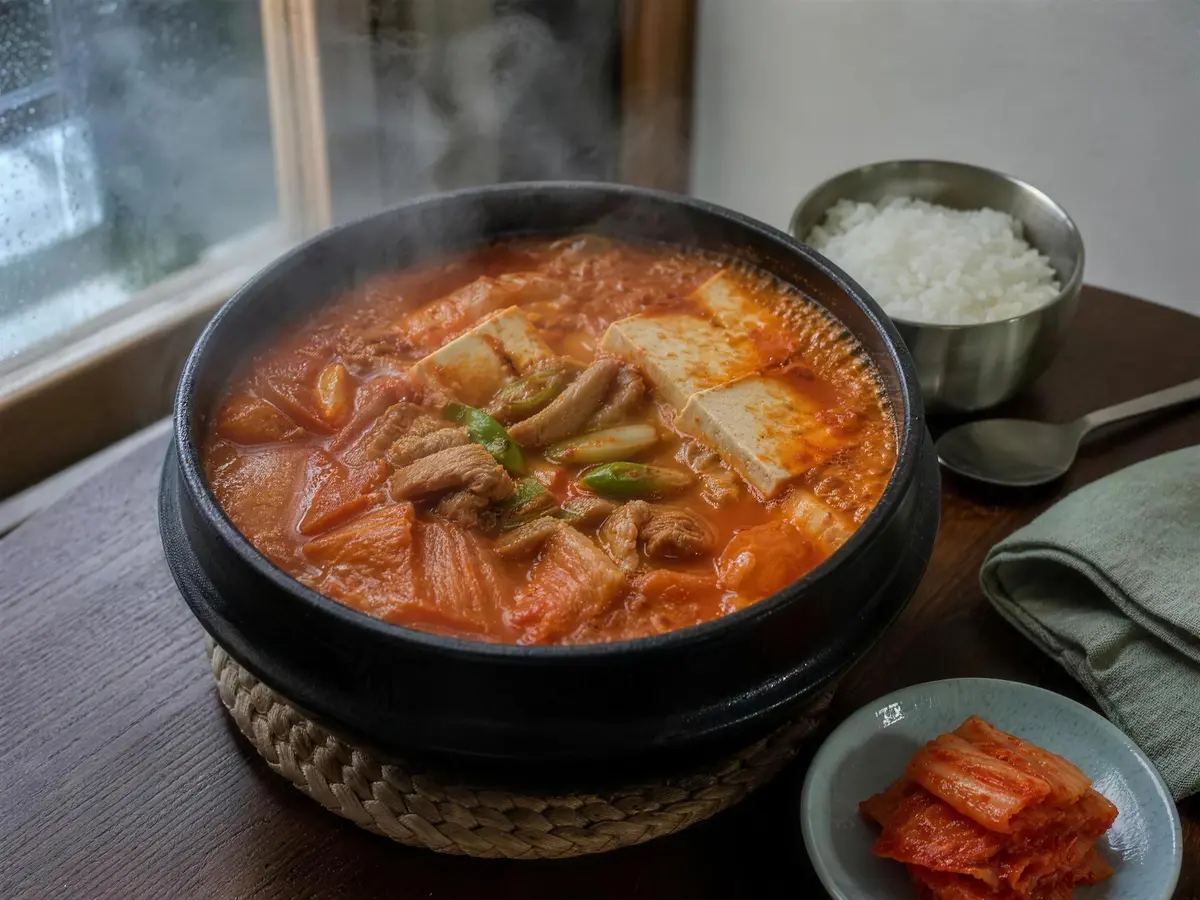
Kimchi Jjigae (Korean Kimchi Stew) with napa cabbage kimchi, pork belly and firm tofu — Korea recipe
🇰🇷KoreaMedium
Soups

Kimchi Jjigae (Korean Kimchi Stew)

Kimchi jjigae is a Korean stew built around well-fermented napa cabbage kimchi, pork belly and tofu. Frying the kimchi with the pork first turns its sharp brine into a deep red broth; the tofu goes in late so it stays in soft, generous pieces. Rice and a few banchan are all it needs.

45 min340 kcal4 serves
🌶️Spicy
★★★★★
Osaka-Style Okonomiyaki with green cabbage, dashi stock and nagaimo yam — Japan recipe
🇯🇵JapanAdvanced
Flour and Confectionery Products

Osaka-Style Okonomiyaki

Osaka-style okonomiyaki is a thick savory pancake held together by a modest amount of dashi batter and a great deal of cabbage. Pork belly browns against the pan while the center steams until tender, then sweet-savory sauce, mayonnaise, aonori, and bonito flakes go on at the table. It is forgiving about fillings, but the cabbage-to-batter ratio is not negotiable.

65 min795 kcal4 serves
Ingredients

Goes well with

Other ingredients that appear most often alongside pork belly across the archive. Pick one to drill deeper.