
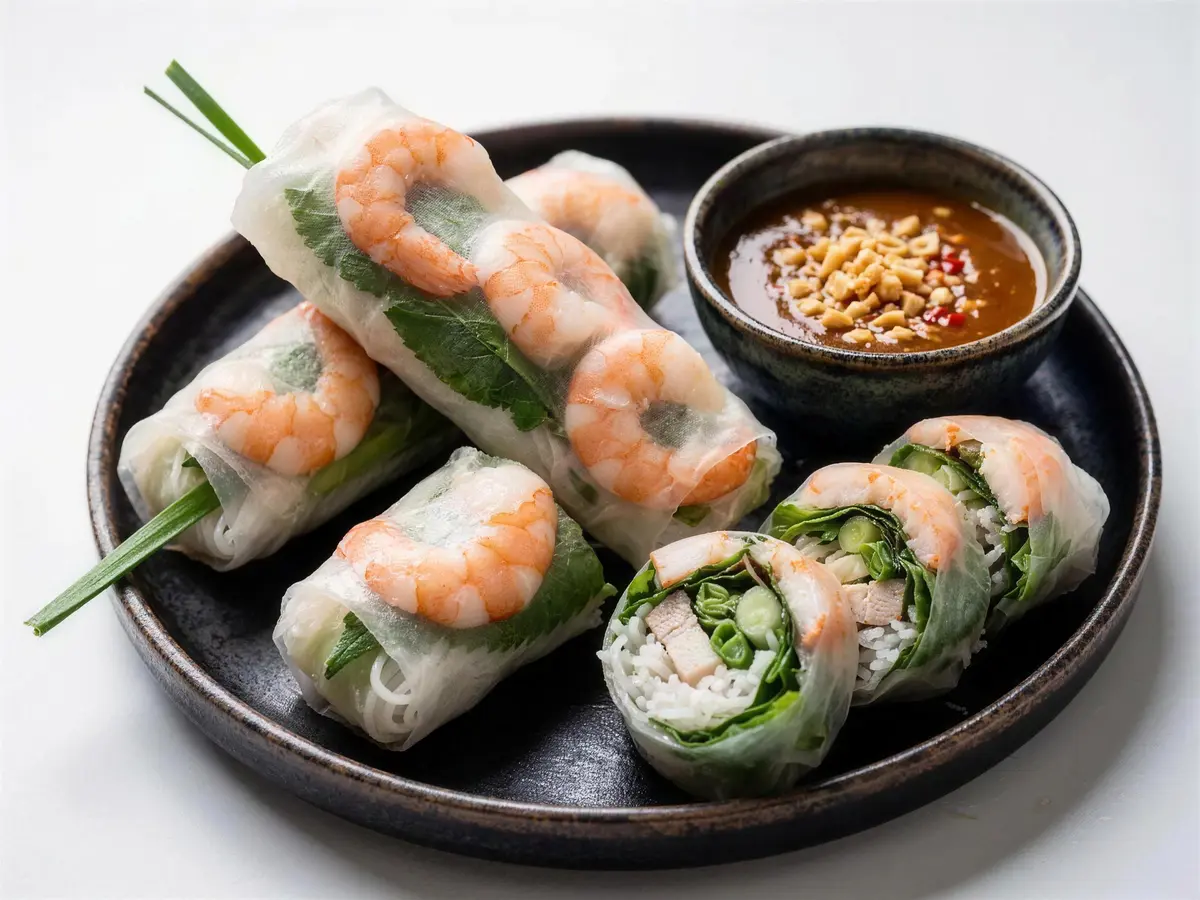
Gỏi Cuốn (Vietnamese Fresh Spring Rolls)
Gỏi cuốn are fresh Vietnamese rolls from the south of the country: translucent rice paper wrapped around poached pork belly, boiled shrimp split lengthwise, rice vermicelli, soft lettuce, mint and Thai basil, with garlic chives trailing from one end. The shrimp is placed at the top before rolling so it shows through the paper like a window — pink, curved, vivid. Everything inside is cooked, cooled, and assembled cold. The roll is eaten with a rich peanut-hoisin dipping sauce. The recipe makes 12 rolls, three per serving. Gỏi cuốn translates literally as 'salad rolls' (gỏi = salad, cuốn = to roll), not spring rolls — the name reflects the herb-forward lightness of the filling rather than the season. They are served fresh, at room temperature, within minutes of rolling; the rice paper hardens and the roll becomes difficult to eat if it sits more than 20 to 30 minutes.
Ingredients
- 300 gpork belly
- 300 gmedium shrimp, shell-on
- 120 gthin rice vermicelli
- 12 round rice paper sheets, 22–25 cm diameter
- 1 head of butter lettuce or soft green leaf lettuce
- 1 small bunch of fresh mint
- 1 small bunch of Thai basil
- 12 garlic chive stalks
- 1 small cucumber, cut into thin matchsticks
- 3 tbspsmooth peanut butter
- 3 tbsphoisin sauce
- 60 mlwarm water
- 1 tbsprice vinegar or lime juice
- 1 tspsriracha or sambal
- 2 tbspcrushed roasted peanuts
Method
- Prepare all fillings first. Put the pork belly in a pot, cover with cold salted water, bring to a gentle simmer and cook for about 15 to 20 minutes, until a skewer slides through easily and the juices run clear (at least 63°C in the thickest part); let it rest for 3 minutes, cool, then slice as thinly as possible (about 3 mm). Drop the shrimp into boiling salted water for 2–3 minutes until pink and opaque all the way through, cool in cold water, peel, devein and halve lengthwise so each half shows a pink exterior and sits flat. Cook the vermicelli according to the package, rinse under cold water, drain well and divide into loose nests. Tear the lettuce into hand-size pieces, pick the mint and basil leaves, have the chives ready and cut the cucumber into matchsticks. Lay everything out on a board within easy reach — the rice paper waits for no one.
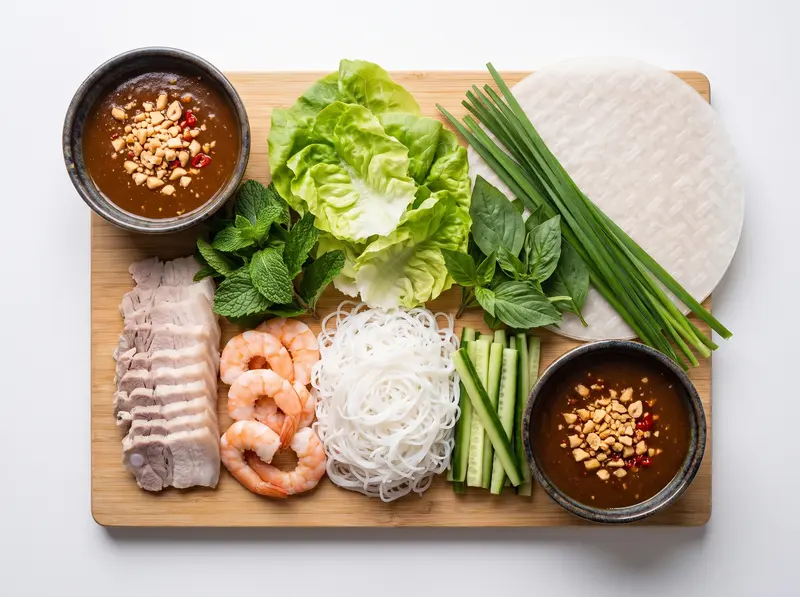
- Make the peanut dipping sauce. Combine peanut butter and hoisin sauce in a small bowl. Add warm water a tablespoon at a time and stir until the sauce has the consistency of thick cream — pourable but not runny. Add rice vinegar or lime juice. Taste: the sauce should be rich, sweet, slightly tangy, and savory. Adjust with more hoisin for sweetness, more vinegar for tang, more water for lightness. Stir in the sriracha if using. Transfer to individual dipping bowls and scatter the crushed peanuts over the top just before serving. The sauce is built on peanuts: if anyone at the table has a peanut allergy, serve the rolls with nước chấm (fish sauce, lime juice, sugar, water, garlic and chilli) instead and leave the crushed peanuts off.
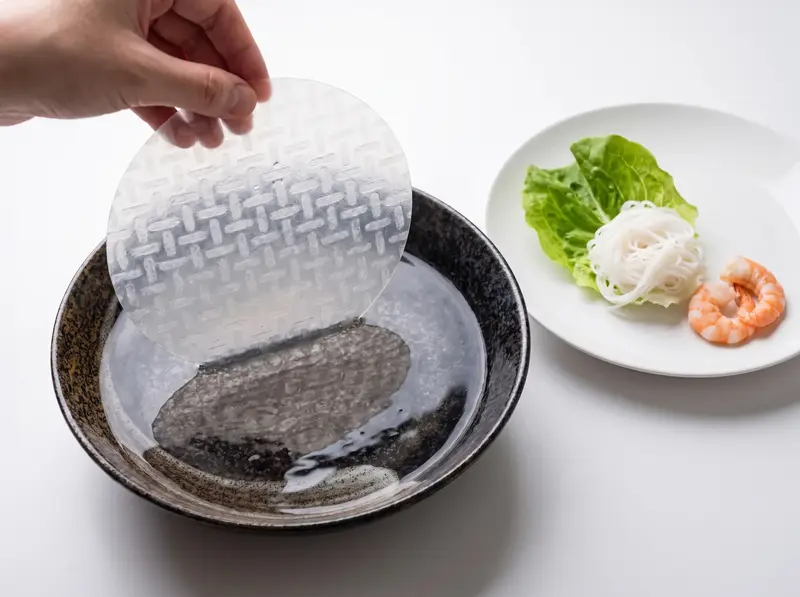
- Soak the rice paper. Fill a wide shallow bowl or plate with warm (not hot) water. Working one sheet at a time, submerge the rice paper for 5 to 8 seconds — it should still feel slightly firm when you lift it out. Do not wait for it to go fully soft in the water; it will continue hydrating for the next 30 to 60 seconds as you assemble. A rice paper soaked too long will tear when rolled. Shake off excess water and lay flat on a clean plate or board.
- Fill and roll. Working quickly: lay a piece of lettuce across the bottom third of the rice paper. On top of the lettuce, add a small nest of vermicelli and 2 to 3 pieces of pork. Add a few herb leaves and 3–4 cucumber sticks. Lay 2 to 3 shrimp halves cut-side down across the upper third of the rice paper — these will show through the paper and are placed here deliberately for presentation. Lay a chive stalk across the center with the green end extending beyond the edge. Fold the left and right sides of the paper inward. Starting from the bottom (lettuce end), roll tightly away from you, tucking the filling as you go. Press the final edge firmly to seal. The roll should be compact and firm. Place seam-side down on a plate.
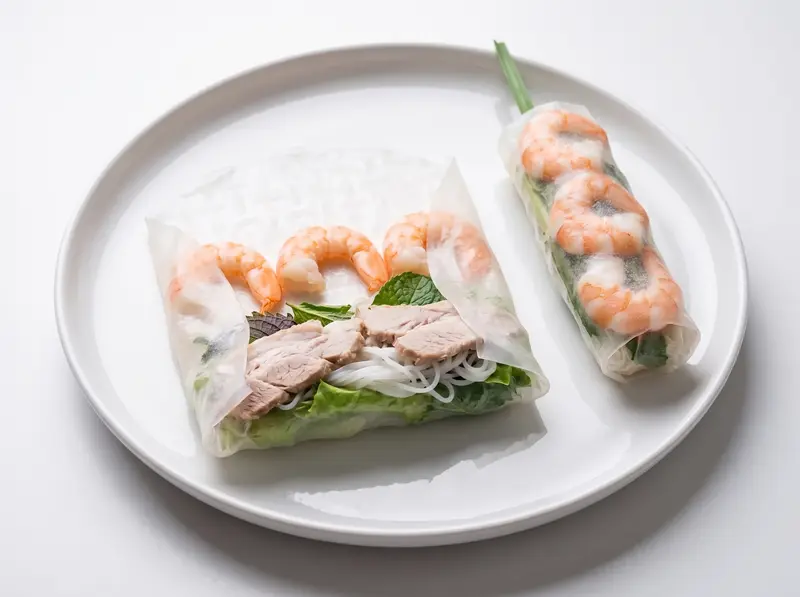
- Serve immediately. Arrange the rolls on a plate, not touching each other — rice paper sticks on contact. Separate them with strips of cling film or keep a finger's width between each. Serve within 20 minutes of rolling. If making ahead for a party, wrap each roll individually in cling film and refrigerate for up to 8 hours; take them out about 10 minutes before serving. Rolls with cooked pork and shrimp should spend no more than 2 hours in total out of the fridge, counting the time the fillings sat out during assembly — throw away any that have been out longer rather than chilling them again. Serve with individual bowls of peanut sauce for dipping.
FAQ
Rice paper tears for two reasons: soaked too long, or rolled too tightly without supporting the paper from underneath. The solution to over-soaking: pull the paper from the water when it still feels slightly firm — it will continue to soften as you work. If you wait for it to feel fully soft in the water, it will be too fragile to handle. The solution to tearing during rolling: always have a lettuce leaf as the first layer directly on the paper — the leaf provides structural support and prevents the filling from puncturing the paper. Roll with even pressure, not a pinching squeeze. If a roll does tear, wrap another briefly-soaked paper around the outside — a double wrap is acceptable and common in restaurants.
Freshly rolled is always best. The rice paper continues to dry at room temperature and begins to harden within 20 to 30 minutes. To hold them longer: wrap each roll individually in cling film immediately after rolling and refrigerate — the film traps enough moisture to keep the paper pliable for up to 8 hours. Take them out about 10 minutes before serving and unwrap just before eating. Because the filling is cooked pork and shrimp, count every minute out of the fridge, assembly included: 2 hours in total at room temperature is the limit, and rolls that sat out longer should be thrown away, not chilled again. Do not refrigerate unwrapped rolls — the cold dries and hardens the rice paper within an hour. Do not freeze. Pre-prepare all fillings (pork, shrimp, vermicelli, herbs) the morning of the day you plan to serve — store separately in the fridge and roll to order.
Gỏi cuốn (fresh spring rolls): rice paper softened in water, not cooked after assembly, served at room temperature. The filling is pre-cooked but the roll itself is never fried. Light, fresh, herbal. Chả giò (fried spring rolls, also called nem rán in the north): a filling of ground pork, glass noodles, and vegetables wrapped in rice paper or a thin flour wrapper and deep-fried until golden and shatteringly crisp. Hot, rich, crunchy. Egg rolls: a Chinese-American preparation, thicker wrapper made with egg, deep-fried, typically with cabbage and pork. Larger than chả giò and crunchy. The three are distinct in texture, temperature, and flavor — gỏi cuốn is fresh and cool; the other two are hot and fried.
The pork belly can be replaced with: pork shoulder or tenderloin (leaner, less fatty, slice thinly); poached chicken breast or thigh (cool and slice); thin slices of grilled pork or nem nướng (grilled Vietnamese pork sausage, which appears in other roll variations). The shrimp can be replaced with: grilled shrimp, crab sticks (imitation crab), or omitted entirely for a herb-heavy vegetarian roll. Tofu (firm, pressed, either raw or pan-fried) replaces both proteins for a fully vegetarian version. Smoked salmon is a contemporary variation. The one element that does not change is the rice vermicelli — it provides the necessary heft and texture.
Both are authentic, served in different contexts. The hoisin-peanut sauce is the most widely served accompaniment and is particularly associated with gỏi cuốn in southern Vietnam and in Vietnamese communities abroad. It is rich, creamy, and slightly sweet — it coats the roll and adds heft. Nước chấm (fish sauce dipping sauce — fish sauce, lime juice, sugar, water, garlic, chilli) is more traditional as a universal Vietnamese condiment and provides a lighter, brighter, acidic contrast to the rich roll. Many tables offer both. Mắm nêm (fermented anchovy sauce) is a third option: pungent and not to everyone's taste. The peanut sauce in this recipe is a practical home version; a more traditional peanut sauce uses a base of sautéed garlic and hoisin rather than raw peanut butter.
Keep browsing
More dishes from the Vietnamese archive — picked by overlap with what you're cooking now.
Recipes by email
One letter a week: a recipe picked for your taste, plus whatever is new on the site. Unsubscribe in one click.
Welcome gift: Sergei's cookbook (e-book).
By subscribing you agree to the privacy policy.
Tell us what you like to cook (30 seconds) →
Join the conversation
Comments
No comments yet — be the first!