


Pho Bo (Vietnamese Beef Noodle Soup)
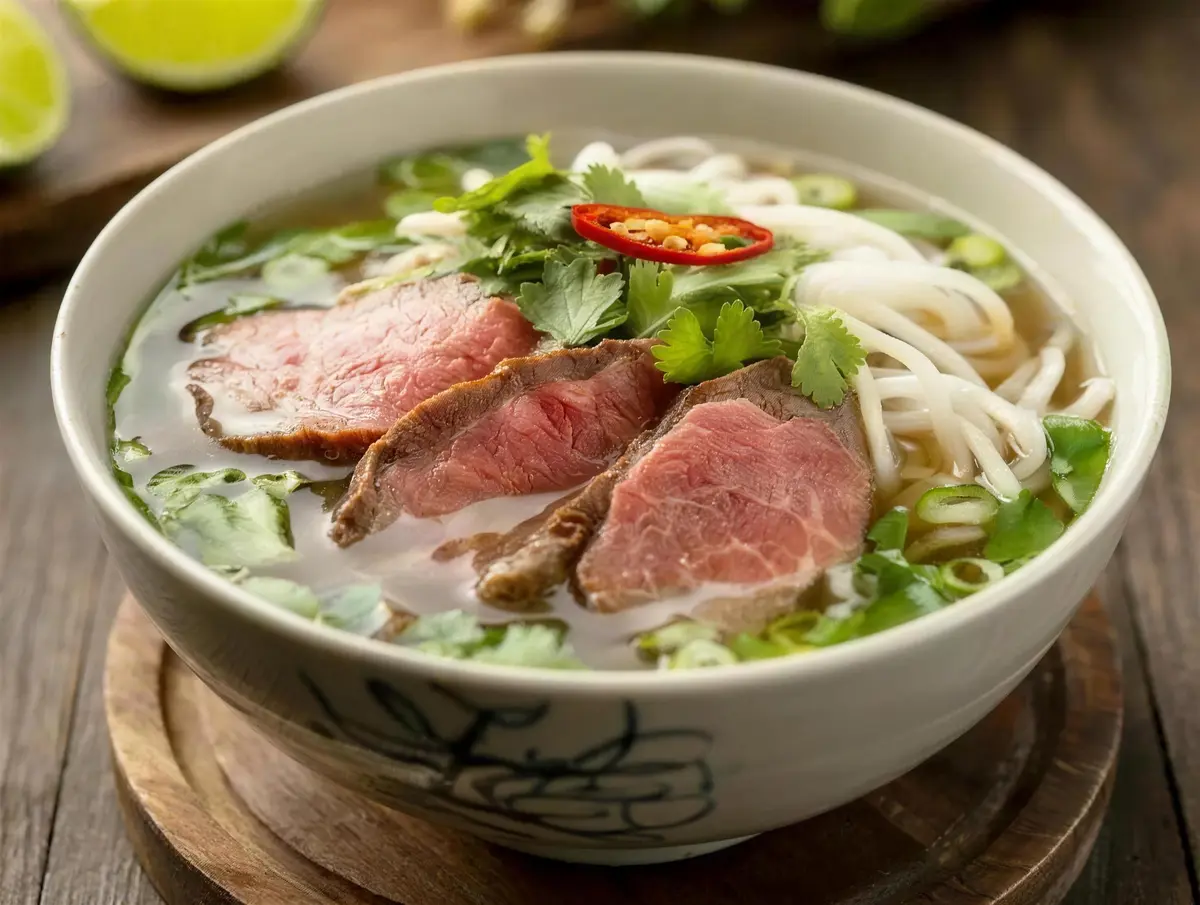
Pho bo is a beef noodle soup from northern Vietnam, most closely associated with Hanoi, built around a clear, richly spiced beef broth — bones and spices simmer for hours with charred onion and ginger, while the bowl itself is finished with rice noodles, thin beef, fresh herbs, lime, and chili. Both cooked and raw beef go into the bowl: a well-done cut simmered in the broth, and paper-thin raw slices that turn from red to grey when boiling broth is poured over them.
Ingredients
- 1.5 kgbeef bones
- 500 gbeef brisket or shank, for the broth
- 200 gbeef eye round or sirloin, for serving raw
- 400 grice noodles
- 2 onions
- 1 ginger, piece 7–8 cm
- 2 star anise
- 4 cloves
- 1 cinnamon stick
- 1 tspcoriander seeds
- 1 tspblack peppercorns
- 2 tbspfish sauce
- 1 tbspsugar
- 1.5 tspsalt
- 1 bunch scallion
- 1 bunch cilantro
- 1 bunch mint
- 1 lime
- 1 chili
- 100 gbean sprouts
Method
- Rinse the bones and the brisket or shank, cover with cold water, bring to a boil and boil for 5 minutes, then drain and rinse the bones, the meat and the pot clean. Return the bones and the meat to the pot, cover with 3 liters of fresh water and bring back to a boil.
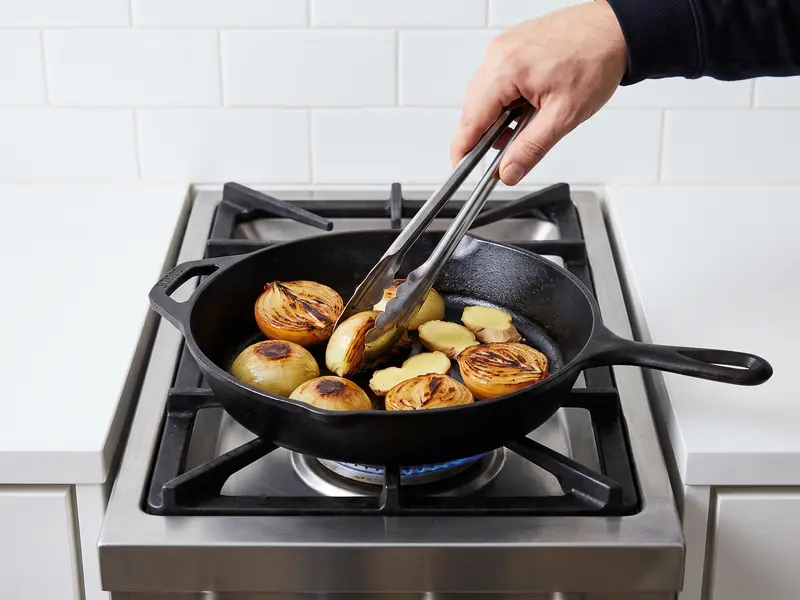
- Char the onion and ginger halves directly on a dry skillet or open flame until blackened in spots and softened. Let them cool, then peel off the burnt skin and rinse away the loose black bits. In the same dry skillet, toast the star anise, cinnamon stick, cloves, and coriander seeds for 2 to 3 minutes until fragrant — this wakes up their oils before they go into the broth. Add everything, along with the peppercorns, to the pot. Simmer on the lowest possible heat for 3 hours, skimming foam regularly. Never let it boil.
- After about 1.5 hours of simmering, lift out the brisket or shank: it should be tender but still firm enough to slice, not falling apart. Put it in a bowl of cold water for 10 minutes so it doesn't dry out and darken, then drain it, chill it and slice thinly against the grain; this becomes the cooked beef topping. The bones stay in the pot for the full 3 hours. About 40 minutes before serving, put the raw beef in the freezer for 15–20 minutes, then slice it as thinly as you can against the grain — the brief freeze firms up the meat enough to shave it paper-thin — and keep the slices in the fridge until the bowls are ready.
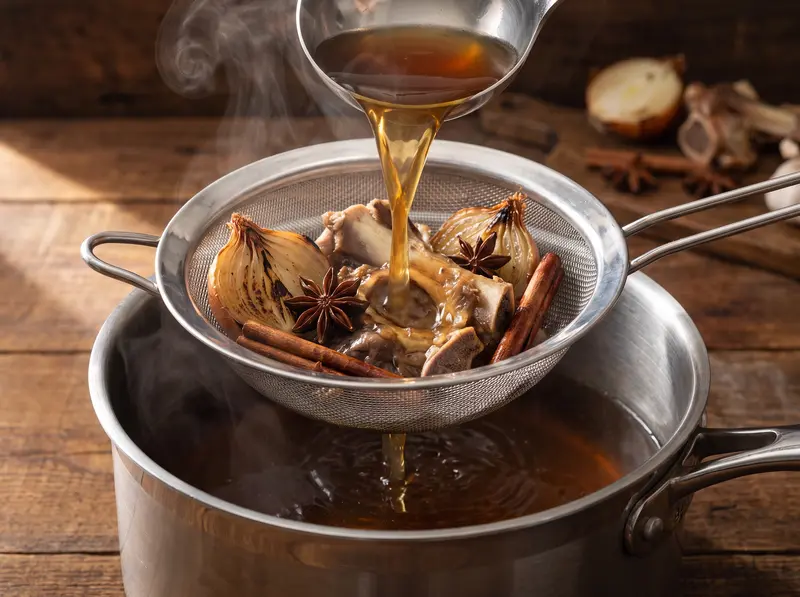
- Add the fish sauce, sugar and salt to the broth, then taste it: the broth should be slightly too strong on its own, because the noodles are unsalted. Strain through a fine sieve, discard the bones and spices, and just before serving bring the strained broth back to a rolling boil — only broth that's actually boiling will cook the raw beef in the bowl.
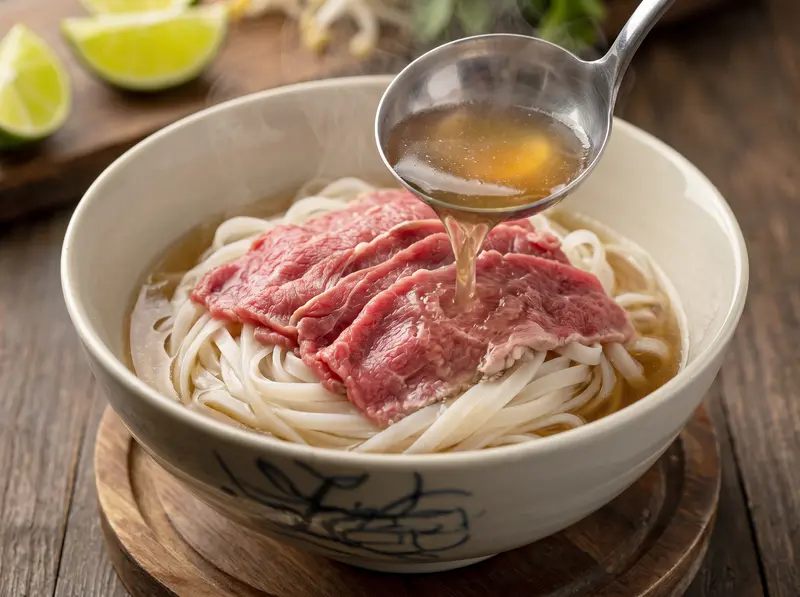
- Bring a pot of water to a boil. Blanch the bean sprouts in it for 30 seconds and lift them out, then cook the dried flat rice noodles (bánh phở) in the same water according to the package instructions and divide them among deep bowls. Top with both the sliced cooked beef and a few slices of the raw beef. Ladle the boiling broth over each bowl — it should be hot enough to visibly turn the raw slices from red to grey within seconds. This is how rare beef is served in pho, and the meat stays below the 63°C (145°F) that food-safety agencies set for beef. For children, pregnant women, older people and anyone with a weak immune system, hold the slices in a ladle in the boiling broth for 20–30 seconds, until no pink is left, before they go into the bowl.
- Serve with the blanched bean sprouts, green onion, cilantro, mint, lime wedges, and chili on the side.
Cooked it? Rate the recipe
FAQ
Cloudy broth is the most common beginner mistake. The causes: skipping the parboil, or simmering at too high a heat. Blanch the bones first — cover with cold water, boil for 5 minutes, drain and rinse everything. Then simmer on the lowest possible heat with barely a bubble, skimming regularly.
Charring the skin until it blackens is not a mistake — it is a technique; the burnt skin is peeled off and the loose black bits rinsed away before the onion and ginger go into the pot. It gives the broth its deep smoky aroma and dark amber color. Without this step the broth tastes flat and pale. This and the parboil are the two non-negotiable secrets of authentic pho.
Yes — it's a good sign. The gelatin comes from collagen released by the beef bones during the long simmer, and it means the broth is rich and full-bodied. Most store-bought stock won't set the same way, because it contains far less gelatin.
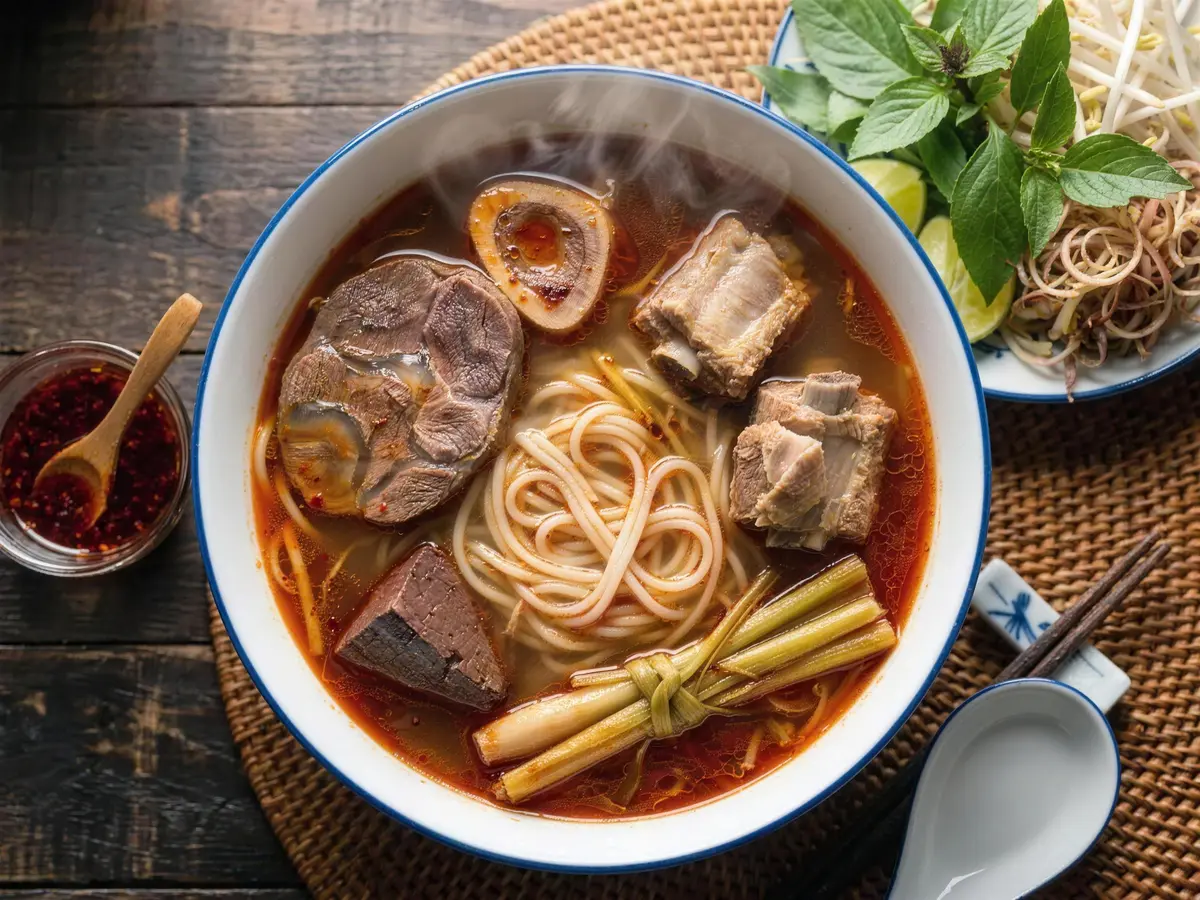
Pho bo is built on beef bones with star anise and cinnamon for a deep, spiced broth, finished simply with lime, herbs, and chili on the side. Pho ga is the lighter chicken version of the same broth style — clearer and milder. Bun bo Hue is a different soup from central Vietnam, built on lemongrass and fermented shrimp paste rather than warm spices, and finished with a chili-lemongrass sauce as well as lime and herbs.
Put the beef in the freezer for 15–20 minutes — semi-frozen meat slices much more easily and evenly. Cut across the grain. The slices should be nearly transparent so they change color the moment boiling broth is poured over them in the bowl.
Keep browsing
More dishes from the Vietnamese archive — picked by overlap with what you're cooking now.

Recipes by email
One letter a week: a recipe picked for your taste, plus whatever is new on the site. You can stop the letters in one click.
Welcome gift: Sergei's cookbook (e-book).
By signing up for the newsletter you agree to the privacy policy.
Tell us what you like to cook (30 seconds) →
Join the conversation
Comments
No comments yet — be the first!