
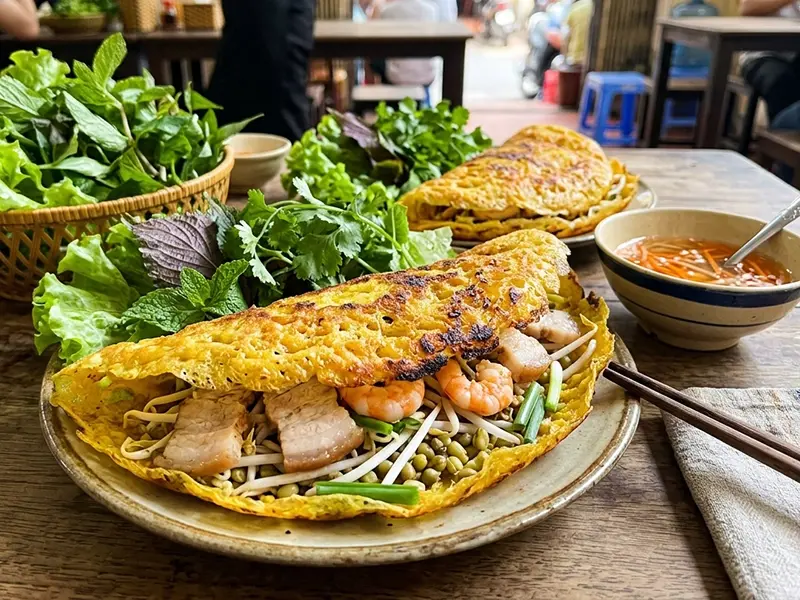
Bánh Xèo (Vietnamese Sizzling Crêpes)
Golden turmeric crêpes fried until shatteringly crisp, filled with pork belly, shrimp, mung bean, and bean sprouts — then folded and eaten wrapped in lettuce with mint and cilantro, dipped in nước chấm. The name means 'sizzling cake': the xèo is the sound the rice flour batter makes the instant it hits the smoking-hot oil. Without that sound, the pan is not hot enough. Getting the crêpe genuinely crisp rather than soft and chewy requires three things: a thin batter, very hot oil, and patience — the crêpe needs 4 to 5 minutes undisturbed before it is ready to fold.
Ingredients
- 200 grice flour
- 30 gcornstarch
- 1.5 tspground turmeric
- 0.5 tspfine salt
- 300 mlcold water
- 200 mlcoconut milk
- 150 mllight beer or sparkling water
- 3 scallions
- 250 gpork belly
- 200 graw shrimp
- 150 gbean sprouts
- 4 tbspneutral oil
- 4 tbspfish sauce
- 2 tbspfresh lime juice
- 2 tbspsugar
- 1 garlic clove
- 1 fresh red chilli
- 8 large lettuce leaves, fresh mint, cilantro
Method
- Make the batter and nước chấm. Whisk together the rice flour, cornstarch, turmeric, and salt. Gradually add the cold water, coconut milk, and beer or sparkling water, whisking until completely smooth with no lumps. The batter should be thin — slightly thicker than milk but much thinner than pancake batter. Rest for at least 30 minutes (overnight in the fridge is better — the crêpes will be crispier). Make the dipping sauce: mix fish sauce, lime juice, sugar, 4 tablespoons of warm water, garlic, and chilli. Taste — it should balance salty, sour, and sweet. Add the spring onions to the batter only just before cooking.
- Prepare the fillings. Bring a small pot of water to the boil. Blanch the pork belly slices for 5 minutes, then drain and pat dry. Slice thinly. Season the shrimp with a pinch of salt and pepper. Prepare the bean sprouts, herbs, and lettuce. Have everything ready beside the stove before you start frying — once you begin, it moves quickly.
- Fry the crêpes. Heat a 26 to 28 cm non-stick pan over high heat. Add 1 tablespoon of oil and heat until shimmering. Add a few pork belly slices and several shrimp to one side of the pan. Sauté for 1 minute until the pork colors and the shrimp turns pink. Give the batter a good stir (the starch settles). Pour enough batter to just barely coat the base of the pan — about 80 to 100 ml — and immediately swirl to spread thinly. You must hear the loud sizzling (xèo) when the batter hits the pan. If it is silent, the pan is not hot enough.
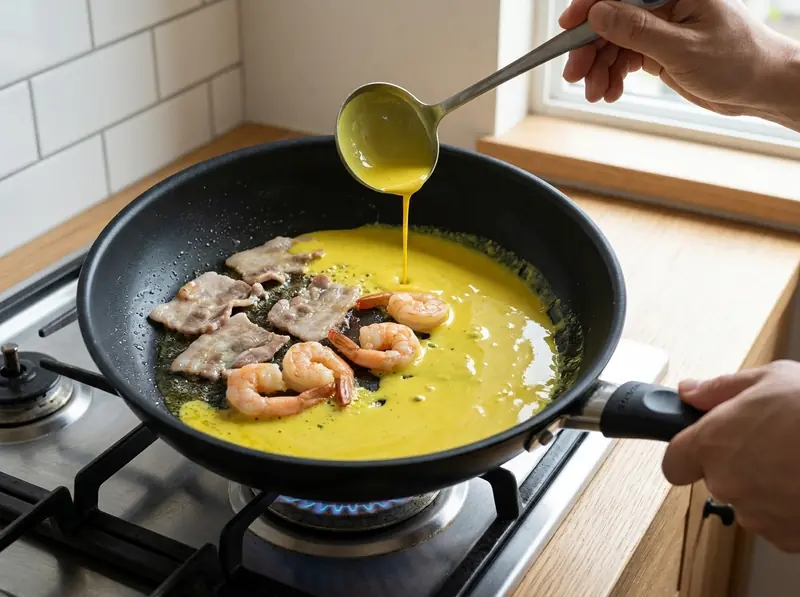
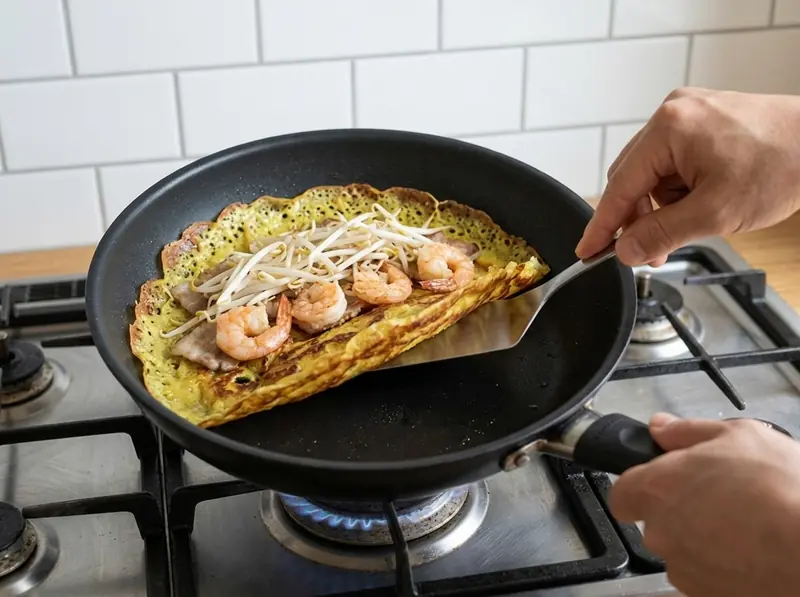
- Crisp and fold. Scatter bean sprouts over one half of the crêpe. Cover with a lid for 2 minutes to steam the filling through. Remove the lid. Cook uncovered over high heat for another 3 to 4 minutes until the edges are golden and starting to lift from the pan. The crêpe is ready when it slides easily when you shake the pan. Fold in half over the bean sprouts and slide onto a plate. Serve immediately — crêpes soften within a few minutes of coming off the heat.
- Eat and wrap. To eat: tear off a piece of crêpe with filling, place on a large lettuce leaf, add a few mint and cilantro leaves, roll into a loose bundle, and dip into the nước chấm. The contrast of hot crispy crêpe, cool fresh herbs, and sharp, bright dipping sauce is the point of the dish. Make the crêpes to order — do not attempt to make them all ahead.
FAQ
Bánh xèo is a Vietnamese compound word: bánh covers a broad range of foods including cakes, pastries, and this kind of savory crêpe; xèo is an onomatopoeia — it is the sound the batter makes the moment it hits hot oil. The xèo can be roughly pronounced 'say' (with a falling tone). If you are not hearing that sound when you pour the batter in, the oil is not hot enough. In Central Vietnam the dish is called bánh khoái, meaning roughly 'happy cake' or 'joyful eating'. The southern style is larger; the central style is smaller and wrapped in rice paper.
Four reasons crêpes come out soft: the pan was not hot enough when the batter went in; too much batter was used; the lid was left on too long; the crêpe was folded before it was ready. The solutions: heat the pan on high for 2 full minutes before adding oil. Pour less batter than seems right and swirl immediately to cover the base thinly. Cover with a lid for only 2 minutes, then remove. Cook uncovered at high heat for another 3 to 4 minutes until the edges are golden and lifting. The crêpe is ready when you can shake the pan and it slides. Authentic restaurant crêpes are made in very hot woks over charcoal with generous oil — the home stove version requires maximum heat to compensate.
Beer and sparkling water both contain dissolved carbon dioxide. When the batter hits the hot oil, the CO2 expands and creates tiny pockets of air in the crêpe surface — this is the same principle as using carbonated water in tempura batter. The result is a lighter, more porous, crispier texture than still water alone. Beer also adds a faint malty note. Sparkling water achieves the same textural effect without the alcohol. Both are non-traditional additions that home cooks use as improvements over straight water. The batter is also better when rested overnight in the fridge — the starch hydrates more fully and the crêpe fries crispier.
The traditional way is interactive and requires no cutlery. Tear off a piece of the folded crêpe — roughly the size of a playing card. Place it on a large lettuce leaf, add a few leaves of fresh mint and cilantro. Roll the lettuce leaf into a loose cigar shape. Dip into nước chấm and eat in one or two bites. The roll should not be tight or neat — it is meant to be a rustic bundle. Some versions also use a square of dampened rice paper as the outer wrap, folded around the whole bundle. In the south the herbs are generous; in the north the wrapping is simpler. The ritual of wrapping is part of the experience.
Southern Vietnamese bánh xèo (from Hồ Chí Minh City and the Mekong Delta) is large — often 35 to 40 cm across — crispy, thin, generously filled with pork, shrimp, mung bean, and bean sprouts, and wrapped in large lettuce leaves. Central Vietnamese bánh khoái (from Hội An and Huế) is smaller — roughly 20 cm — thicker, slightly softer, and uses more modest fillings. It is typically wrapped in rice paper rather than lettuce. Both are eaten with dipping sauce but the central sauces tend to include fermented shrimp paste (mắm tôm) or peanut-based sauces rather than the standard nước chấm.
Rate this
Recipes by email
One letter a week: a recipe picked for your taste, plus whatever is new on the site. Unsubscribe in one click.
Welcome gift: Sergei's cookbook (e-book).
By subscribing you agree to the privacy policy.
Tell us what you like to cook (30 seconds) →Keep browsing
More dishes from the Vietnamese archive — picked by overlap with what you're cooking now.
Join the conversation
Comments (2)
The name means "sizzling cake" and if your pan is not hot enough to make the batter sizzle violently on contact, the crepe will be soft and pale. I heat a non-stick pan on high for 2 full minutes before the first pour. Swirl the batter thin — this is a crepe, not a pancake. The coconut milk in the batter is what gives it that rich golden colour and faint sweetness that balances the dipping sauce.
The batter ratio here is spot on. The coconut milk and turmeric give it that authentic golden color. Make sure your pan is screaming hot before pouring — the name literally means sizzling cake and you need that sizzle. I add extra bean sprouts inside because they give the best crunch contrast against the crispy crepe.