


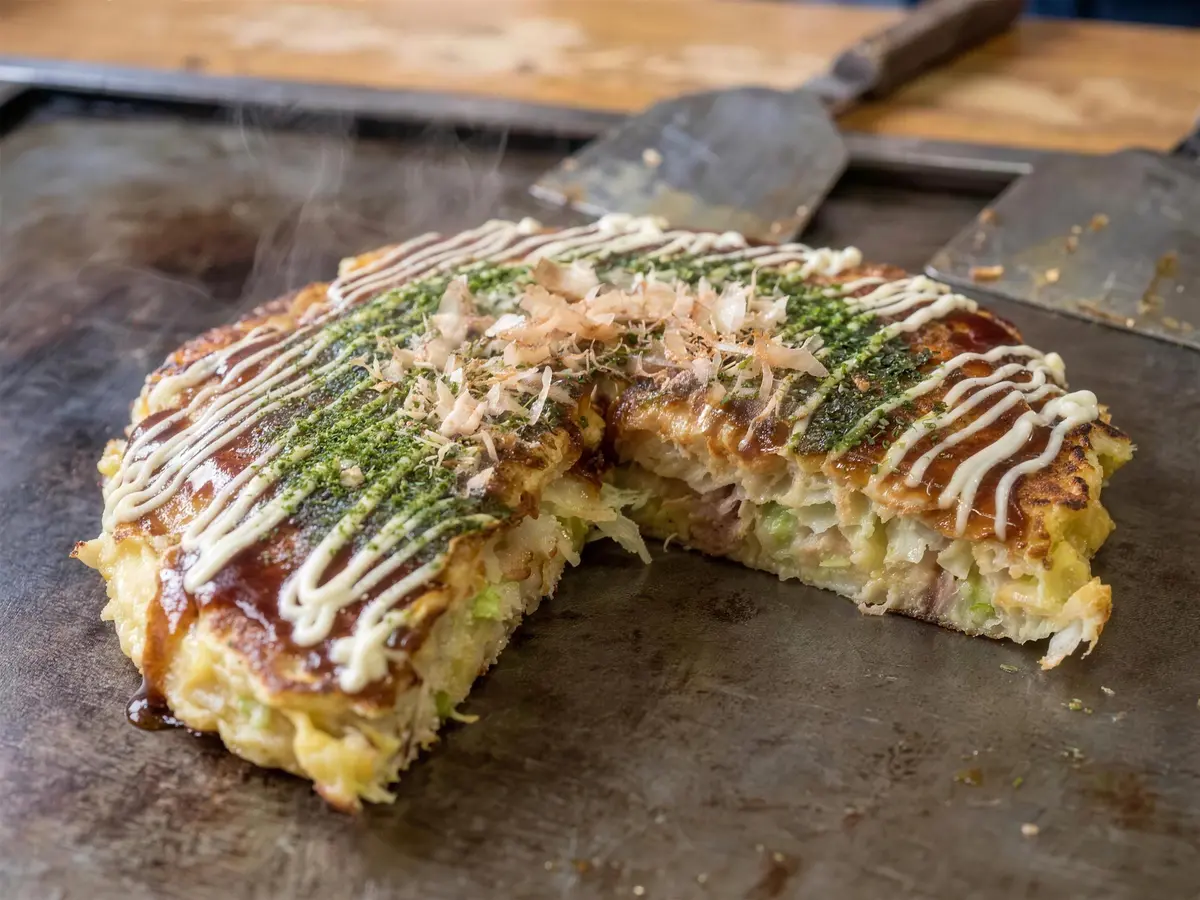
Osaka-Style Okonomiyaki
Osaka-style okonomiyaki is a thick savory pancake held together by a modest amount of dashi batter and a great deal of cabbage. Pork belly browns against the pan while the center steams until tender, then sweet-savory sauce, mayonnaise, aonori, and bonito flakes go on at the table. It is forgiving about fillings, but the cabbage-to-batter ratio is not negotiable.
Ingredients
- 500 ggreen cabbage
- 160 gall-purpose flour
- 220 mldashi stock
- 4 eggs
- 120 gnagaimo yam
- 4 green onions
- 40 gtenkasu
- 200 gpork belly
- 2 tbspvegetable oil
- 6 tbspokonomiyaki sauce
- 4 tbspJapanese mayonnaise
- 2 tspaonori
- 10 gbonito flakes
- 40 gpickled ginger
Method
- Prepare the vegetables. Remove the tough cabbage core and cut the leaves into rough 5 mm pieces; thinly slice the green onions and pickled ginger. Keep the cabbage dry after washing because trapped water thins the batter and makes the pancake heavy.
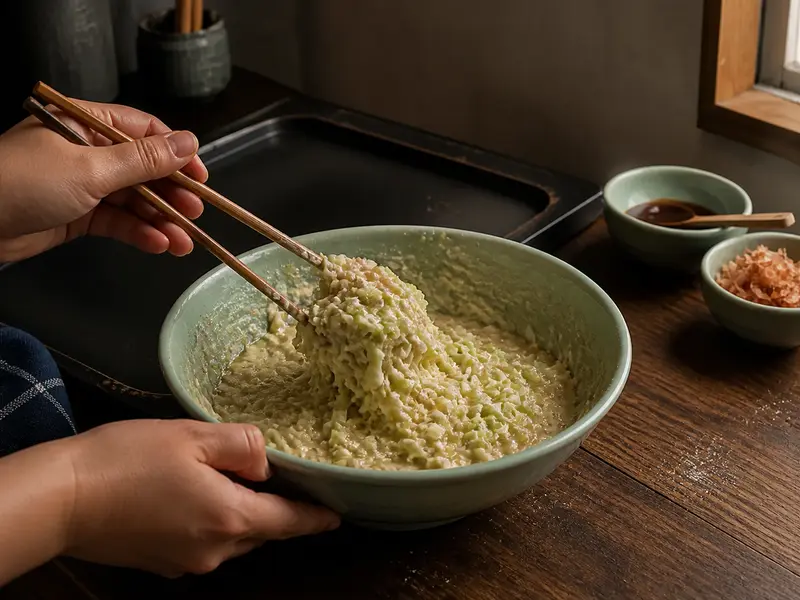
- Mix the batter. Whisk flour and cold dashi just until no dry pockets remain, then fold in finely grated nagaimo. The yam makes the center light and custardy; stop mixing while a few small lumps remain so gluten does not toughen it.
- Build one portion at a time. For each pancake, put one quarter of the cabbage, green onion, ginger, tenkasu, and batter in a bowl, add one egg, and fold 10–12 times. Mixing all four portions in advance draws water from the cabbage and leaves the final pancake flat.
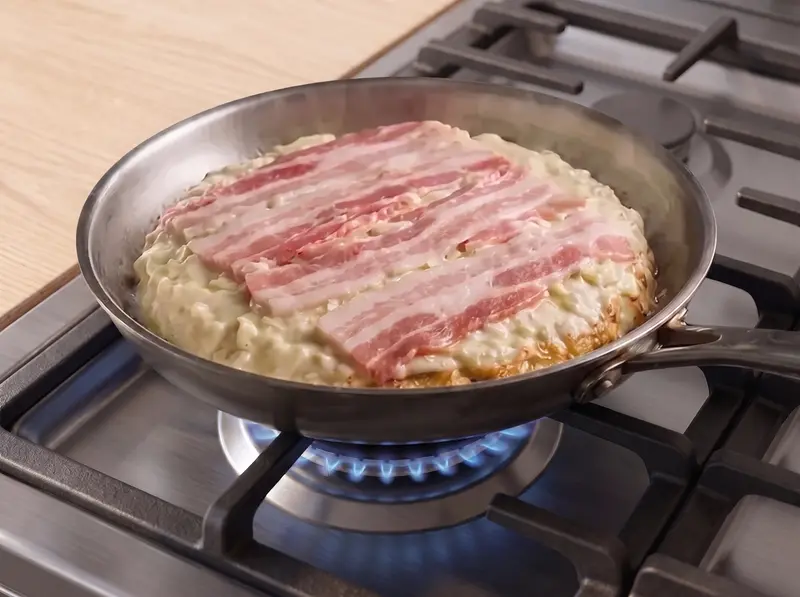
- Shape the pancake. Heat 1 teaspoon oil in a 20 cm skillet over medium heat, add one portion, and form a 2 cm-thick round without pressing it solid. Lay one quarter of the pork belly, thinly sliced (2–3 mm) and cut into 10 cm pieces, across the top, cover, and cook for 5 minutes until the bottom is deep golden and the edge looks set.
- Flip without breaking it. Slide the pancake onto a plate, invert the hot skillet over it, and turn both together, holding the skillet with an oven mitt and keeping your face away from spitting fat; use two broad spatulas if that feels easier. Cover and cook the pork side for 5 minutes over medium-low heat until the cabbage softens and the pork is browned and crisp at the edges with no pink left.
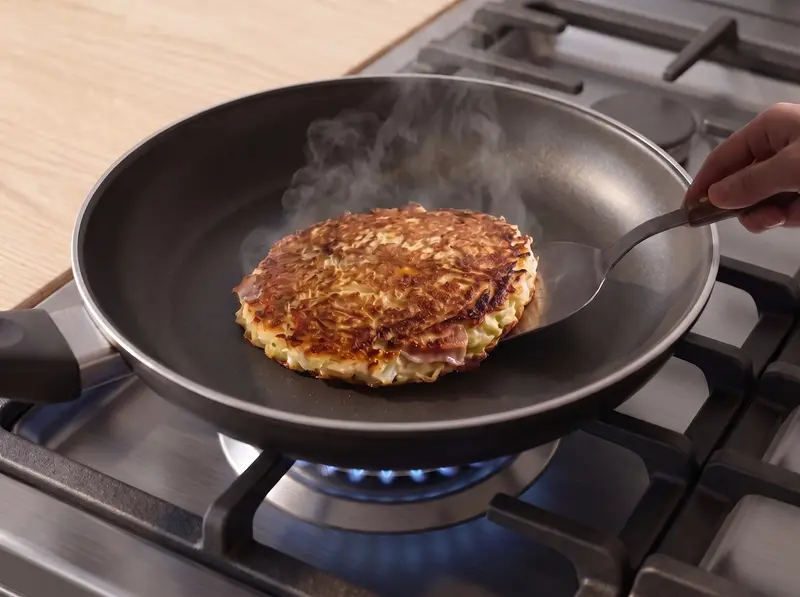
- Crisp the surface. Turn the pancake once more and cook uncovered for 2 minutes, allowing steam to escape. A skewer through the center should come out without raw batter, and the pancake should spring back rather than slosh when nudged.
- Dress and serve. Brush the hot top with okonomiyaki sauce, pipe mayonnaise in thin lines, and scatter aonori and bonito flakes over it. Serve at once while the pork edge is crisp, and repeat with the remaining portions, wiping out any dark crumbs between pancakes.
Cooked it? Rate the recipe
FAQ
The pancake may be too wet, too large, or flipped before its underside sets. Keep washed cabbage dry, shape a round about 15 cm across and 2 cm thick, and wait the full 5 minutes until the edge is opaque. A plate-flip is safer than trying to lift the whole pancake on one narrow spatula.
Nagaimo gives the batter lift and a slightly elastic center. For 120 g yam, use 1 teaspoon baking powder and replace 60 ml dashi with whole milk. The pancake will taste good, though it will be more bread-like and less custardy.
Yes. Replace pork belly with sliced shiitake brushed with oil, use kombu-shiitake dashi, and omit bonito flakes. Check the okonomiyaki sauce label because some brands contain oyster or fish extracts; a mix of ketchup, vegan Worcestershire sauce, and soy sauce works instead.
The plain flour-and-dashi batter keeps for 24 hours in the refrigerator. Do not combine it with cabbage, egg, or tenkasu until the pan is hot because cabbage releases water and tenkasu loses its crunch. Cooked pancakes keep for 2 days in the fridge; reheat them in a dry skillet, covered, until hot through.
Osaka-style okonomiyaki mixes cabbage and fillings into the batter before frying. Hiroshima-style builds separate layers and usually includes yakisoba noodles, with the egg cooked as its own layer. This recipe follows the Osaka method, which is easier to manage in one home skillet.
Keep browsing
More dishes from the Japanese archive — picked by overlap with what you're cooking now.


Recipes by email
One letter a week: a recipe picked for your taste, plus whatever is new on the site. You can stop the letters in one click.
Welcome gift: Sergei's cookbook (e-book).
By signing up for the newsletter you agree to the privacy policy.
Tell us what you like to cook (30 seconds) →
Join the conversation
Comments
No comments yet — be the first!