
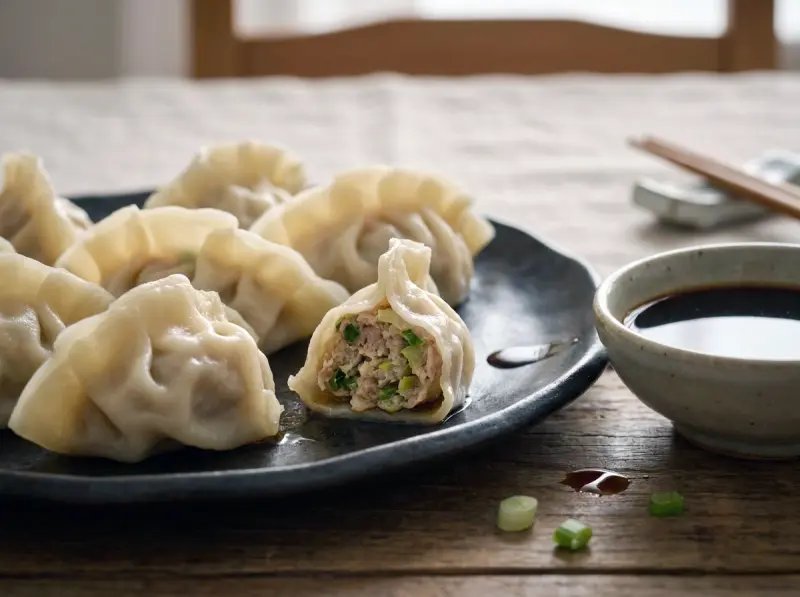
Pork and Cabbage Dumplings (Chinese Jiaozi)
These northern Chinese jiaozi have thin, pleasantly chewy skins and a juicy pork filling threaded with sweet Napa cabbage. Salting and squeezing the cabbage keeps the filling moist without flooding the wrappers. Make them for Lunar New Year, or settle in for an unhurried weekend folding session.
Ingredients
- 400 gall-purpose flour
- 210 mlwater
- 500 gground pork
- 500 gNapa cabbage
- 12 gsalt
- 3 scallions
- 20 gfresh ginger
- 3 tbsplight soy sauce
- 2 tbspShaoxing wine
- 1 tbsptoasted sesame oil
- 1 tspsugar
- 0.5 tspground white pepper
- 80 mlcold water
- 60 mlChinkiang vinegar
Method
- Make the dough. Stir 2 g of the salt into the 210 ml water, then pour it gradually into the flour while mixing with chopsticks. Knead for 8 minutes until the dough feels smooth and firm, cover it, and let it rest for 45 minutes; the rest relaxes the gluten so the wrappers roll without springing back.
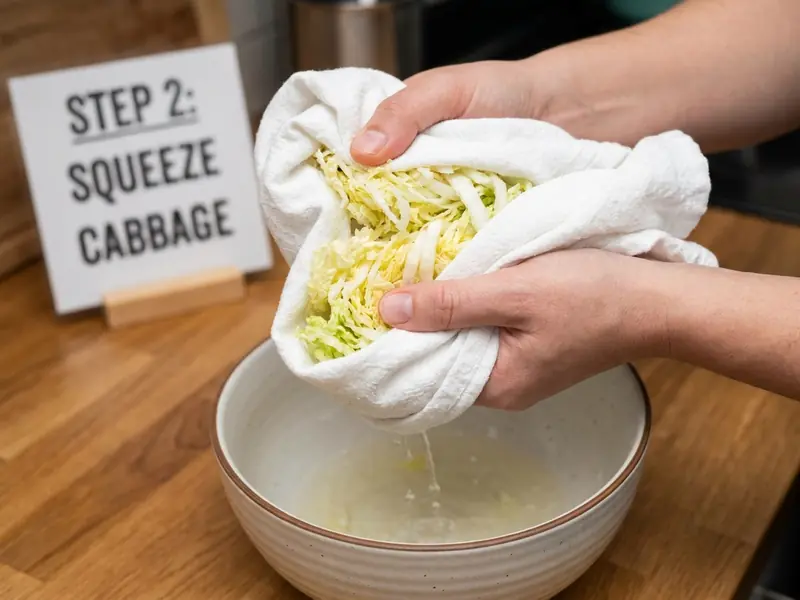
- Drain the cabbage. Finely chop the Napa cabbage, toss it with the remaining 10 g salt, and leave it for 15 minutes until glossy puddles form in the bowl. Squeeze it firmly in a clean towel until no stream of liquid runs out; loosely drained cabbage is the usual cause of split, watery dumplings.
- Season the pork. Grate the ginger and stir it into the pork with the soy sauce, Shaoxing wine, sesame oil, sugar, and white pepper. Mix vigorously in one direction for 4 minutes, adding the 80 ml cold water in four portions, until the meat looks tacky and leaves fine strands on the spoon; chill for 15 minutes.
- Finish the filling. Thinly slice the scallions, then fold them and the squeezed cabbage into the chilled pork just before you begin wrapping. Stir only until evenly distributed, because prolonged mixing at this point draws more water from the vegetables.
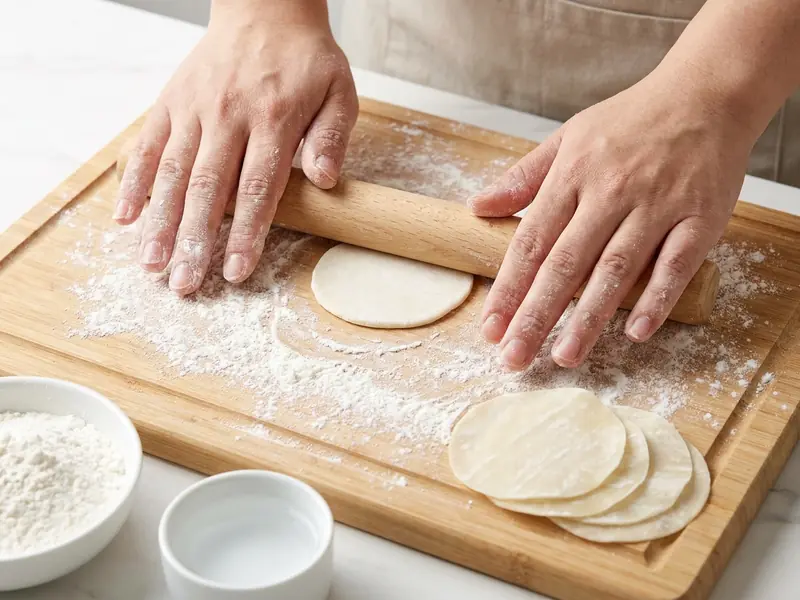
- Roll the wrappers. Divide the rested dough into 40 pieces of about 15 g and keep them covered with a damp towel. Flatten one piece at a time and roll it into a 9 cm round with a slightly thicker center and thin edge; dust sparingly with flour so the pleats still seal.
- Shape the jiaozi. Place about 1 tablespoon filling in the center of each wrapper, fold it into a half-moon, and pinch the top shut before making three pleats on each side. Press out trapped air and set the dumplings upright on a floured tray without touching; keep both dough and finished dumplings covered.
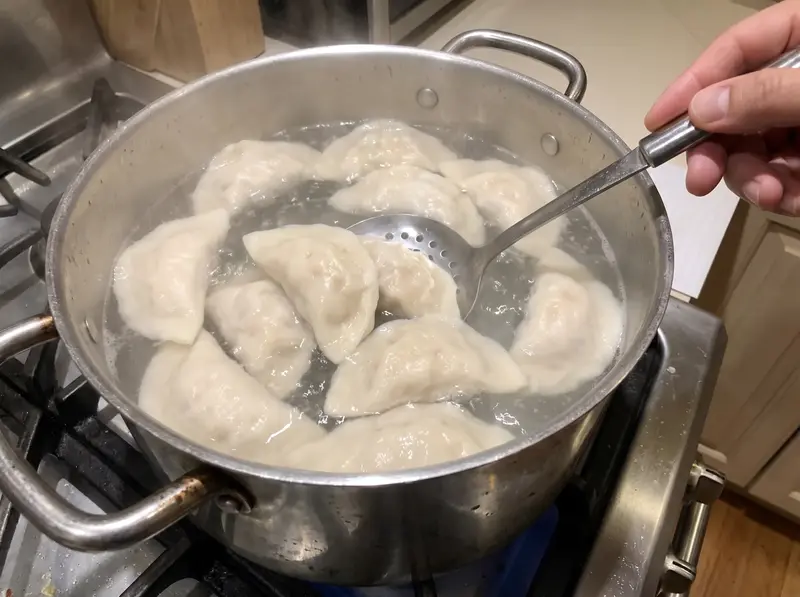
- Boil and serve. Bring a wide pot of water to a lively boil and cook the jiaozi in three batches, stirring once along the bottom so they do not stick. After they float, keep them at a steady simmer for 4 minutes until the skins look slightly translucent and the pork reaches 71°C, then lift them out with a slotted spoon and serve with Chinkiang vinegar.
FAQ
Napa cabbage releases a surprising amount of water after it meets salt. Salt it for 15 minutes, then squeeze it in a towel until liquid no longer streams out. Mix the cabbage into the pork only when you are ready to wrap, and keep the finished filling cold.
Yes, use 40 round wheat dumpling wrappers about 9 cm wide and skip the dough step. Brush a narrow ring of water around each edge because packaged wrappers are drier than fresh dough. Keep the unused rounds under a damp towel and reduce the total preparation time by about 50 minutes.
Arrange uncooked jiaozi on a flour-dusted tray with space between them and freeze for 2 hours. Transfer the hard dumplings to a sealed bag and keep them for up to 2 months. Boil them straight from frozen and give them 6 minutes after they return to a simmer; do not thaw them first.
Yes, place the dumplings in 1 tablespoon neutral oil in a lidded skillet and brown their bases over medium heat for 2 minutes. Add 120 ml water, cover, and steam for 8 minutes. Remove the lid and cook for 2 more minutes until the water is gone and the bottoms are crisp and amber.
In northern China, boiled jiaozi are often served simply with dark Chinkiang vinegar. Some families add thin ginger slivers, soy sauce, or chile oil at the table. Serve the dumplings as soon as they are drained, while the skins are supple and the filling is hot.
Rate this
Recipes by email
One letter a week: a recipe picked for your taste, plus whatever is new on the site. Unsubscribe in one click.
Welcome gift: Sergei's cookbook (e-book).
By subscribing you agree to the privacy policy.
Tell us what you like to cook (30 seconds) →Keep browsing
More dishes from the Chinese archive — picked by overlap with what you're cooking now.

Join the conversation
Comments
No comments yet — be the first!