
Napoleon Cake (Russian Mille-Feuille)
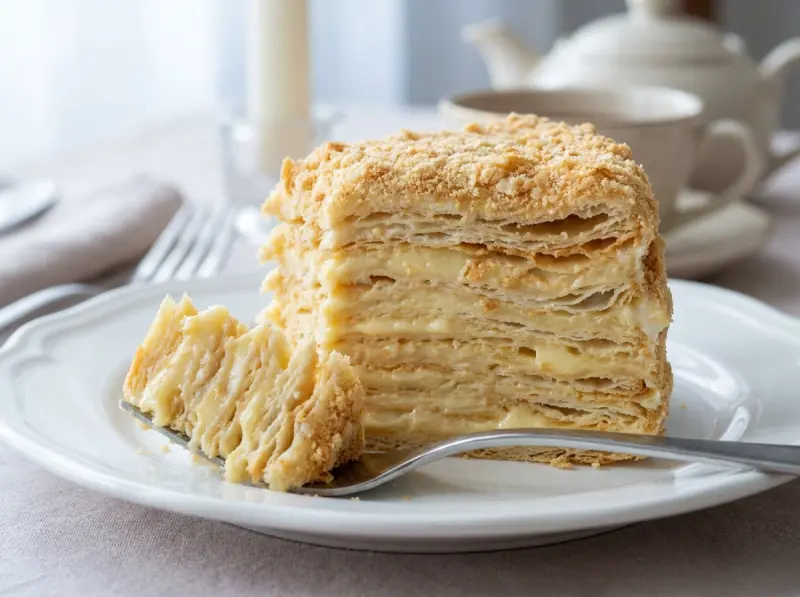
Napoleon cake is Russia's iconic layered pastry: ten or more crisp, butter-rich pastry layers soaked overnight in a thick vanilla custard until they turn meltingly soft. The rough-chopped pastry crumbs pressed into the top are the signature finish. A Soviet festive staple since the 1950s, it takes time but no special skill.
Ingredients
- 500 gflour
- 300 gbutter
- 1 pcsegg
- 150 mlcold water
- 1 tbspwhite wine vinegar
- 0.5 tspsalt
- 800 mlmilk
- 4 pcsegg yolk
- 200 gsugar
- 3 tbspflour
- 150 gbutter
- 10 gvanilla sugar
Method
- Grate the cold butter on a coarse grater straight into the flour and toss to coat. This keeps it cold and avoids warming it with your hands. Mix the egg, cold water, vinegar, and salt and drizzle into the flour-butter crumbs. Fold until it barely holds together — don't knead. Divide into 10–12 balls, wrap, and refrigerate at least 2 hours.
- Roll each portion directly on a sheet of baking paper into a very thin round or rectangle (about 2 mm). Prick all over with a fork. Bake one or two at a time at 200°C for 7–10 minutes until golden. Cool completely on a rack. Set one layer aside for the crumb topping.
- Make the custard: whisk the egg yolks, sugar, and vanilla sugar until pale. Whisk in the flour. Warm the milk almost to a boil, then pour it in a thin stream into the egg mixture, whisking constantly. Return to the heat and stir until thick and bubbling — about 5 minutes. Take off the heat.
- Cool the custard to about 40°C, then beat in the softened butter a little at a time until it's glossy and smooth. Press film onto the surface and cool to room temperature.
- Place the first pastry layer on a serving board. Spread a generous layer of custard. Repeat with all remaining layers, pressing each one gently to level. Finish with custard on the top and sides.
- Crumble the reserved layer into fine crumbs and press them all over the top and sides.
- Refrigerate at least 6 hours — overnight is better. The layers must fully absorb the cream before slicing. Serve cold.
FAQ
Two things: keep the butter cold throughout (grate it frozen if necessary, work quickly) and roll each portion as thin as you can manage, ideally no more than 2 mm. Pricking the layers all over with a fork prevents large air pockets. If you want the layers to stay crunchier even after soaking, bake them slightly longer until deeply golden rather than pale. Thinner and more layers always means a better Napoleon.
A minimum of 6 hours, but overnight (8–12 hours) is the standard. The pastry absorbs moisture from the custard during this time and transforms from crisp to tender and almost creamy. Cutting too soon gives you separate crunchy layers and cream — not the unified, melt-in-the-mouth texture the cake is known for. If you can plan ahead, assemble the day before serving.
Custard splits when the butter is added while the base is still too warm, melting the fat instead of emulsifying it. Let the custard cool to about 40°C (finger-warm) before adding butter. If it splits, put the bowl in the fridge for 10–15 minutes and whisk again — this usually brings it back. Make sure both butter and cream are at similar temperatures before combining.
Yes, and it's the quick route — many home cooks do it. Commercial puff gives a very flaky, crisp result, different in texture from the homemade rough-puff (which is crisper and less rich). The custard and assembly stay exactly the same. Thaw the pastry, roll it thin, cut to shape, bake until golden, and proceed. The overnight soaking time is still necessary.
Store in the fridge, covered, for up to 3–4 days. The texture actually improves over the first 12–24 hours as more cream soaks in. After day 3 the pastry starts to turn dense and slightly gummy. Don't freeze a finished Napoleon — the custard changes texture on thawing. Unfilled baked layers can be frozen and assembled later.
Rate this
Recipes by email
One letter a week: a recipe picked for your taste, plus whatever is new on the site. Unsubscribe in one click.
Welcome gift: Sergei's cookbook (e-book).
By subscribing you agree to the privacy policy.
Tell us what you like to cook (30 seconds) →Keep browsing
More dishes from the Russian archive — picked by overlap with what you're cooking now.
Join the conversation
Comments
No comments yet — be the first!