
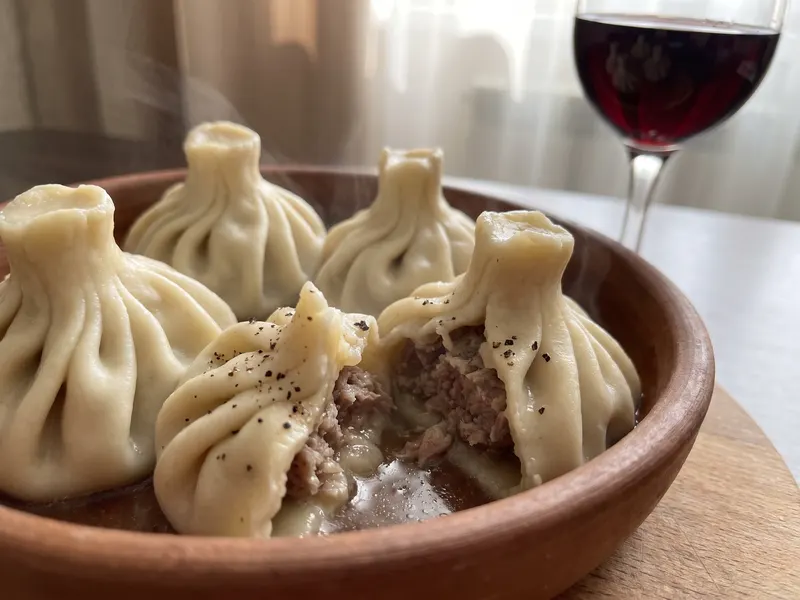
Georgian Khinkali
Khinkali are large Georgian dumplings built to hold seasoned meat and its own hot broth. The dough must be sturdy enough to pleat without tearing, yet thin enough to eat around the thick top knot. They are boiled, showered with black pepper and eaten by hand while the broth is still hot.
Ingredients
- 500 gwheat flour
- 250 mlwater
- 10 gsalt
- 300 gground beef
- 200 gground pork
- 1 onion
- 2 clovesgarlic
- 180 mlcold water
- 15 gfresh cilantro
- 1 tspground coriander
- 1 tspground cumin
- 1 tspblack pepper
Method
- Make the dough. Mix flour with 5 g salt, then add 250 ml water and knead for 12 minutes until firm and smooth. It will feel stiffer than pasta dough; this strength keeps the broth inside during boiling.
- Rest and knead again. Cover the dough for 30 minutes, knead it for 3 minutes, then rest for another 30 minutes. The rested dough should spring back slowly when pressed and roll without shrinking.
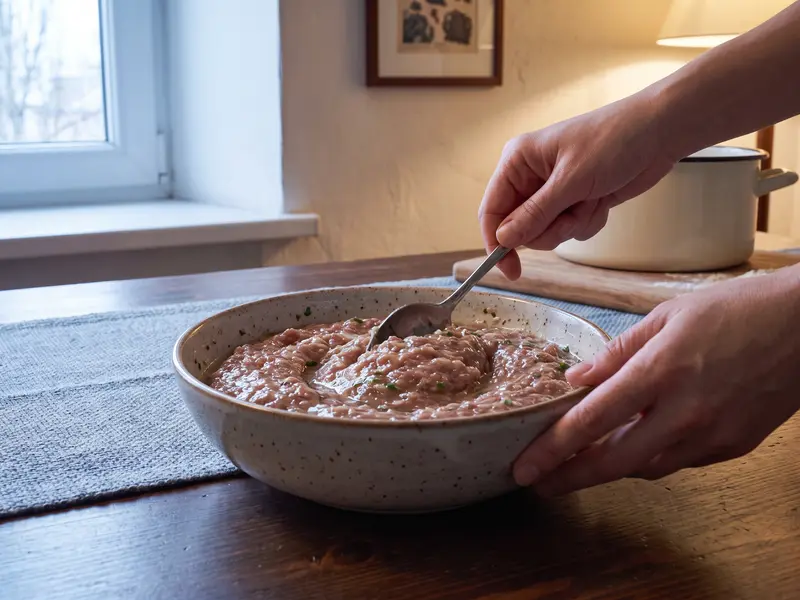
- Mix the filling. Grate the onion, mince the garlic and cilantro, then combine them with both meats, coriander, cumin, remaining salt and half the pepper. Work in 180 ml cold water a little at a time until the filling is loose, glossy and spoonable; the meat absorbs this water and turns it into broth.
- Roll the wrappers. Divide the dough into 16 equal pieces and keep them covered. Roll each piece into a 14 cm circle about 2 mm thick, leaving the centre slightly thicker so the wet filling cannot break through.
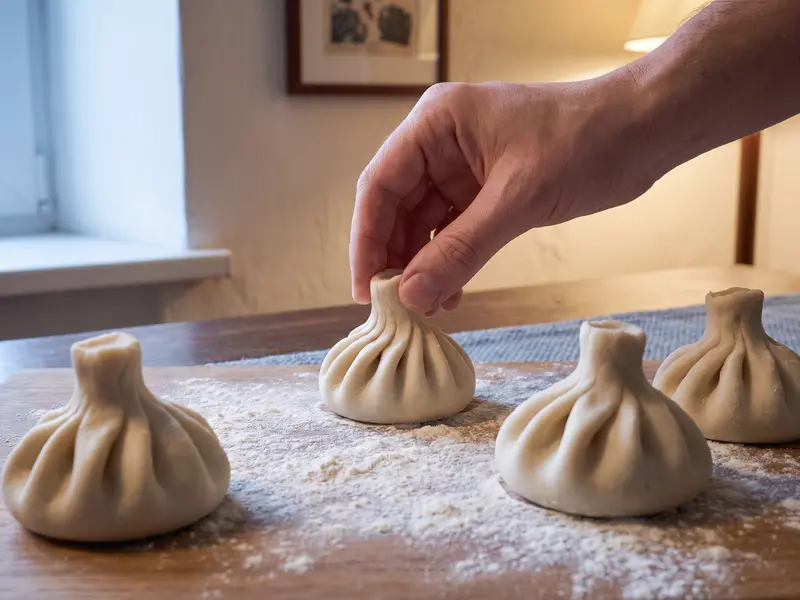
- Pleat the khinkali. Put 45 g filling in the centre, lift the edge and make 14 to 18 narrow pleats around it. Pinch the pleats firmly together, twist once and trim the top to a 2 cm knob; set each dumpling upright on a floured tray.
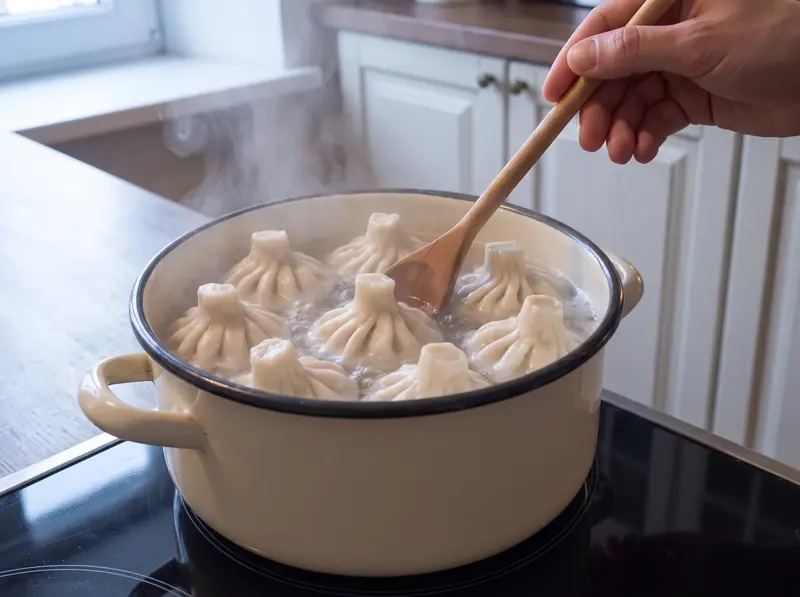
- Boil in batches. Bring 3 litres of well-salted water to a lively boil in a wide pot, stir it into a whirlpool and lower in no more than eight khinkali. Stir once to prevent sticking, then cook for 8 minutes after they float; the wrappers should look slightly translucent and inflated.
- Drain and serve. Lift the khinkali with a slotted spoon, let excess water run off and dust with the remaining black pepper. Hold the top knot, bite a small opening, drink the broth, then eat the dumpling; Georgians usually leave the thick knot on the plate.
FAQ
The broth comes from cold water mixed into meat, not from a set cube of stock. For 500 g meat, work in about 180 ml water until the filling is loose and glossy. A torn wrapper or weak seal lets that liquid escape, so keep the centre thicker and pinch the top firmly.
Freeze shaped khinkali in one layer on a flour-dusted tray for 2 hours, then transfer them to a sealed bag for up to 2 months. Boil them straight from frozen and add 2 minutes after they float. Thawing makes the dough damp and likely to tear.
Yes. Use 500 g beef with at least 15% fat, or combine beef and lamb in equal weights. Lean meat needs another 20 ml cold water and will still taste less succulent than the beef-and-pork filling.
The usual causes are a thin centre, trapped air or an overcrowded pot. Leave the middle of each wrapper about 2 mm thick, press out excess air before sealing and cook no more than eight at once in a wide pot. Keep a steady boil rather than a violent one that throws dumplings against each other.
Pick one up by its dough knot, turn it sideways and bite a small opening near the base. Sip the hot broth before eating the rest with your hands. The dense knot is a handle and is usually left on the plate, with black pepper as the only finishing seasoning.
Rate this
Recipes by email
One letter a week: a recipe picked for your taste, plus whatever is new on the site. Unsubscribe in one click.
Welcome gift: Sergei's cookbook (e-book).
By subscribing you agree to the privacy policy.
Tell us what you like to cook (30 seconds) →Keep browsing
More dishes from the Georgian archive — picked by overlap with what you're cooking now.

Join the conversation
Comments
No comments yet — be the first!