

Oladyi (Russian Fluffy Yeast Pancakes)
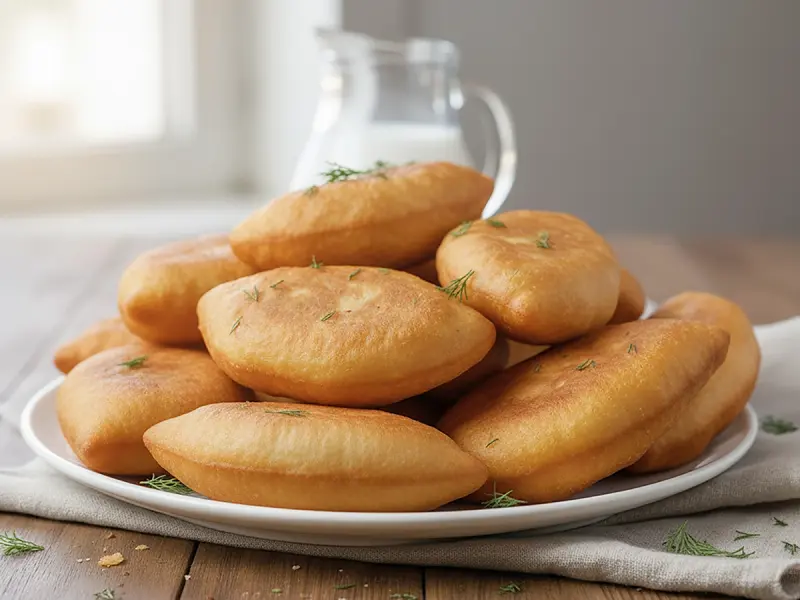
Oladyi are small thick Russian pancakes raised with yeast rather than baking powder — a palm-sized relative of the blin, puffed and soft inside. The sponge of warm milk, sugar and yeast does the work: it gives the crumb its open holes and a faint sourness that a quick batter never develops. They fry in a shallow film of oil to a dark gold and go to the table hot, with sour cream, jam, honey or fresh berries.
Ingredients
- 200 gwheat flour
- 250 mlwarm milk
- 1 egg
- 1.5 tbspsugar
- 0.5 tspsalt
- 1 tspdry yeast
- 2 tbspvegetable oil
- vegetable oil for frying
Method
- Mix warm milk (30–35 °C), sugar, and yeast in a bowl. Add 2–3 tablespoons of sifted flour and stir well until smooth. This is the sponge. Cover and place in a warm spot for 15–20 minutes until it starts to foam.
- Add egg, salt, and vegetable oil to the risen sponge. Stir well with a whisk. Gradually add the remaining sifted flour, mixing until a thick batter forms — it should slide slowly off a spoon.

- Cover the bowl and place in a warm spot for 30–40 minutes until the batter doubles in volume. Do not stir the batter after it has risen.
- Heat a skillet over medium heat and grease lightly with oil. Carefully spoon the batter onto the hot skillet without stirring it, forming round pancakes. To prevent sticking, dip the spoon in cold water between spoonfuls.
- Fry 2–3 minutes per side until golden brown. Transfer to paper towels to drain excess oil.

- Serve hot with sour cream, jam, honey, or fresh berries.
FAQ
Three things flatten them, and all three happen before the pan. Milk hotter than 40 °C kills the yeast — it should feel barely warm on the wrist, around 30–35 °C. Yeast past its date foams weakly or not at all: the sponge has to bubble visibly within 15–20 minutes, and if it does not, start it again rather than carry on. The third reason is the most common one — stirring the batter after it has doubled. That single stir releases the gas and there is no way to put it back, so scoop gently from the edge instead.
You can, and it is the everyday version in most Russian kitchens, but it is a different recipe rather than a swap inside this one. Kefir oladyi take 500 ml of room-temperature kefir, 1 teaspoon of baking soda, 1 egg, 2 tablespoons of sugar and about 300 g of flour; the soda reacts with the acid in the kefir, so the batter rests 15 minutes and goes straight into the pan with no proving at all. Kefir used cold from the fridge is the usual reason that version refuses to rise. The yeast method here costs an hour more and gives a deeper, slightly sour flavour that soda cannot produce.
Sour cream is the traditional Russian pairing. Jam, honey, fresh berries, or condensed milk are also popular. For a savory twist, smoked salmon or cottage cheese with herbs work surprisingly well.
Place cooked oladyi on a plate, cover with a lid or foil to trap steam. This keeps them soft and prevents them from drying out while you finish cooking the rest.
Yes — the lift here comes from the yeast and the gluten in the flour, and the egg only adds richness and colour. Leave it out, add an extra tablespoon of flour so the batter still holds a dome on the spoon, and give the second rise ten extra minutes. The crumb turns out slightly paler and a touch more open. Do not replace the egg with flax or chia gel: it weighs the batter down, and a yeast dough has no soda to compensate for that.
Rate this
Recipes by email
One letter a week: a recipe picked for your taste, plus whatever is new on the site. Unsubscribe in one click.
Welcome gift: Sergei's cookbook (e-book).
By subscribing you agree to the privacy policy.
Tell us what you like to cook (30 seconds) →Keep browsing
More dishes from the Russian archive — picked by overlap with what you're cooking now.
Join the conversation
Comments (1)
Ingredient temperature matters enormously for oladyi. Unless the recipe says otherwise, everything should be at room temperature. Cold wheat flour doesn't cream properly, and the texture suffers throughout.