
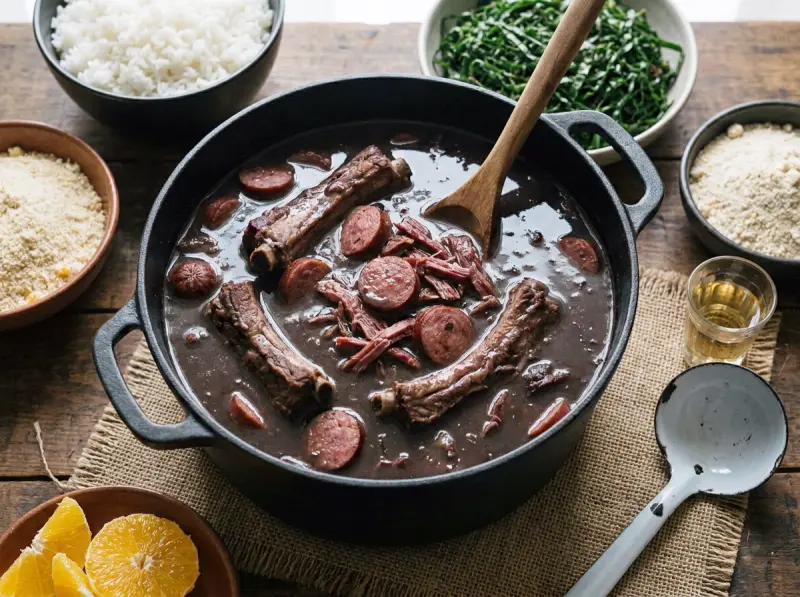
Feijoada
Feijoada is the black bean and pork stew eaten across Brazil, by restaurant custom on Saturdays (and in many places on Wednesdays too), as a full meal with rice, greens and orange on the side. Salt-cured and smoked pork cook slowly with black beans until the beans give up enough starch to turn the liquid into a dark, thick broth. The set of meats matters more than any seasoning: carne seca for salt and depth, smoked ribs for smoke, paio and calabresa for spice and fat. Origin stories tying it to slave quarters and discarded offcuts are widespread but historically contested, since bean and pork stews were already common in Portugal. Bean soaking and desalting the cured meat happen the day before.
Ingredients
- 500 gblack beans
- 300 gcarne seca
- 200 gsmoked pork ribs
- 150 gpaio sausage
- 150 glinguiça calabresa
- 150 gpork belly
- 1 pieceonion
- 4 clovesgarlic
- 3 piecesbay leaves
- 2 tbspvegetable oil
- 2 piecesoranges
- 1 tspfine sea salt
Method
- The day before, soak the black beans in plenty of cold water for 8 to 12 hours, and separately soak the carne seca in the fridge for 24 hours, changing the water three or four times. Without that, the finished pot is inedibly salty and no amount of dilution fixes it.
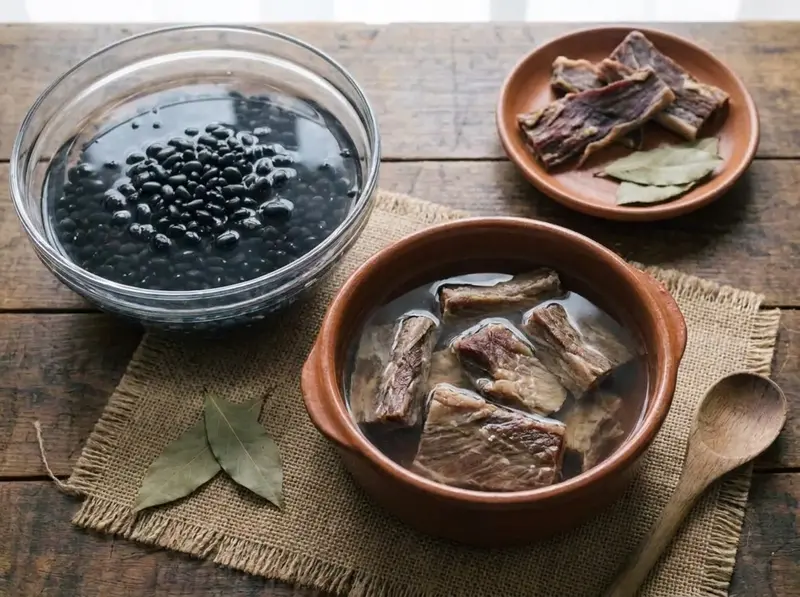
- Cut the desalted carne seca and the pork belly into 4 cm pieces and blanch them with the ribs in boiling water for 10 minutes, counted from when the water returns to a boil, then drain and discard that water. This takes out surface salt and a good part of the rendered fat that would otherwise sit on top of the stew.
- Drain the beans, put them in a large heavy pot with the bay leaves and cold water about 4 cm above the surface, bring to a boil and then drop to the barest simmer for 1 hour, skimming the foam in the first 10 minutes.
- Add the carne seca, ribs and pork belly and simmer another hour, topping up with hot water only if the beans become exposed. The pot should never boil hard, which breaks the beans and clouds the broth.
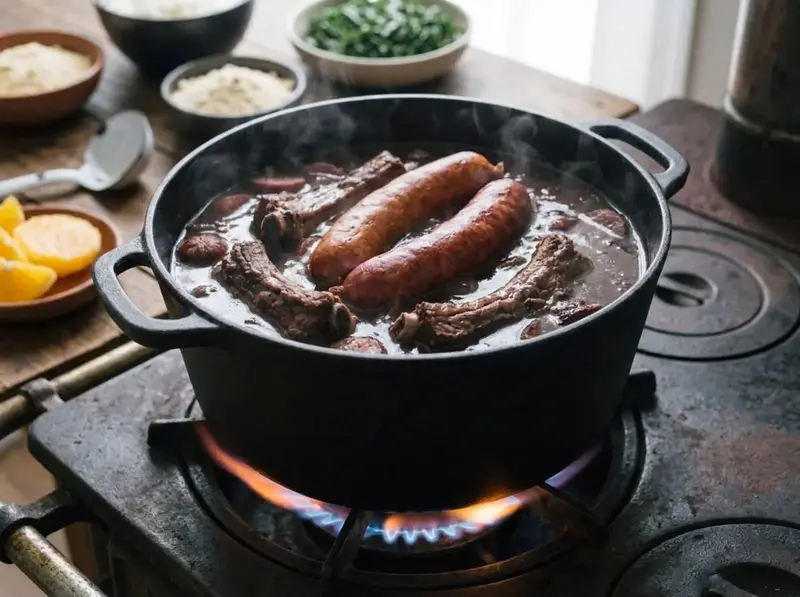
- Add the paio and calabresa whole and cook 30 minutes more, by which time the beans should crush easily against the side of the pot, the meat should pull away from the rib bones and a piece of carne seca should pull apart between two forks; if it still resists, keep simmering.
- Make the refogado: fry the chopped onion and garlic in the oil until golden, then ladle in a cupful of beans and mash them into the pan before returning everything to the pot. That mashed portion is what thickens the broth, so nothing else is needed to bind it.
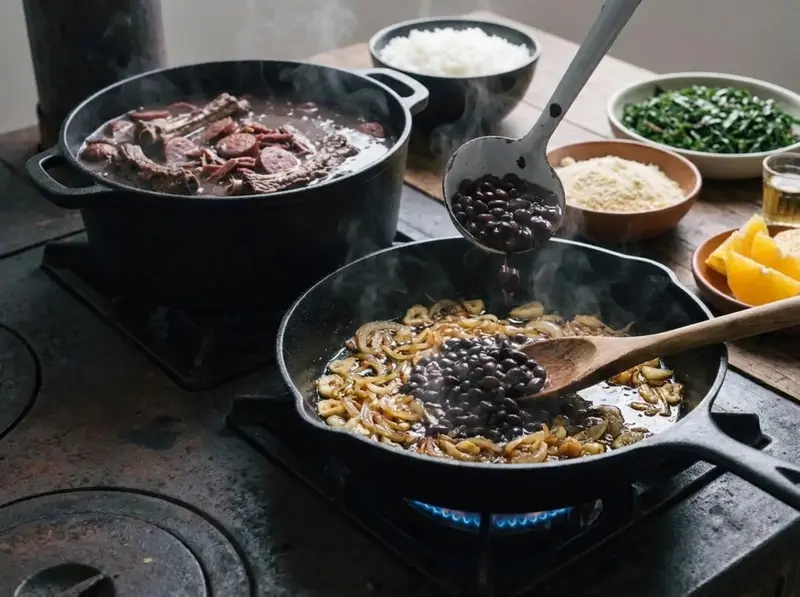
- Simmer uncovered 30 minutes, salt only now, and let the pot rest 30 minutes off the heat. Lift the sausages and meats out with a slotted spoon, slice them, return them to the pot, and serve with orange segments on the side.
FAQ
Only partly, and prevention is the real answer: the carne seca needs a full 24 hours of soaking with several water changes, plus the 10-minute blanch. If it is already salty, the only thing that helps is dilution: add unsalted cooked black beans and hot water, a ladle at a time, and simmer for 10 minutes before tasting again. A potato dropped into the pot does not pull salt out; it only soaks up broth that is just as salty. Salt only at the end, after tasting, because the cured meats keep releasing salt into the broth.
Smoked ham hock and smoked pork ribs cover the smoke, Spanish chorizo or a mild smoked sausage replaces the paio, and salt-cured beef brisket stands in for carne seca. Avoid fresh unsmoked sausage, which contributes fat without the cured depth the dish is built on. Whatever you choose, keep at least three different cuts, one smoked, one salt-cured and one fatty like pork belly, because that spread of flavours is what the dish is built on.
Three to four days in the fridge, and it improves through day two. It freezes well for three months. Reheat it gently until it is steaming hot all the way through (74°C), without a hard boil, which is when the beans fall apart.
White rice, sautéed collard greens cut into fine ribbons, farofa and orange segments. The orange is eaten between mouthfuls rather than added to the pot, and its acidity cuts the fat, which is exactly why it belongs on the plate. Farofa is cassava flour toasted in butter or oil, and the greens are cut into ribbons as thin as possible and sautéed briefly with garlic.
Yes, and it is common in home cooking: use only ribs and one sausage, skim the fat after chilling, and increase the ratio of beans to meat. The result is closer to a plain feijão with a couple of smoked cuts, which is what most Brazilian households eat on ordinary days. If you want something lighter from the same country, moqueca baiana is a coconut fish stew with no cured meats at all.
Rate this
Recipes by email
One letter a week: a recipe picked for your taste, plus whatever is new on the site. Unsubscribe in one click.
Welcome gift: Sergei's cookbook (e-book).
By subscribing you agree to the privacy policy.
Tell us what you like to cook (30 seconds) →Keep browsing
More dishes from the Brazilian archive — picked by overlap with what you're cooking now.
Join the conversation
Comments
No comments yet — be the first!