
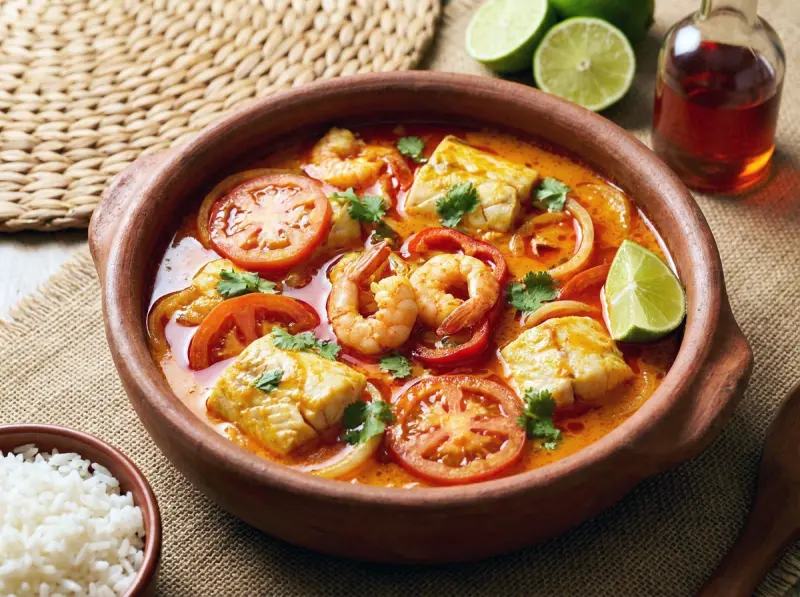
Moqueca Baiana (Brazilian Fish and Shrimp Stew)
Moqueca baiana is a Brazilian fish and shrimp stew from Bahia, simmered gently in coconut milk with tomatoes, peppers, onion, and lime, then finished with dendê — red palm oil that turns the sauce a deep orange and adds a nutty, faintly smoky depth found in no other stew. The recipe blends Indigenous, African, and Portuguese cooking, and it's built in layers rather than stirred, cooked on low heat so the fish stays in whole pieces. The fish and shrimp marinate in lime and garlic for 20–30 minutes first, which is not counted in the time. It's served hot over white rice, straight from the pot it was cooked in.
Ingredients
- 600 gfirm white fish
- 300 graw shrimp (peeled weight)
- 400 mlcoconut milk
- 3 pcstomato
- 2 pcsonion
- 1 pcsred bell pepper
- 4 clovesgarlic
- 2 pcslime
- 3 tbspdende palm oil
- 1 bunchcoriander
- to tastesalt and pepper
Method
- Cut the fish into large chunks and peel the shrimp. Toss both with the juice of one lime, half the garlic, salt, and pepper, and marinate 20–30 minutes in the fridge.
- Slice the onion, tomatoes, and bell pepper into rounds. Chop the remaining garlic and the coriander stems, keeping the leaves for garnish.
- In a wide pot or clay pot, build a layer with half the onion, then half the tomato, then half the pepper across the base. Scatter over the chopped garlic and coriander stems.
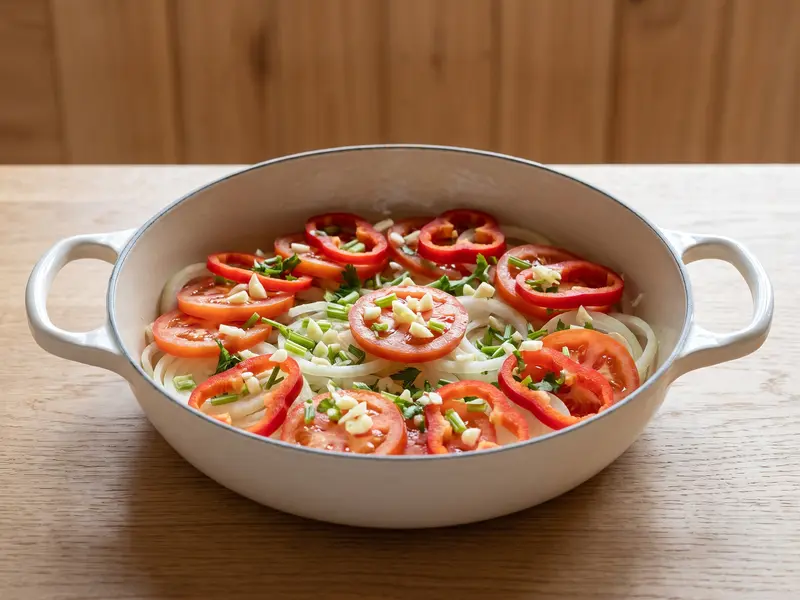
- Lay the marinated fish over the vegetables and spoon over the juices from the bowl, then cover with a second layer of the remaining onion, tomato, and pepper. Season each layer lightly with salt and pepper. Keep the shrimp refrigerated for now — they go in later.
- Pour the coconut milk evenly over the top. Bring to a gentle simmer over medium heat, then cover, lower the heat, and cook 12–15 minutes without stirring — swirl the pot instead so the fish stays intact. Then nestle the shrimp into the sauce, cover again, and cook 3–4 minutes more, just until the shrimp are pink and opaque and the fish flakes easily (63°C / 145°F in the thickest chunk).
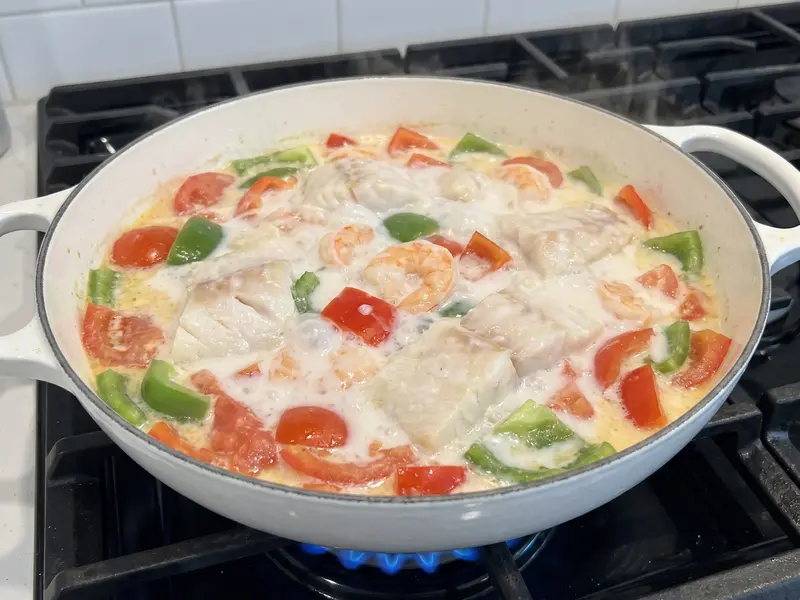
- Warm the dendê in a small pan just until loose, then drizzle it over the stew. Keep the heat under the pot low so the coconut milk doesn't split.
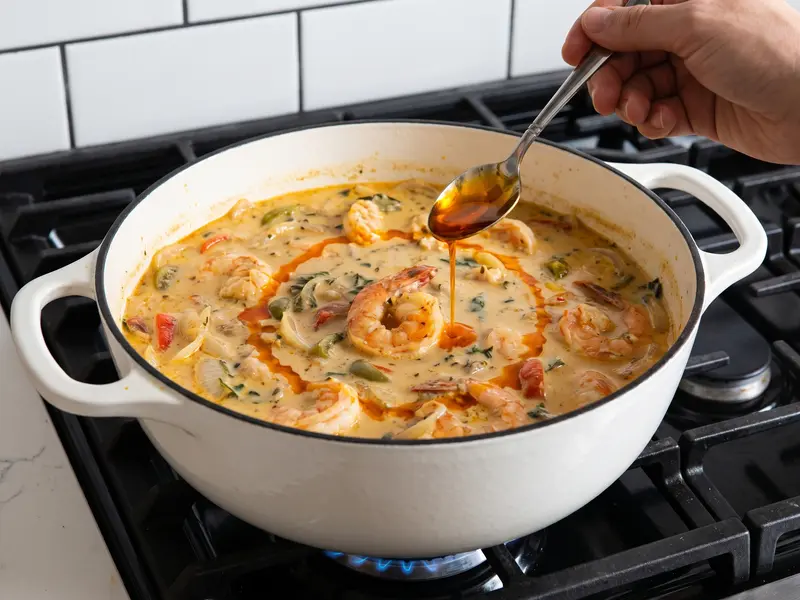
- Scatter the reserved coriander leaves and a final squeeze of lime over the top. Serve hot, straight from the pot, over white rice.
FAQ
Dendê is unrefined red palm oil, an African ingredient central to Bahian cooking. It gives moqueca its glowing orange colour and a distinctive nutty, faintly smoky, slightly earthy flavour that truly defines the dish. There's no exact substitute: for colour alone you can warm a neutral oil with sweet paprika or a little annatto, but the flavour will be missing. It's worth sourcing from a Latin, African, or online grocer. Use it sparingly; this recipe adds it near the end, though many Bahian cooks let it simmer with the stew.
Use a firm white fish that holds its shape in a stew — cod, halibut, sea bass, snapper, grouper, or monkfish all work well. Cut it into large chunks so it doesn't fall apart during the gentle simmer. Softer, flakier fish tends to disintegrate. Many cooks add shrimp alongside the fish, and you can also use squid, mussels, or crab for a mixed-seafood version. Whatever you choose, don't overcook it — the fish only needs a short simmer.
Layering is traditional and practical: the vegetables release moisture and steam the fish gently from below and above, while the delicate fish and shrimp stay whole instead of breaking up. Stirring a moqueca tends to shred the fish and cloud the stew. Instead of stirring, cooks swirl or tilt the pot to redistribute the sauce. The result is a clean, brothy stew with intact pieces and distinct layers of flavour.
Coconut milk splits when it boils too hard or too long. After you pour it in, bring the stew only to a gentle simmer, then keep the heat low and covered for the short cooking time. Full-fat coconut milk is more stable and gives a richer result than light versions. If it does begin to split, take it off the heat and swirl gently — it usually settles.
The classic accompaniment is plain white rice, which soaks up the fragrant coconut broth. In Bahia it's also served with pirão (a soft porridge made from the stew's broth thickened with cassava flour) and farofa (toasted cassava flour) for texture. A few slices of lime and extra fresh coriander on the side are typical. It's a generous, brothy dish, so give everyone a bowl and plenty of rice. If you're setting a full Bahian table, coxinha or pão de queijo make good starters before the stew arrives.
Keep browsing
More dishes from the Brazilian archive — picked by overlap with what you're cooking now.
Recipes by email
One letter a week: a recipe picked for your taste, plus whatever is new on the site. Unsubscribe in one click.
Welcome gift: Sergei's cookbook (e-book).
By subscribing you agree to the privacy policy.
Tell us what you like to cook (30 seconds) →
Join the conversation
Comments
No comments yet — be the first!