
Bún Chả
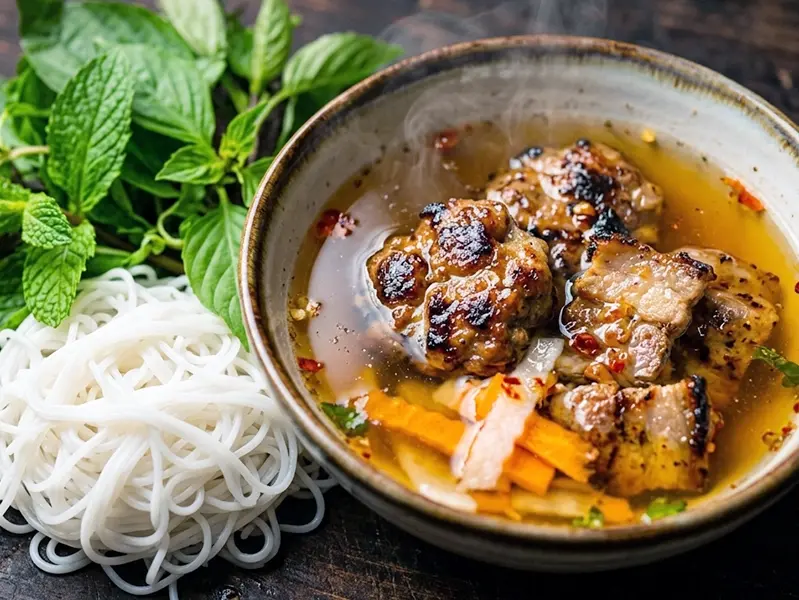
Hanoi's most iconic street-food dish: smoky grilled pork patties (chả băm) and caramelized pork belly slices (chả miếng) submerged in a warm, sweet-sour dipping broth, served alongside cool rice vermicelli, pickled carrot and daikon, and a heap of fresh Vietnamese herbs. The components arrive separately and each diner builds their own bite — a tangle of noodles and herbs dipped into the broth with a piece of pork and pickle, all in one mouthful. Gained international fame when Barack Obama and Anthony Bourdain ate it at a Hanoi street stall in 2016. The version that gained that fame is a Hanoi recipe, distinct from the southern bún thịt nướng: no lemongrass in the pork, the sauce served warm not cold, patties alongside sliced belly.
Ingredients
- 300 gground pork
- 300 gpork belly
- 3 tbspfish sauce
- 2 tbspsugar
- 3 shallots
- 6 garlic cloves, minced (2 for each marinade, 2 for the dipping broth)
- 1 tbspneutral oil
- 200 gcarrots
- 200 gdaikon radish
- 4 tbsprice vinegar
- 2 tbspsugar
- 60 mlfish sauce
- 60 mlfresh lime juice
- 3 tbspsugar
- 250 mlwarm water
- 200 grice vermicelli
- 1 large handful of fresh herbs: Vietnamese mint, Thai basil, perilla, or regular mint
- 2 heads of butter lettuce, leaves separated
Method
- Pickle the vegetables. Combine the rice vinegar, 2 tbsp sugar, and a pinch of salt in a bowl. Add the julienned carrot and daikon. Toss well and set aside for at least 30 minutes, ideally 2 hours. The pickle should taste bright and lightly sweet-sour. Drain before serving.
- Marinate the pork belly (chả miếng). Combine 1.5 tbsp fish sauce, 1 tbsp sugar, half the minced shallot, and 2 minced garlic cloves in a bowl. Add the pork belly slices and toss to coat. Marinate 30 minutes at room temperature or up to 4 hours refrigerated.
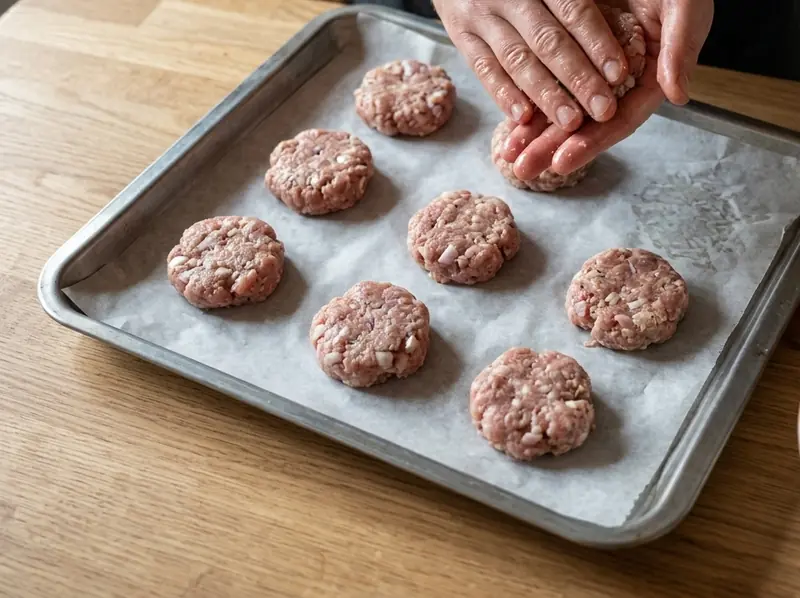
- Mix the pork patties (chả băm). Combine the ground pork with the remaining 1.5 tbsp fish sauce, 1 tbsp sugar, remaining shallot, 2 more minced garlic cloves, and a pinch of black pepper. Mix by hand for 2 to 3 minutes until the mixture becomes cohesive and slightly sticky. Refrigerate 20 minutes. Oil your hands lightly and shape into small flat patties about 6 cm wide and 1 cm thick — slightly thicker in the center than at the edge. This shape ensures the center stays moist while the edge chars.
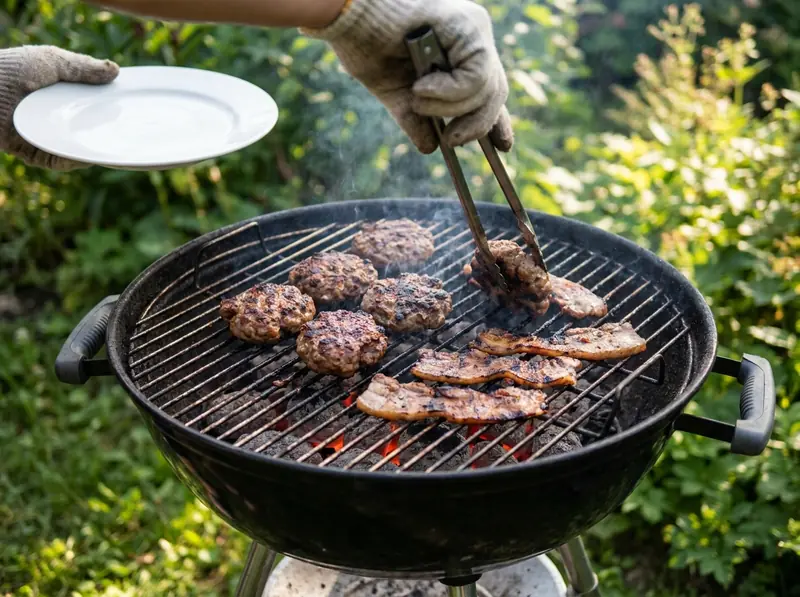
- Grill the pork. Heat a charcoal grill, cast-iron grill pan, or oven broiler to high. Grill the patties and belly slices over direct high heat, turning every 2 minutes, for 6 to 8 minutes total, until deeply caramelized and charred at the edges. The sugar in the marinade scorches quickly — watch carefully and turn frequently. The pork should be smoky and brown with crisp, caramelized edges.
- Make the dipping broth. Dissolve the sugar in the warm water. Add the fish sauce, lime juice, and 2 minced garlic cloves. Taste: the broth should be distinctly sweet, sour, and salty in roughly equal measure. Add thinly sliced fresh chilli to taste. Keep warm — unlike cold nước chấm served with other dishes, Hanoi bún chả broth is served warm. Transfer the grilled pork directly into the warm broth and let soak for 2 minutes before serving.
- Cook the noodles and serve. Cook the rice vermicelli in boiling water according to the package (usually 3 to 5 minutes). Drain and rinse under cold water. Arrange on a plate. Set out the herbs and lettuce on a separate plate. Serve the warm pork-filled broth in individual bowls alongside the noodles and herbs. To eat: pick up a small tangle of noodles and herbs with chopsticks, dip into the broth, scoop up a piece of pork and some pickle, and eat in one bite.
FAQ
Both are grilled pork with rice vermicelli, herbs, and a sweet dipping sauce — but the details differ significantly. Bún chả is a Hanoi dish: the pork is both ground into patties (chả băm) and sliced from the belly (chả miếng), the marinade does not include lemongrass, and most distinctively, the dipping sauce is served warm with the pork submerged in it. Bún thịt nướng from southern Vietnam uses whole pork slices (usually lemongrass-marinated), no patties, and the sauce is served cold, drizzled over a bowl of noodles rather than as a dipping broth. The southern version typically also includes crushed peanuts and spring rolls as accompaniments.
A cast-iron grill pan on the highest flame your stove can produce gets closest to the charcoal result for the patties. Preheat for 3 to 4 minutes before adding meat — the pan should be so hot that a drop of water immediately vaporises. For the belly slices, which are thinner and have more fat, a regular cast-iron pan or even a very hot stainless steel pan works well because the fat renders into the pan and helps fry the meat. An oven broiler at maximum heat on a wire rack also produces good results: 5 to 6 minutes per side for patties, 3 to 4 for belly. The key in any method is high heat and patience — let the meat develop the crust before turning.
The traditional herb plate at a Hanoi bún chả stall includes rau răm (Vietnamese coriander/mint — peppery, with a lemony note), húng quế (Thai basil — anise fragrance), tía tô (Vietnamese perilla — purple leaf, minty and earthy), and húng lui (spearmint). In practice outside Vietnam, a combination of fresh mint, Thai basil, and cilantro covers most of the flavor range. If rau răm is available at Asian supermarkets, use it — it is the most distinctive herb of Hanoi cuisine. Regular basil is a mediocre substitute for Thai basil. The herbs are not decoration: they are a structural flavor element and should be eaten in quantity with each bite.
The warm broth is the Hanoi definition of the dish and what physically distinguishes bún chả from related dishes. Practically, the warm broth blooms the garlic and chilli aromatics more intensely than a cold sauce. More importantly, the grilled pork is transferred directly into the warm broth after grilling, releasing its rendered fat and meat juices into the sauce — the broth becomes enriched and smoky as you eat. The warmth also keeps the pork tender and moist rather than letting it cool and stiffen. Cold bún chả broth is technically a different dish.
The pickle keeps for 2 to 3 weeks in the fridge and improves after the first day. The raw pork mixtures (both patties and belly) can be marinated overnight and grilled the next day. The dipping broth lasts 3 to 4 days refrigerated — reheat gently before serving. The vermicelli can be cooked, rinsed, and stored refrigerated for up to 2 days, though it firms slightly; a brief soak in hot water restores softness. Grilled pork can be reheated in the warm broth. The herbs and lettuce should be prepared fresh on the day of serving.
Rate this
Recipes by email
One letter a week: a recipe picked for your taste, plus whatever is new on the site. Unsubscribe in one click.
Welcome gift: Sergei's cookbook (e-book).
By subscribing you agree to the privacy policy.
Tell us what you like to cook (30 seconds) →Keep browsing
More dishes from the Vietnamese archive — picked by overlap with what you're cooking now.
Join the conversation
Comments (2)
The dipping broth is the soul of bun cha. It is not a sauce — it is a light, sweet-sour fish sauce broth that you dip everything into. The ratio that works for me: 2 parts water, 1 part fish sauce, 1 part sugar, juice of 2 limes, and plenty of garlic. The pork patties need enough fat to stay juicy on the grill. Lean pork makes sad, dry meatballs. I use pork with at least 20% fat.
Ich bin normalerweise skeptisch bei asiatischem Essen, aber Bún Chả hat mich überrascht. Die gegrillten Schweinefleischbällchen erinnern an unsere Frikadellen, nur mit anderen Gewürzen. Die Tunke mit Fischsauce und Limette ist gewöhnungsbedürftig aber nach dem dritten Bissen will man nicht mehr aufhören. Meine Frau war auch angetan.