


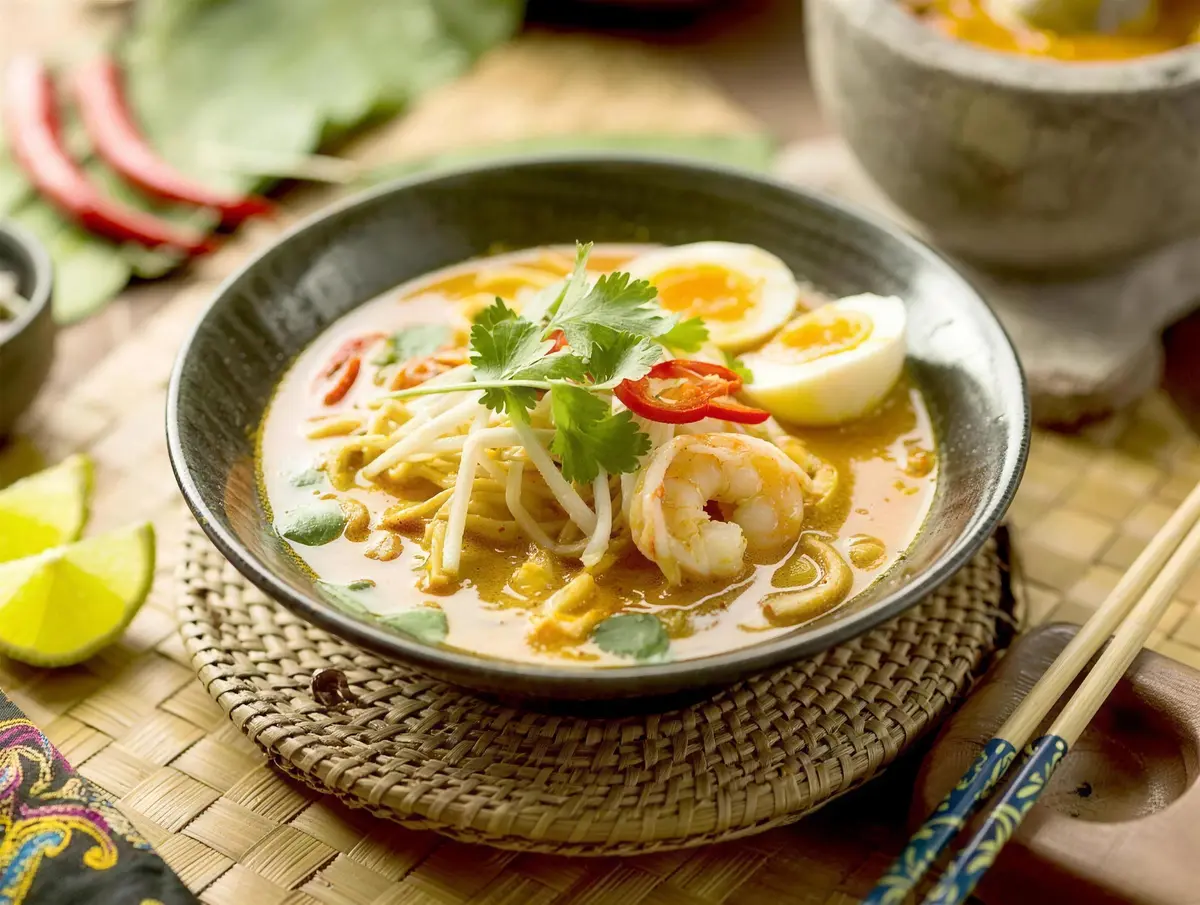
Curry Laksa
Curry laksa is a Malaysian-Singaporean noodle soup: rice noodles sitting in a spiced coconut curry broth, topped with chicken or shrimp, bean sprouts, and half a boiled egg. The coconut milk gives the broth a rounded sweetness, the curry paste brings heat and color, and a squeeze of lime at the table cuts through the richness. Malaysia and Singapore each have dozens of regional versions, from mild to fiery.
Ingredients
- 150 gchicken fillet or shrimp
- 150 grice noodles
- 400 mlcoconut milk (1 standard can)
- 500 mlchicken or vegetable broth
- 1 tbspvegetable oil
- 4 tbsplaksa paste (or red Thai curry paste), plus more to taste
- 1 tspsugar
- 1 tbspfish sauce
- 1 tsplime juice
- 1 boiled egg
- 30 gbean sprouts
- tofu puffs (tau pok), optional
- fresh cilantro, chili and lime for serving
Method
- Heat a tablespoon of oil in a heavy-bottomed pot over medium heat. Add the laksa paste (or red Thai curry paste as a substitute) and fry, stirring constantly, for 2 minutes until it darkens slightly and the kitchen fills with a deep, fragrant aroma. This step blooms the spices and builds the flavor base of the entire soup.
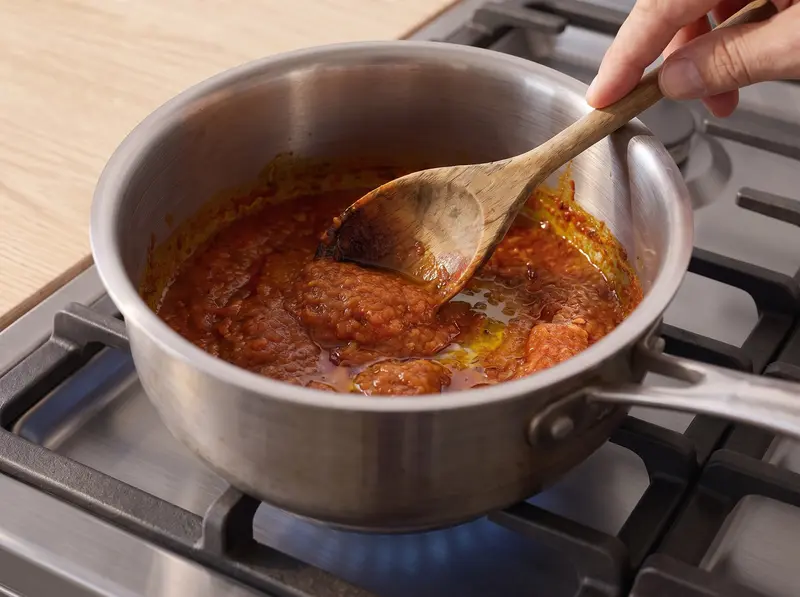
- Pour in the broth and coconut milk, stirring to dissolve the paste completely. Bring to a gentle boil, then stir in the sugar, fish sauce, and lime juice. Let it simmer for 5 minutes so the flavors meld. Taste the broth — it should be rich, slightly sweet, salty, and aromatic. If it tastes thin, stir in another spoonful of paste: brands vary in strength.
- If using chicken, slice the fillet into thin bite-sized pieces and add to the simmering broth. Cook for 5–7 minutes until the pieces are opaque throughout and tender. If using shrimp instead, add them now and cook just 2–3 minutes until they curl and turn pink — overcooking makes them rubbery. Add the tofu puffs now too, if using; they soak up the broth as it simmers.
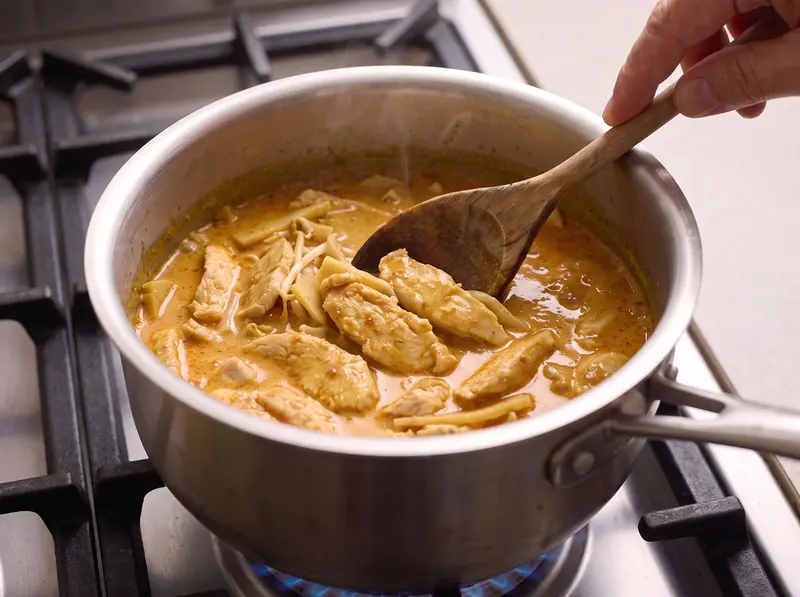
- While the protein cooks, prepare the noodles separately according to the package directions. Blanch the bean sprouts in the boiling noodle water for 30 seconds, lift them out with a slotted spoon and set them aside. Drain the noodles and rinse briefly under warm water to prevent clumping. Divide the noodles between deep serving bowls.
- Ladle the hot coconut broth and protein over the noodles. Top each bowl with half the boiled egg, the blanched bean sprouts, cilantro leaves, thin chili slices, and a lime wedge on the side. Serve immediately — squeeze the lime into the soup at the table for a bright finish.
Cooked it? Rate the recipe
FAQ
Laksa is a Malaysian noodle soup in a coconut curry broth. Unlike curry, it is a soup — thin, spicy, coconut-forward — served over noodles with toppings like egg, bean sprouts, and fresh herbs.
Red curry paste is the best substitute. Add a pinch of turmeric for color. The flavor will be simpler but very close.
Traditionally rice vermicelli or yellow egg noodles are used, often both in one bowl. Rice noodles give a more delicate texture and are gluten-free; if that matters to you, check the label of the paste and stock too. Egg noodles add more body and richness. Rice noodles are also the star of dishes like pad Thai.
Yes — replace chicken with tofu or extra vegetables (eggplant, zucchini, spinach), use vegetable broth, and replace fish sauce with soy sauce (tamari if you need it gluten-free). Check the paste too: most laksa pastes and Thai red curry pastes contain shrimp paste, so look for one labelled vegetarian. For a fully plant-based coconut curry, try our vegan coconut curry.
The broth keeps in the fridge for up to 3 days. Cook noodles fresh — they absorb the broth and become soggy. Store broth and noodles separately and combine just before serving.
Keep browsing
More dishes from the Malaysian archive — picked by overlap with what you're cooking now.




Recipes by email
One letter a week: a recipe picked for your taste, plus whatever is new on the site. You can stop the letters in one click.
Welcome gift: Sergei's cookbook (e-book).
By signing up for the newsletter you agree to the privacy policy.
Tell us what you like to cook (30 seconds) →
Join the conversation
Comments
No comments yet — be the first!